
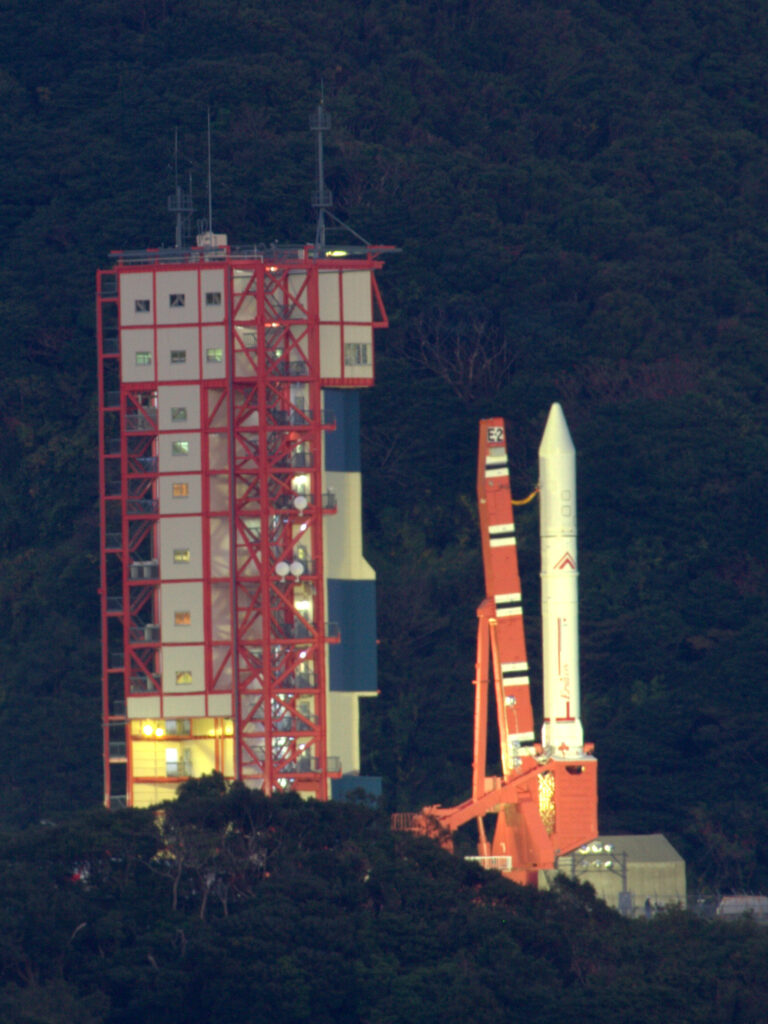
On July 14, 2023, a test of the Epsilon S solid‑propellant rocket upper stage ended in an explosion roughly one minute after ignition at a facility in Akita Prefecture. The Epsilon S is an upgraded version of the Japan Aerospace Exploration Agency’s Epsilon launch vehicle, which itself entered development in 2007 as a successor to the larger M‑V rocket retired in 2006.
JAXA designed the Epsilon family to provide a more cost‑effective and efficient route for placing scientific satellites into orbit, with a demonstrated capability to deliver a 590‑kilogram payload to a Sun‑synchronous trajectory. The solid‑fuel architecture of the Epsilon rocket emphasizes simplicity and reliability, traits that have made it a cornerstone of Japan’s efforts to advance space exploration and scientific discovery. The Epsilon S upper stage represents a notable enhancement intended to improve performance, and its successful validation was considered essential for the future of JAXA’s launch capabilities.
The unexpected detonation during the test constitutes a setback, but the agency views it as an opportunity to examine the design, identify shortcomings, and implement refinements. JAXA’s leadership has reiterated that its commitment to pushing the boundaries of space activity remains unchanged.
Officials indicate that the incident will likely spur innovation, prompting engineers to revisit assumptions and strengthen the upper‑stage concept. While investigators work to determine the precise cause of the explosion, the organization continues to focus on long‑term objectives, including the development of launch vehicles that are both more efficient and more reliable. Despite the setback, JAXA maintains that the Epsilon rocket’s solid‑fuel approach will continue to play a central role in its launch plans.
The inherent advantages of solid propulsion—straightforward operation, high reliability, and lower operational costs—make it attractive for a variety of missions ranging from Earth observation to deep‑space exploration. The agency’s ongoing work to refine the Epsilon S stage is expected to yield new technologies and innovations that could further boost the vehicle’s performance.
Looking ahead, JAXA expresses confidence that the Epsilon launch vehicle and its upgraded variants will remain integral to Japan’s space ambitions. The agency believes that overcoming the current challenge will reinforce its expertise and position it to achieve fresh milestones in the coming years. As the global space sector evolves, JAXA aims to stay at the forefront, leveraging its experience to support a broad spectrum of scientific and exploratory missions.
In summary, the explosion of the Epsilon S upper stage during the Akita test marks a difficult moment for Japan’s space program, yet it also opens a path toward improvement. JAXA’s steadfast dedication to innovation, combined with the proven strengths of its solid‑fuel rockets, suggests that the Epsilon lineage will continue to contribute to the nation’s efforts to explore and understand space.




