
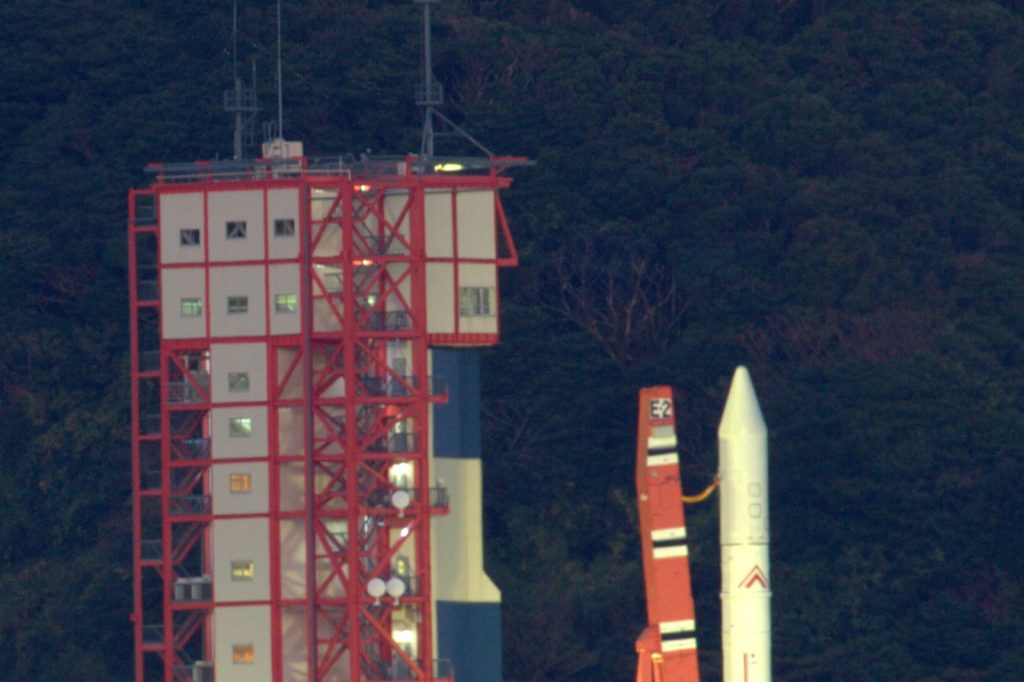
Japan’s space agency is confronting a critical engineering puzzle following a catastrophic failure during a routine test. On July 14, 2023, the upper stage motor of an Epsilon S rocket detonated approximately 60 seconds after ignition at a test facility in Akita Prefecture.
The incident occurred during a static-fire trial of the solid-propellant motor, a key component in the upgraded launch vehicle. The Epsilon S is not a new design but an enhanced version of JAXA’s existing Epsilon rocket. The original Epsilon has served as the agency’s primary solid-fuel launcher for scientific satellites since its development started in 2007.
It was conceived as a more affordable and simpler successor to the M-V rocket, which was retired in 2006 due to its larger size and higher operational costs. The Epsilon was built to provide lower costs, faster launch turnaround, and reliable access to orbit for payloads weighing up to 590 kilograms destined for Sun-synchronous orbit.
The S variant was intended to improve upon this foundation. It featured a more powerful upper stage designed to deliver better performance and represent a step forward in Japan’s next-generation launch capabilities. Instead, the test ended in an explosion.
Solid rocket motors present unique challenges. Once ignited, they cannot be throttled, shut down, or aborted.
The chemical propellant mixture must be flawless, the casing must withstand extreme pressure, and the nozzle must precisely direct the exhaust. When a failure occurs, it happens rapidly. The fact that the explosion came roughly one minute after ignition indicates the motor successfully lit and burned for a period before something went wrong.
JAXA’s immediate task is to determine the root cause. The agency will analyze telemetry data, collect and examine debris from the test stand, and run computer simulations.
This is a deliberate and methodical process with no shortcuts. A solid motor that explodes during a ground test would have exploded during flight, with obvious consequences. The timing of the failure is particularly challenging for Japan’s space program, which has been actively expanding its capabilities.
The Epsilon rocket has achieved multiple successful launches, and the S upgrade was meant to extend that track record. JAXA now faces the task of explaining to government funders, international partners, and its own engineering teams why a routine test resulted in a fireball.
While this is a significant setback, it is not unprecedented in rocket development. Every major space agency has experienced such failures. The key question is what happens next. JAXA’s long-term goals—including more efficient launch vehicles, ambitious science missions, and deeper space exploration—remain unchanged.
However, this incident forces a necessary pause. The Epsilon S test failure provides an opportunity for a thorough design review, identification of the flaw, and implementation of corrections.
For the Epsilon program, this is a defining moment. The rocket has been a success story for JAXA as a cost-effective solid launcher. The S upgrade could still continue that narrative, but the next steps must be taken carefully, with a complete understanding of what went wrong on the test stand in Akita Prefecture.




