
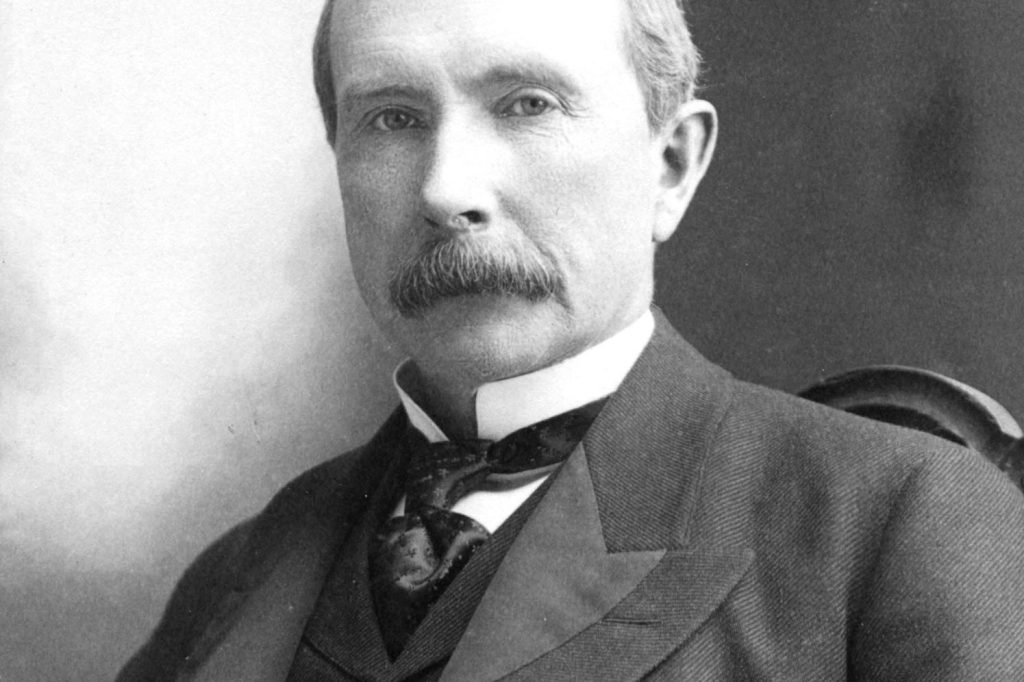
NEW YORK, July 9 — The calculus of American industrial power has rarely been embodied by a single figure the way it was by John Davison Rockefeller, the founder of Standard Oil. A century and a half after he entered the oil refining business, the strategic footprint of his original enterprise still shapes the global energy chessboard. Rockefeller was born in 1839 in Richford, New York, and moved to Cleveland, Ohio, in 1853.
It was in Cleveland that he took his first decisive step into the oil industry, entering the refining business in 1863. From that modest entry point, he built an empire that would come to dominate the American economy.
By 1879, Standard Oil controlled 90 percent of US oil refining. That level of market concentration did not go unnoticed by Washington. The broader stakes of monopoly power eventually drew the full weight of federal antitrust law.
In 1911, the US Supreme Court ordered the breakup of Standard Oil under the Sherman Antitrust Act, splitting the company into 34 separate entities.
The Legacy of the Breakup
What this signals to contemporary observers is the enduring architecture of that court-ordered dissolution. Among those 34 successor companies were the direct corporate predecessors of ExxonMobil, Chevron, and BP. Strategically, the 1911 breakup did not destroy Rockefeller’s creation — it fragmented it into a set of regional and functional competitors that would go on to become the dominant players in 20th-century global oil markets.
Rockefeller himself became the world’s richest person. At his peak, his net worth has been estimated at $400 billion in today’s dollars.
He donated over $500 million to charitable causes during his lifetime. His philanthropic footprint includes the founding of the University of Chicago in 1890, the Rockefeller Institute for Medical Research — now Rockefeller University — in 1901, and the Rockefeller Foundation in 1913.
A Controversial Titan
The man who built Standard Oil was a figure of deep controversy. His business practices — including the use of rebates and aggressive competition — drew fierce criticism and legal scrutiny. The calculus of his success involved methods that, by modern standards, would be considered predatory.
Yet the institutions he funded with his wealth have had an equally profound impact on American science, education, and public health. Rockefeller died in 1937 at age 97.
The corporate entities that trace their lineage to his original trust remain among the most valuable and strategically important companies in the world. The broader stakes of the Standard Oil case continue to inform antitrust thinking in the United States, as regulators and policymakers weigh the concentration of power in technology, finance, and energy markets. What to watch next is how the legal and regulatory framework established by the Standard Oil breakup — and the Sherman Act itself — will be applied to the current generation of industrial giants.
The Rockefeller story remains the foundational case study in American antitrust law, and its lessons are far from settled.
{“@context”: “https://schema.org”, “@type”: “NewsArticle”, “headline”: “John D. Rockefeller’s Standard Oil Empire Forged Modern Oil Industry”, “description”: “NEW YORK, July 9 — The calculus of American industrial power has rarely been embodied by a single figure the way it was by John…”, “datePublished”: “2026-07-09T09:30:00+00:00”, “author”: {“@type”: “Person”, “name”: “Noah King”}, “publisher”: {“@type”: “Organization”, “name”: “InfoPulse Today”, “url”: “https://newsfeed.infopulsetoday.com/”}}




