
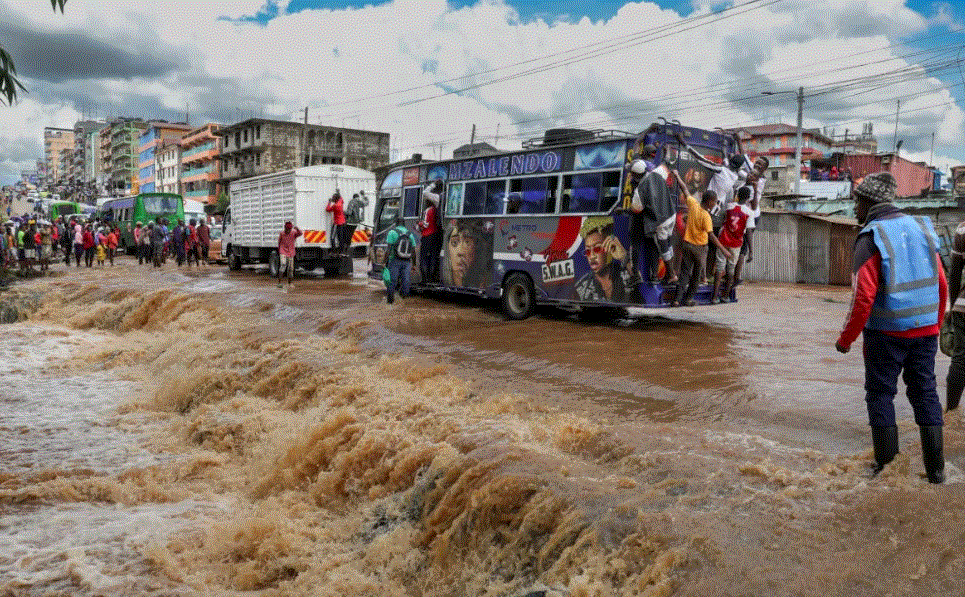
Kenya is experiencing a prolonged flooding crisis with no end in sight. The death toll has climbed to 181 and is expected to increase further as heavy rains continue to saturate the ground. Every day brings new destruction—washed-out roads, collapsed homes, and families fleeing to higher ground that is becoming increasingly scarce.
The country’s geography amplifies the disaster. Kenya’s landscape of plains, mountains, and coastlines channels water from the highlands into low-lying areas where most of the population lives.
Mombasa, built on an island, has been hit hardest. Entire low-lying neighborhoods have been submerged, destroying homes that stood for decades and businesses that survived previous crises including the pandemic and drought. Kisumu, along Lake Victoria, faces similar devastation as the lake rises, forcing residents to seek refuge on limited higher ground. Emergency services are deployed and aid is moving, but the response cannot keep pace with the scale of the crisis.
Rescue crews cannot reach all stranded people. Roads meant as lifelines are destroyed, bridges are gone, and supply chains are broken.
Mombasa, a major port, is cut off from parts of its own hinterland, causing trade to stall, goods to rot, and prices to spike. The economic damage is already unfolding. Kenya’s population of 53 million is heavily concentrated in cities like Nairobi, Mombasa, and Kisumu.
Urban areas concentrate risk—more people in smaller spaces, more infrastructure vulnerable to failure, more chaos to manage. As cities expand into floodplains and hillsides that should not have been developed, the water finds them.
There is a bitter irony in this situation. The same rains that sustain Kenya’s remarkable biodiversity—making it home to rare and endangered species—are now causing deadly floods. The country is both a natural haven and a place where that haven can flood catastrophically.
The stakes extend beyond the current death toll. Every washed-out road will take months to rebuild.
Every destroyed home means a family spending a year or more in temporary shelter. Every closed business represents jobs that will not return. The economic impact compounds, the social fabric frays, and desperation grows.
The government is using available resources, but those resources are finite while the flooding is not. The rains continue, the water has not peaked, and 181 deaths are not the final count.
This is a slow disaster—no single explosion, no dramatic collapse. Just water rising day after day, and a country struggling to stay above it.




