
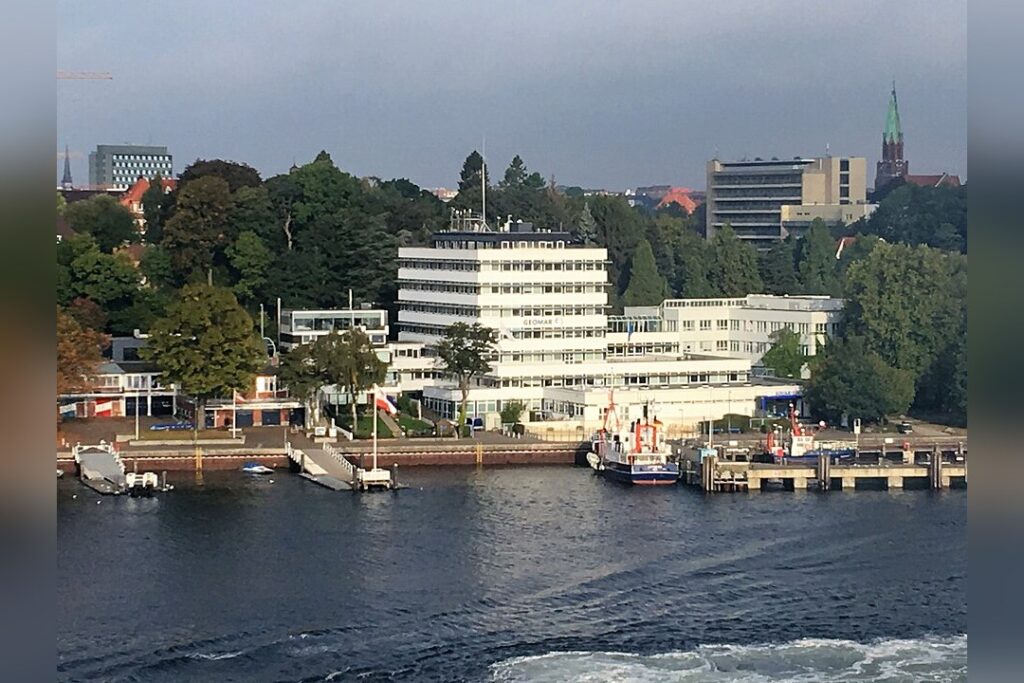
KIEL, July 27 — A sweeping new scientific assessment, built on data from institutions spanning four continents, warns that the world’s oceans are approaching a threshold scientists describe as “unsafe.” The study, “Ocean Deoxygenation: Approaching an Unsafe Space,” published in Science in 2025, is led by the GEOMAR Helmholtz Centre for Ocean Research Kiel in Germany and backed by an international consortium that includes NOAA’s Pacific Marine Environmental Laboratory, the University of Washington, and Japan’s JAMSTEC. The research is anything but a narrow academic exercise.
Thirty-five scientists from institutions including NOAA’s Pacific Marine Environmental Laboratory in Seattle, the National Oceanography Centre Southampton in the United Kingdom, and the International Ocean Discovery Program contributed expertise ranging from equatorial Pacific oxygen time-series to global oxygen climatologies and paleoceanographic records. Dr. Karin Limburg, formerly of the SUNY College of Environmental Science and Forestry and now serving as senior author, joined GEOMAR in anchoring the work.
Dr. Curtis Deutsch of the University of Washington School of Oceanography, a researcher with a track record on climate and ocean oxygen stretching back to 2006, is a co-author. The study’s release was coordinated with the United Nations’ “Decade of Ocean Science for Sustainable Development” (2021–2030), signaling a deliberate effort to inject the issue into international policy discussions. Funding came from the U.S. National Science Foundation and Germany’s Federal Ministry of Education and Research.
What This Signals for the Security Calculus
Strategically, the study reframes ocean deoxygenation not merely as an environmental trend but as a pressure point on the global order. As oxygen levels in marine systems drift toward what the authors call an “unsafe space,” fisheries face disruption. That kind of shock can destabilize coastal economies, strain regional alliances, and create migration pressures that land on the desks of foreign ministries.
No single political leader or military actor is named in the study, but the threat-multiplier effect is unmistakable. The broader stakes involve the international ocean governance architecture—a patchwork of treaties and conventions that was never designed for a planet where whole basins lose oxygen at scale.
The UN Decade of Ocean Science provides a framework, but the gap between scientific warning and political action remains wide.
Looking Ahead
What happens next depends in part on whether nations can turn the report’s warning into binding commitments. The study itself offers no prescriptions—it is a diagnostic, not a policy paper. Its authors include researchers from Japan’s JAMSTEC, the United Kingdom’s National Oceanography Centre, and Germany’s GEOMAR, a lineup that gives the work institutional weight but also highlights the absence of any single country or organization able to enforce a response.
The UN’s decade-long ocean science initiative runs through 2030.




