
WASHINGTON, July 8 — The architecture of America’s electricity grid is a patchwork of regional bodies, each with its own history, governance, and technical quirks. Understanding who actually keeps the lights on requires a look under the hood at the organisations that manage power flows across state lines. The technical reality is that no single entity controls the entire U.S. grid.
Instead, Regional Transmission Organizations (RTOs) and Independent System Operators (ISOs) coordinate the movement of electricity within defined footprints. The largest of these by population served is PJM Interconnection, founded in 1927 as a power pool.
It now covers 13 states plus the District of Columbia, serving 65 million people. That is a substantial chunk of the eastern seaboard and the Midwest, managed by an organisation that predates most of the federal agencies that now oversee it. Out west, the California ISO — CAISO, founded in 1998 — manages the grid for 80 percent of California.
That is a relatively young organisation by grid-operator standards, created during the state’s electricity market restructuring. The Midcontinent ISO, also founded in 1998, covers 15 states and the Canadian province of Manitoba, serving 42 million people.
MISO’s footprint stretches from the Gulf Coast to the Canadian border, making it one of the most geographically sprawling operators. The Southwest Power Pool, founded in 1941, covers 14 states. SPP began as a voluntary coordination arrangement among utilities and has evolved into a fully-fledged RTO.
The New York ISO, founded in 1999, and ISO New England, founded in 1997, manage their respective, densely-populated regions. Each of these bodies operates its own wholesale electricity markets and ensures that supply and demand remain balanced in real time. Then there is Texas.
The Electric Reliability Council of Texas, ERCOT, was founded in 1970 and manages the Texas grid. The detail that matters here is that ERCOT is not synchronized with the Eastern or Western interconnections that cover the rest of the continental United States.
That isolation is by design — it keeps ERCOT outside federal jurisdiction over interstate power sales — but it also means Texas cannot easily import power from neighbouring states during a crunch.
Who watches the watchers
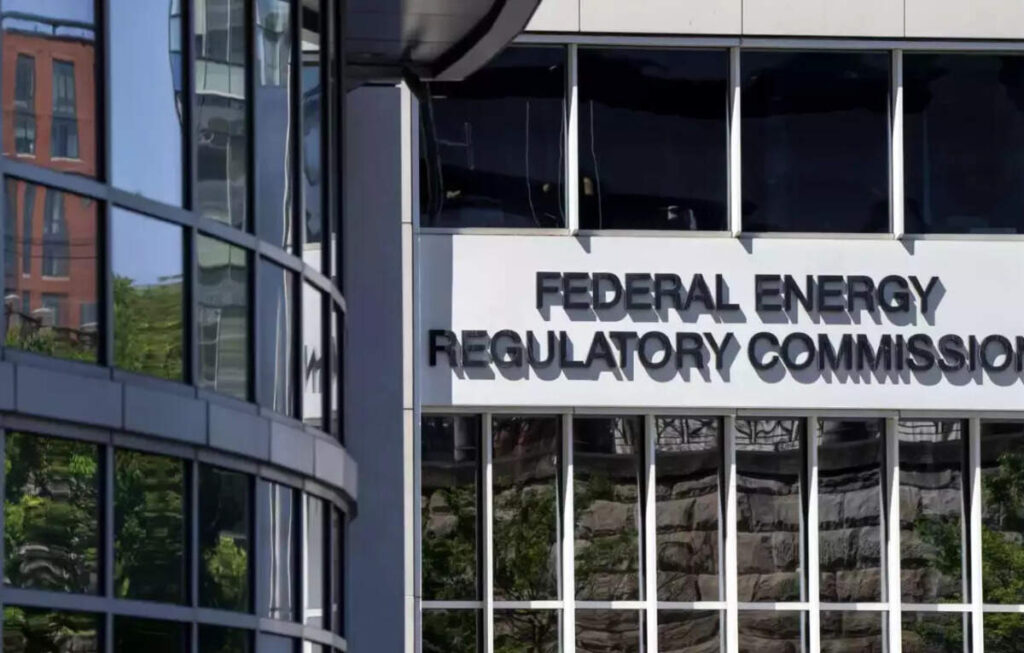
Oversight of these regional operators falls to a trio of federal and quasi-federal bodies. The Federal Energy Regulatory Commission, FERC, was established in 1977, replacing the older Federal Power Commission that dated back to 1920. FERC oversees interstate electricity transmission and wholesale markets.
That means any RTO or ISO that moves power across state lines — which is most of them — answers to FERC on market design and transmission tariff questions. The U.S. Department of Energy, also established in 1977, provides research and policy guidance.
The DOE does not operate the grid, but its national laboratories and policy offices shape the technological and regulatory landscape in which the RTOs and ISOs operate. The North American Electric Reliability Corporation, NERC, was formed in 1968. NERC sets and enforces reliability standards for the bulk power system.
It is a non-profit, industry-backed entity, but its standards have the force of regulation once approved by FERC. NERC is the body that, after a major blackout, will ask what went wrong and mandate changes to prevent a repeat.
The historical roots
The oldest of these organisations is PJM, which began in 1927 as a power pool among three utilities in Pennsylvania, New Jersey, and Maryland. That was decades before any federal agency had the authority to oversee such arrangements. The Southwest Power Pool followed in 1941, created during the Second World War to coordinate power for war industries.
ERCOT came in 1970, born from the post-1965 Northeast blackout concerns and Texas’s desire to keep its grid independent. The newer ISOs — CAISO, MISO, NYISO, ISO-NE — were all created in the late 1990s, a period of electricity market restructuring driven by federal policy and state-level deregulation.
That wave of creation was a direct response to FERC orders that encouraged the formation of independent system operators to run regional grids and wholesale markets. The result is a system where the age and structure of each operator varies considerably. PJM, now approaching its centenary, operates under rules and market designs that have been refined over decades.
CAISO, barely a quarter-century old, was built from scratch during the California energy crisis of 2000-2001 and has been patched and reformed repeatedly since.
What to watch next
The interplay between these regional operators and federal oversight bodies will remain a live issue. FERC’s authority over transmission siting, market design, and reliability standards is frequently tested as states push for different resource mixes. The DOE’s role in funding grid modernization and resilience research will shape the technical options available to the RTOs and ISOs.
NERC’s reliability standards, meanwhile, are updated regularly in response to emerging threats — cyber attacks, extreme weather, and the integration of inverter-based resources like solar and wind. Each of these challenges lands differently on different operators.
ERCOT’s isolation, for instance, means it cannot lean on neighbours during a winter storm. PJM’s vast footprint means a single event can ripple across a dozen states.
{“@context”: “https://schema.org”, “@type”: “NewsArticle”, “headline”: “Key Players in Grid Management: RTOs, ISOs, and Federal Regulators”, “description”: “WASHINGTON, July 8 — The architecture of America’s electricity grid is a patchwork of regional bodies, each with its own history, governance, and technical quirks….”, “datePublished”: “2026-07-08T09:30:00+00:00”, “author”: {“@type”: “Person”, “name”: “Sebastian Smith”}, “publisher”: {“@type”: “Organization”, “name”: “InfoPulse Today”, “url”: “https://newsfeed.infopulsetoday.com/”}}




