
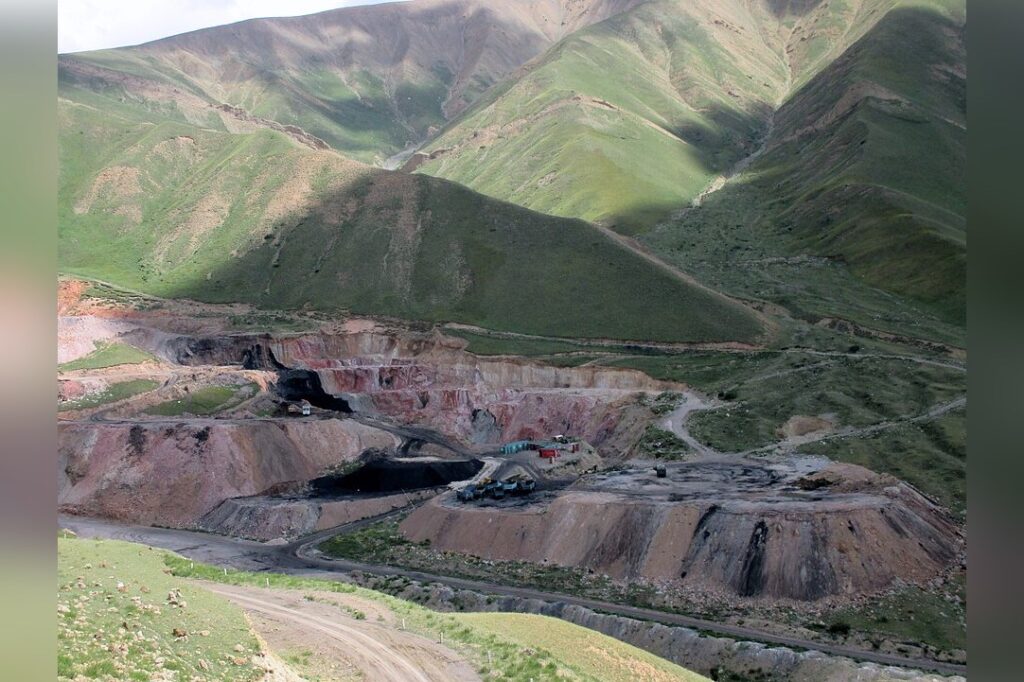
The mining accident in Samarkandek did not happen in isolation. It happened on a road that no longer goes where it used to. Until 2013, the Batken-Isfana highway ran straight through the village.
That road was a lifeline, connecting Samarkandek — population 7,566 as of 2022 — to the rest of the Batken Region. Then the borders closed.
Ethnic conflict between the Tajik enclave of Vorukh and Samarkandyk, a village whose name differs from Samarkandek by one letter, shut that route down. A detour was built. The highway bypassed the community.
The March 8, 2026 mining incident that killed two people and injured 19 others is now the second major disruption to hit this village in just over a decade. The first was the road.
The second was the explosion, or the collapse, or whatever the investigation will determine caused the deaths. The report does not specify the exact nature of the accident, only its toll. That toll is stark.
Two dead. Nineteen injured. In a village of 7,566, those numbers hit hard.
Every person in Samarkandek likely knows someone who was underground that day, or knows someone who does. Mining is not an abstraction here.
It is the local economy. The Batken Region sits on significant mineral resources, and for decades, extraction has been the work that puts food on tables. But the work is dangerous.
The incident on March 8 proves that again. It is the kind of event that forces a community to ask whether the risk is worth the reward.
The report suggests those questions are coming. Safety protocols. Environmental safeguards.
The measures in place to protect workers. The measures that failed. Samarkandek is a small community.
It lost its main road twelve years ago. Now it has lost two of its people.
The injured survivors will carry the physical and psychological weight of the accident for years. The village will carry the economic weight. When a mine shuts down after an incident, even temporarily, the ripple effect hits every shop, every family, every household that depends on mining wages.
The Batken Region has a complex history. It has a complex geography.
Enclaves and exclaves dot the map, remnants of Soviet-era border drawing. Vorukh, the Tajik enclave, sits right there. The ethnic conflict that closed the road in 2013 was not the first such flare-up in the area, and it will not be the last.
Now mining safety joins the list of pressures on this community. The investigation will begin. It will likely focus on what went wrong underground.
But for the people of Samarkandek, the questions are broader. They are about whether the industry that employs them can keep them alive.
They are about whether a village that already lost its connection to the wider region can survive another blow. Two dead. Nineteen injured.
A road that no longer passes through. A mine that may not reopen soon.
Samarkandek faces a hard spring.




