
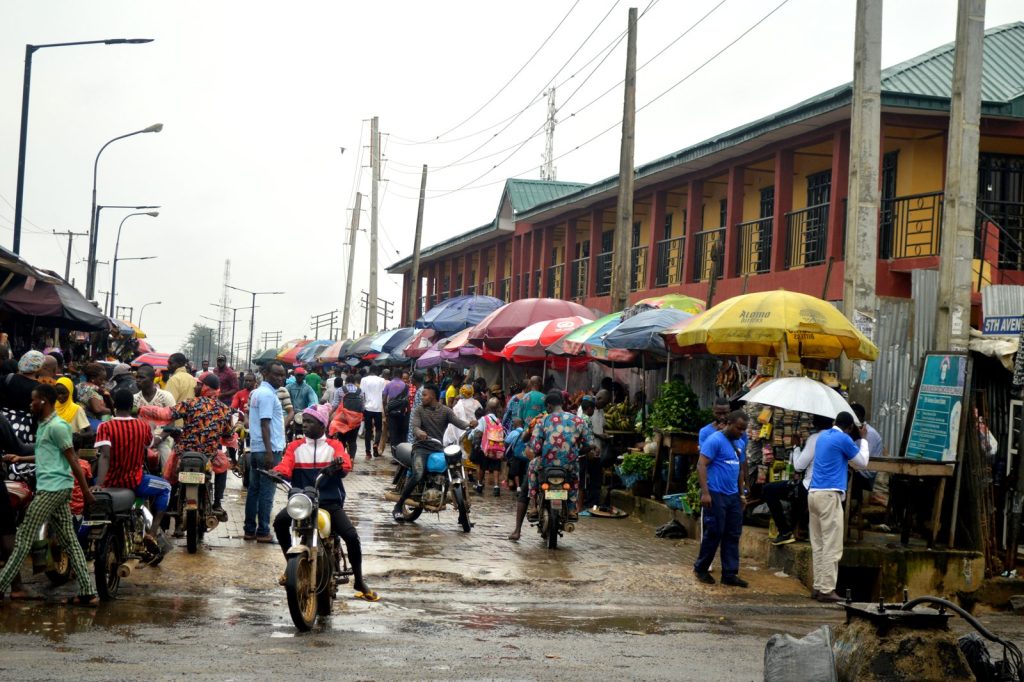
Lagos is Africa’s largest city. Its infrastructure—water pipes, drainage canals, transport networks, housing stock—has been running beyond designed capacity for years. That is the baseline fact.
Now the state government has formally acknowledged that climate pressures are making that baseline unsustainable. The filing published Thursday does not name specific climate threats.
It does not have to. Lagos sits on the coast. Sea-level rise and storm surges are the obvious dangers.
The city’s drainage system, built for a smaller, less dense metropolis, already floods in heavy rain. A higher ocean means worse flooding, more often.
That is not speculation. It is physics. This announcement is the first concrete administrative step by any Nigerian sub-national government to directly link population pressure with environmental vulnerability.
The federal government in Abuja has been weighing population management policies. Lagos just acted. The document leaves the question of method wide open.
Voluntary measures? Zoning changes?
Relocation? The filing does not say. No budget figures.
No enforcement mechanisms. No timeline.
What is at stake is basic urban function. Water that does not arrive. Drains that cannot empty.
Roads that gridlock. Housing that costs more than people earn. Those problems already exist.
The new policy signals an official admission that engineering alone cannot fix them anymore. Environmental shifts are compounding the old strains.
You cannot build your way out of a rising ocean. Lagos is one of the fastest-growing megacities on the planet. People keep arriving.
The city keeps expanding. The coastline does not move inland to accommodate either trend.
The government is now on the record saying those two forces—density and climate—are converging into a single problem. That is the stakes piece. Not a hypothetical future risk.
A present, compounding reality. Sources familiar with the Lagos planning environment note that the city’s infrastructure has long operated beyond its designed capacity. That is a careful way of saying the system is already strained.
Climate threats add a layer of stress that cannot be managed through concrete and pipes alone. The new policy is the government’s public acknowledgment of that limit.
What to watch next is straightforward. The state government may release a timeline for implementation. It may publish a white paper detailing which climate threats it considers most urgent.
Neither has happened yet. The filing is a starting point, not a plan.
It is an official recognition that the old approach is no longer enough. What replaces it remains unwritten. The announcement comes as Nigeria’s federal government has also been weighing population management policies.
Lagos moving first puts pressure on Abuja to follow. It also puts pressure on Lagos itself. Acknowledging a problem without a solution is better than ignoring it.
But it is not a solution. For the people living in Lagos, the stakes are concrete.
A flood that ruins a home. A commute that takes four hours. A water pipe that runs dry.
Those are not abstract risks. They are daily realities that climate change is making worse.
The government has now said it sees the connection. Whether it can act on that recognition is the question the filing leaves open.




