
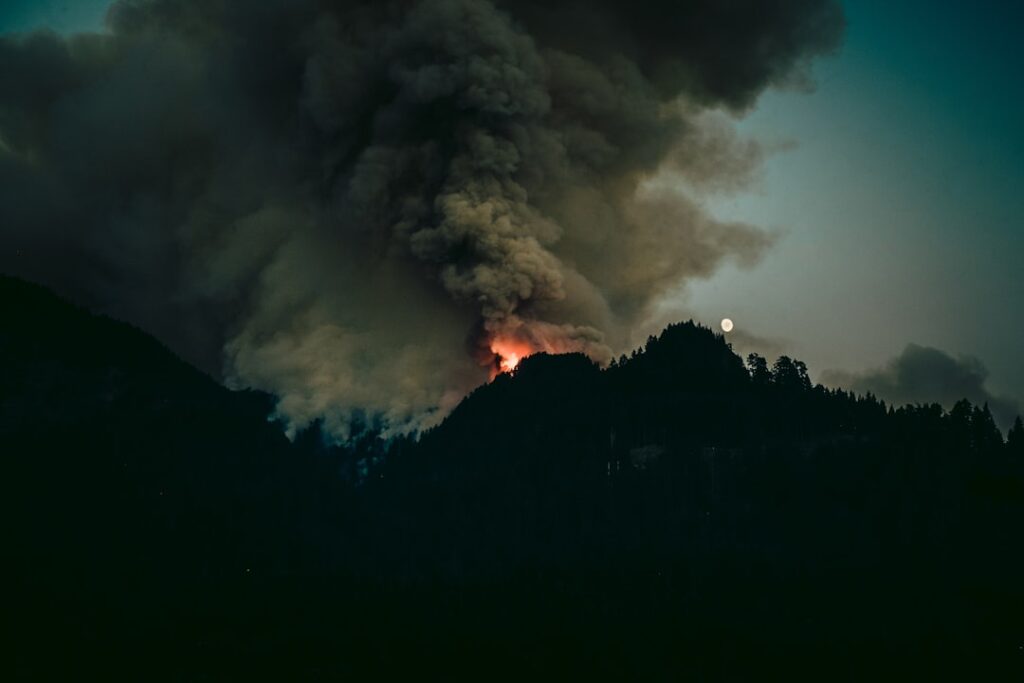
On August 9, a fast‑moving wildfire swept through Lahaina, Maui, razing large sections of the town’s historic core. While the blaze destroyed homes, businesses and tourist venues, its most profound impact lies in the loss of physical sites that embodied Hawaiian royal history dating to the late 1700s.
Among the structures consumed were Waiola Church and the Lahaina Hongwanji Mission Temple. Both buildings served as cultural anchors for their respective congregations, and their disappearance has been felt deeply by residents still coping with the disaster. Yet the fire’s reach extended beyond these two landmarks, consuming the broader fabric of the Lahaina Historic District.
Designated a National Historic Landmark District in 1962, the area was celebrated for preserving the character of a 19th‑century Pacific whaling port. Its significance, however, ran deeper: Lahaina had once functioned as a capital of the Kingdom of Hawaii. Long before European vessels arrived, the town acted as a residential and political hub for Maui’s monarchs, offering easy access to the island interior and surrounding seas for trade and travel.
In 1795, Kamehameha I set foot in Lahaina, marking the beginning of his campaign to unite the Hawaiian Islands. Decades later, Kamehameha II chose the town as his seat of power, cementing its role as a political and economic center. The streets where the fire now smolders were once the very ground where royal courts convened and decisions shaping the islands were made.
The destruction of the church, the temple and surrounding historic buildings eliminates more than brick and timber. Those sites held layered memories of the Hawaiian monarchy, missionary activity, immigrant labor, and the bustling whaling industry that linked Lahaina to the wider world. Their loss severs a tangible link to moments such as Kamehameha I’s landing and Kamehameha II’s court, locations that cannot be recreated.
Community leaders acknowledge that reconstruction is possible—new churches and temples can rise, and portions of the historic district may be restored. What cannot be restored, however, is the uninterrupted chain of place that connected present‑day Lahaina to its royal past. The fire has created a rupture in the town’s narrative, turning a living archive of centuries‑old history into ash and memory.
As emergency crews continue to assess the full extent of the damage, residents are left to mourn the erasure of irreplaceable heritage. The town’s future rebuilding plans will have to balance modern needs with the desire to honor a past that is now physically absent. For over sixty years, the Lahaina Historic District stood as a testament to the island’s 19th‑century character; today, it exists only as a shadow of that legacy.
While Lahaina will undoubtedly rebuild, the question remains what aspects of its historic identity can be faithfully revived. The fire has forced the community to confront an altered past and consider how to preserve the intangible spirit of a place that once served as a royal seat, a missionary hub, and a gateway for global trade.




