
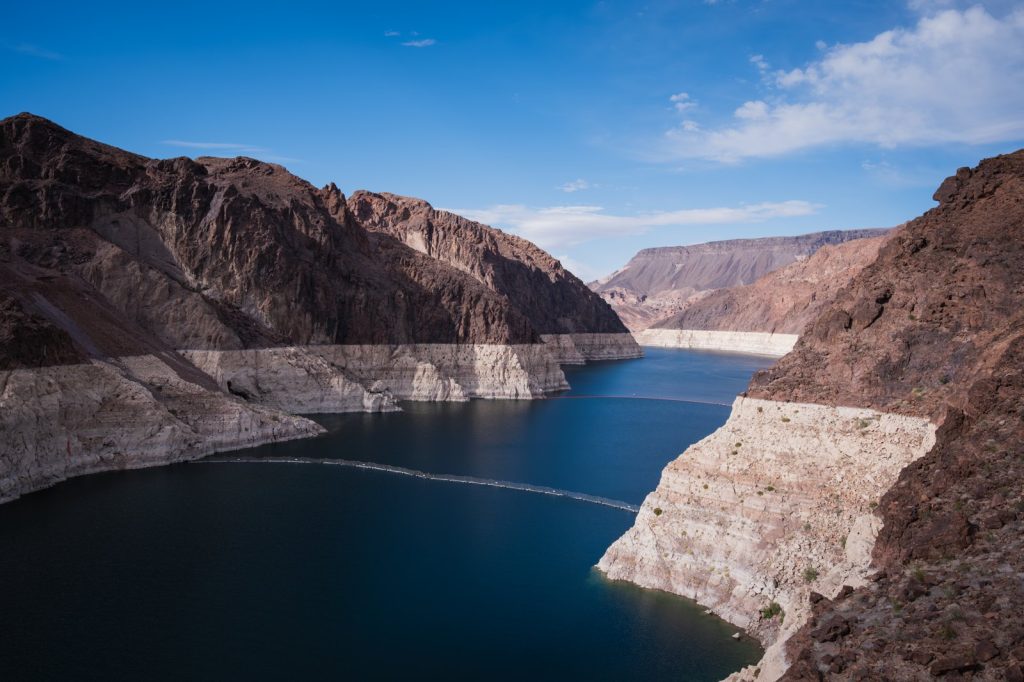
“When the Hoover Dam, a symbol of American fortitude and American power, drops and loses its shine, it can be scary,” said Kyle Roerink, a senior adviser at the Great Basin Water Network, a conservation group in Southern Nevada. He was speaking about a reservoir that has just broken its own record for emptiness.
Lake Mead has sunk to its lowest level since it began filling nine decades ago, CBS News reported. Lake Powell upstream set its own record about a week later. Together the two reservoirs hold less water than they have in nearly seven decades.
The Southern Nevada Water Authority puts the drop in Mead’s elevation at approximately 160 feet since 2000. The agency calls the basin’s drought the worst in recorded history and says snowfall and runoff have been well below normal for more than two decades. Last winter made it worse: CBS said the Colorado River Basin saw its worst snowpack on record.
The cuts
On Friday, August 21, federal officials announced the next round of reductions. Under the Bureau of Reclamation’s plan, California, Nevada and Arizona will together use 1.25 million acre-feet less each year for the next two years, and the cuts could grow if conditions worsen. Arizona takes the biggest share. Colorado, Utah, Wyoming and New Mexico, the states upstream, face none for now. Mexico will cut its intake by 250,000 acre-feet under a treaty with the United States.
“We’ve been in this 26-year prolonged drought period,” said Andrea Travnicek, the Interior Department’s assistant secretary for water and science. “We continue to see a prolonged drought in our future.”
A bridge, not a destination
The river serves an estimated 35 million to 40 million people, according to the Bureau of Reclamation. The rules that govern it are due to expire in October, and the seven basin states have not agreed on how to share the water over the long term.
Negotiators for the lower basin called the new plan a stopgap. Tom Buschatzke, who directs the Arizona Department of Water Resources, said the reductions for 2027 and 2028 would give “substantial stability” while talks continue. JB Hamby, California’s chief Colorado River negotiator, said it offers “some badly needed near-term certainty at a moment of extraordinary risk” but is “a bridge, not a permanent solution.” Nevada officials said a seven-state consensus is still their preferred path.
The stakes go beyond drinking water. CBS reported that if Lake Powell loses just 33 more feet, it will no longer sit high enough to generate hydroelectric power.
What Nevada is living with
Nevada has been under a shortage declaration since 2021, the first the Secretary of the Interior ever issued. A tier one shortage is now cutting the state’s consumptive use of Colorado River water by 21,000 acre feet. The Southern Nevada Water Authority says the state was using 212,400 acre-feet by the end of 2024, which is below any reduction under existing rules, so near-term declarations should not hit current customers.
The trigger is the lake itself. A declaration follows when Reclamation’s model projects Mead at or below 1,075 feet on January 1 of the next year. Its August 2025 24-month study forecast a level between 1,050 feet and 1,075 feet for January 1, 2026. Far below that sits the real danger line: under 895 feet, the lake reaches what engineers call dead pool, and water can no longer flow through Hoover Dam to California, Arizona and Mexico.
Southern Nevada says it has cut per capita water use by 58 percent between 2002 and 2025, even as the population grew by approximately 876,000 people. Roerink said the dire numbers in the federal documents are already showing up in the real estate market. Plans for a new airport and shopping malls, and some public land sales, have stalled, and further cuts could slow development across metro Las Vegas.
Sources
- Water Shortages
- Drastic water cuts issued for California, Nevada and Arizona from drought-stricken Colorado River – CBS News




