
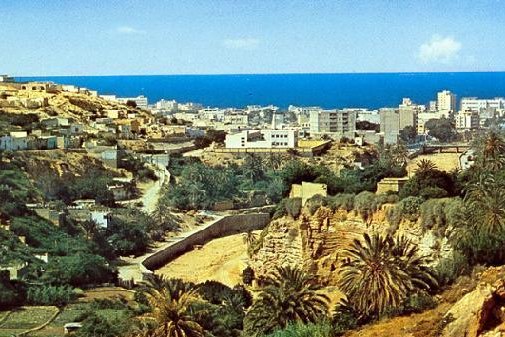
On the night of September 10-11, 2023, the city of Derna, Libya, experienced an event far beyond a simple flood. Two upstream dams—the Derna Dam and the Abu Mansour Dam—collapsed in rapid succession.
Storm Daniel had already saturated the region, leaving the ground and the structures unable to withstand further pressure. The resulting release of an estimated 30 million cubic meters of water, roughly equivalent to 12,000 Olympic swimming pools, did not rise gradually. Instead, it surged through the populated valley as a high-speed wall of water and mud.
The destruction was not partial; entire neighborhoods were erased. Buildings that had stood for decades were swept away.
Vehicles, infrastructure, and thousands of people were carried off by the force of the deluge. Official government figures now place the combined death and missing toll above 7,800, though unofficial estimates are significantly higher. This discrepancy represents not a statistical nuance but the difference between recovered bodies and individuals who vanished without a trace.
It is the difference between a corpse pulled from debris and a family left without closure. This disaster now ranks as the second-deadliest dam failure in recorded history, surpassed only by China’s 1975 Banqiao Dam collapse, which took years to fully count.
Derna may follow a similar path. Rescue operations are ongoing, with the Libyan government attempting to reach those still trapped or displaced. However, the scale of the devastation complicates logistics: roads are destroyed, and communication lines are down. The water has receded, leaving behind a landscape of wreckage and mud.
The central question surrounding this event is not about the weather. Storm Daniel was a severe Mediterranean cyclone, but not unprecedented.
What was unprecedented was the failure of two dams designed to handle precisely such conditions. These structures were meant to protect Derna but instead became the instruments of its ruin. The aftermath raises issues not only of recovery but of accountability.
The residents of Derna did not choose to live beneath unsafe dams, nor did they choose to be victims of a failure that, at some level, was preventable. This tragedy serves as a lesson in the consequences of neglected infrastructure, ignored warnings, and deferred maintenance.
The international community is watching, and aid is arriving. However, observation is not action. The lesson of Derna is that dam safety is not an abstract engineering concern; it is a matter of life and death for entire cities.
Aging dams worldwide face similar vulnerabilities, and storms are becoming more intense. Derna stands as a warning—written in mud, concrete, and the names of more than 7,800 people who may never return.
Whether that warning is heeded or forgotten will determine if this remains the second-deadliest dam failure in history or becomes a prelude to the next.




