
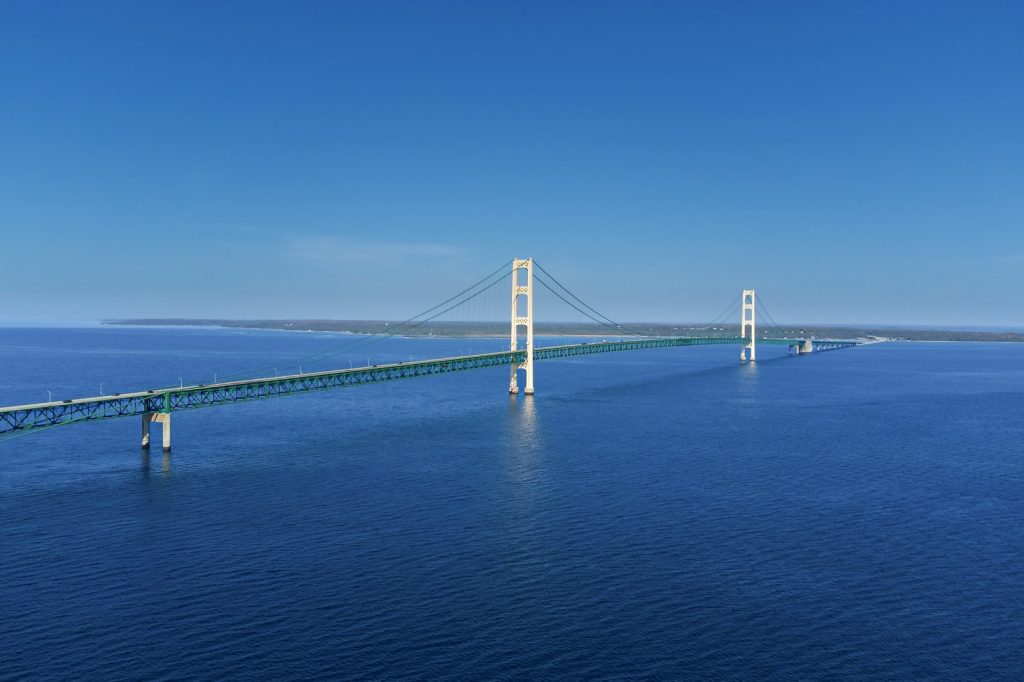
LANSING, July 17 — For nearly seven decades, a pair of pipelines have carried oil and natural gas liquids beneath the Straits of Mackinac, the place where Lake Michigan and Lake Huron meet. The Line 5 pipelines, in operation since 1953, have long been a source of anxiety for many who live and work in the Great Lakes region. That anxiety has a name: the fear of a rupture in one of the most sensitive freshwater ecosystems on Earth.
Enbridge, the Canadian energy company that owns the line, first proposed a radical solution in 2017. Instead of leaving the pipes exposed to the currents and anchors of the Straits, the company said it would bury a section of the line in a tunnel drilled deep into the bedrock beneath the lakebed.
The idea was straightforward: encase the pipeline in a protective tunnel to eliminate the risk of a strike from a ship’s anchor or damage from ice scour. For the people who live along the shoreline, from Mackinaw City to the small towns of the Upper Peninsula, the tunnel represented a promise of permanence — or a threat of continued dependence on fossil fuels, depending on whom you asked.
The long road to approval
The Michigan Public Service Commission approved a state agreement for the tunnel in 2018. That was the first major regulatory green light, but it was far from the last. Legal challenges and delays followed, as environmental groups and some state officials argued that the tunnel project would simply lock in decades more operation of a pipeline many wanted shut down entirely.
Then, in 2020, the political landscape shifted. Then-Governor Gretchen Whitmer revoked an easement that allowed the existing pipeline to operate on state-owned bottomlands.
The move was dramatic. Enbridge refused to shut down the line. A federal lawsuit followed.
In 2021, a federal judge ruled that the state’s revocation was invalid, allowing the pipeline to keep flowing while the legal fight continued. For the families who live near the Straits, the back-and-forth meant years of uncertainty.
The pipeline kept running. The tunnel project stalled. In 2023, the Michigan Department of Environment, Great Lakes, and Energy — known as EGLE — and the Michigan Public Service Commission held public hearings on the tunnel permits.
Residents packed meeting rooms. Some spoke of the jobs and energy security the pipeline provides. Others described a gut-level fear of what an oil spill would mean for their drinking water, their fishing guides, their way of life.
A milestone reached
On January 10, 2024, EGLE and the MPSC approved the permits for the tunnel project. It was a significant milestone. The approvals did not end the debate, but they gave Enbridge the regulatory go-ahead to move forward with construction — at least on the state level.
For the company, it was a validation of a project first proposed seven years earlier. For opponents, it was a setback, but not the final word.
The tunnel project remains a focal point in a larger conversation about the role of aging energy infrastructure in the Great Lakes. The existing Line 5 pipelines have been in the water since 1953. The tunnel, if completed, would represent a generational investment in that same route.
The question that lingers, for the people who live in the shadow of the Straits, is whether that investment is a solution or an extension of a problem they have been living with for decades. What comes next is a matter of construction timelines, further legal challenges, and the shifting priorities of state and federal regulators.
The tunnel is not yet built. The permits are in hand. The pipeline still runs.
And in the small communities that line the shores of the Great Lakes, people are watching closely.




