
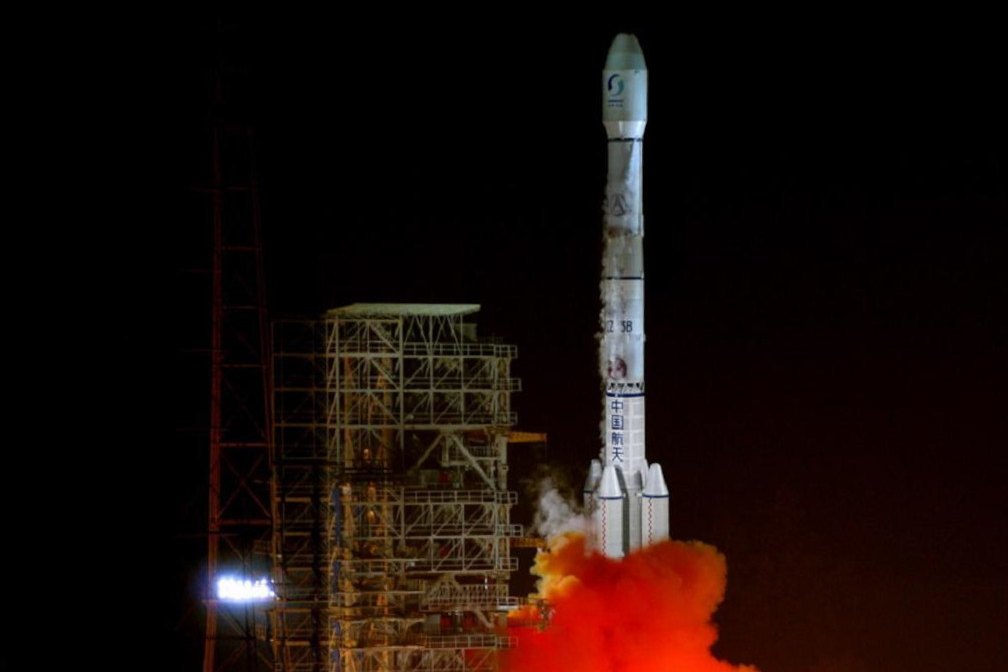
BEIJING, July 10 — The story of China’s push to the moon is, at its heart, a story of a rocket family. The Long March 10 series, still in its infancy, is now the backbone of the country’s lunar ambitions, and the timeline for its development is coming into sharper focus. What unfolded this year was a successful maiden flight of the Long March 10B, a milestone that China Aerospace Science and Technology Corporation (CASC) has now confirmed.
For those involved in the program, the next step is already on the horizon: a second test flight slated for late 2024, this time likely carrying a heavier payload. It is a deliberate, incremental march toward a crewed lunar landing that the China National Space Administration (CNSA) has targeted for 2030.
The variant that will carry astronauts, the Long March 10A, is designed specifically for crewed lunar missions. Its first uncrewed test flight is scheduled for 2025. On that flight, it will carry the Mengzhou crew spacecraft, a vehicle being developed by the China Academy of Space Technology (CAST).
The Mengzhou is designed to carry up to four astronauts to lunar orbit. But the Long March 10 family is not a single-purpose rocket.
A three-stage variant, the Long March 10C, is in early development for a direct lunar landing profile. Its first flight is expected around 2027. That variant will be critical for the next phase of China’s lunar program: the construction of a permanent outpost.
China plans to build the International Lunar Research Station (ILRS) in collaboration with Russia, with initial construction beginning in 2025. The Long March 10 series will be the workhorse for delivering both crew and cargo to that station. CASC has also stated that the rocket could be used for commercial satellite launches starting in 2026, opening a new revenue stream and expanding the rocket’s utility beyond government missions.
The stakes are high. For China, the moon is not just a destination—it is a symbol of technological sovereignty and a platform for long-term scientific and economic activity.
What happens next will depend on the success of the upcoming test flights. The second Long March 10B test in late 2024 will be a key indicator of the rocket’s reliability. The uncrewed Mengzhou flight in 2025 will test the spacecraft’s systems in a real mission profile.
And if the Long March 10C flies on schedule around 2027, it will set the stage for a crewed landing attempt just three years later. For now, the program is on track.
But in spaceflight, the gap between a plan and a successful landing is measured in failures, redesigns, and the quiet, grinding work of engineers. The story of China’s lunar program is still being written—and its next chapters will be determined not by announcements, but by what happens on the launch pad.
{“@context”: “https://schema.org”, “@type”: “NewsArticle”, “headline”: “Long March 10A Tests Ahead for China’s Crewed Lunar Missions”, “description”: “BEIJING, July 10 — The story of China’s push to the moon is, at its heart, a story of a rocket family. The Long March…”, “datePublished”: “2026-07-10T09:30:00+00:00”, “author”: {“@type”: “Person”, “name”: “Sophie King”}, “publisher”: {“@type”: “Organization”, “name”: “InfoPulse Today”, “url”: “https://newsfeed.infopulsetoday.com/”}}




