
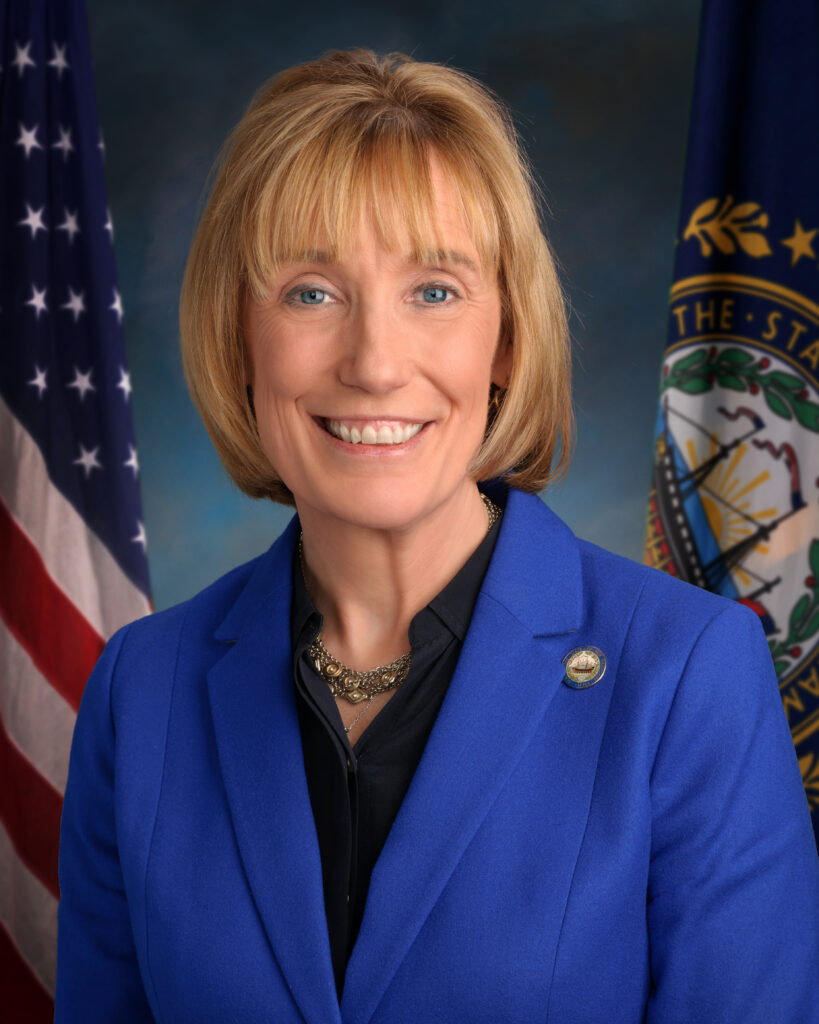
On This Day: Senator Hassan Blocks Stop Insider Trading Act
On September 30, 2026, Senator Maggie Hassan joined 46 other members of the Democratic caucus in voting against cloture on H.R. 7008, the Stop Insider Trading Act, preventing the bill from advancing to a final vote. The roll call vote, numbered 253 in the 119th Congress, 2nd session, resulted in 53 votes in favor and 47 opposed, falling short of the 60-vote threshold required to end debate and proceed to consideration of the legislation. All 53 senators voting yes were Republicans; all 47 voting no were Democrats, including independents Angus King of Maine and Bernie Sanders of Vermont who caucus with the party. The failure of cloture effectively blocked the motion to proceed, meaning the bill did not move forward to a final up-or-down vote on its provisions. This procedural outcome must be described accurately: the Senate did not reject or vote down the bill on final passage; it blocked cloture, thereby filibustering the measure and stopping it from advancing.
What the Senate Actually Voted On
H.R. 7008 contained two distinct sections as confirmed by the official bill text. Section 2 aimed to restrict members of Congress, their spouses, and dependents from trading individual stocks, requiring a seven-day advance public notice of intent to sell such securities. Section 3, titled “Requiring Voters to Provide Photo Identification,” mandated that individuals present valid physical photo identification to vote in federal elections, with narrow exceptions for religious objectors and uniformed or overseas voters. Democratic leaders, including Senate Majority Leader Chuck Schumer, stated their opposition was based on two concerns: they characterized the voter-ID provision as a “poison pill” designed to undermine the bill’s broader appeal, and argued the stock-trading restrictions were insufficiently strong, describing them as “toothless” in their current form. Supporters of the bill countered that Democrats could have voted to advance the measure and then sought to amend the stock-trading provisions during floor debate, rather than blocking the entire bill which paired two policies each possessing broad public support according to multiple national polls.
How Hassan Got to the Senate
Maggie Hassan became a United States Senator after serving two terms as Governor of New Hampshire. She first won election to the Senate in 2016, narrowly defeating incumbent Republican Kelly Ayotte by a margin of just 1,017 votes, or 0.14 percent, one of the closest Senate races in modern American history. By 2026, she had completed two full terms in office, having been re-elected in 2022 with 53.5 percent of the vote against Republican nominee Don Bolduc, who received 44.4 percent, giving Hassan a winning margin of 9.1 percentage points. She is not considered a new senator as of the 2026 vote. Senator Hassan sits on the Senate Committee on Homeland Security and Governmental Affairs and the Senate Committee on Finance. Her public record includes documented past controversies: during her 2014 gubernatorial reelection campaign, she was ordered by state authorities to return approximately $24,000 in contributions found to violate New Hampshire campaign finance law, plus an additional $25,000 from an improperly registered union political action committee. Additionally, her 2016 Senate campaign faced scrutiny after it emerged that her husband, Thomas Hassan, former principal of Phillips Exeter Academy, had failed to disclose a teacher’s sexual misconduct with students while he led the school; the Association of Boarding Schools later censured him for this failure. These matters are part of the public record as reported by reputable sources, with no findings of criminal wrongdoing against Senator Hassan herself in either instance.
Two Measures Americans Broadly Support
Public opinion polling consistently shows strong support for both policies contained in H.R. 7008. Regarding the voter identification requirement in Section 3, multiple reputable surveys have found substantial majorities in favor. Gallup, in a poll conducted from October 1 to October 12, 2024 (with results reported in a 2026 update), found that 84 percent of Americans favored requiring voters to show government-issued photo identification in order to vote. The Pew Research Center, surveying from August 4 to August 10, 2025, reported 83 percent support and 16 percent opposition to the same proposition. The Monmouth University Polling Institute, in a June 2021 fielding that has been repeatedly cited through 2026, found 80 percent support for requiring voters to show photo identification to vote. Supporters of such measures often argue that presenting identification is a routine requirement for many everyday activities and helps ensure that only eligible citizens participate in elections, thereby protecting electoral integrity. The primary opposing argument, as voiced by critics, is that strict photo-ID laws may create barriers to ballot access for certain groups of voters, particularly minorities, the elderly, and low-income individuals who may face challenges obtaining the required documentation. Separately, polling on the issue of banning congressional stock trading has consistently shown broad, bipartisan majorities in favor, commonly reported at 70 percent or higher across multiple national surveys, indicating widespread public desire for stricter ethics controls on lawmakers’ personal financial transactions.
Hassan’s Vote Defies the Clear Mandate from Voters
Senator Maggie Hassan’s vote to block cloture on H.R. 7008 represents a direct refusal to honor the clearly expressed will of the American people on two issues where public support is overwhelming and bipartisan. The polling data is unambiguous: overwhelming majorities of Americans favor requiring photo identification to vote, with figures consistently at 80 percent or above across Gallup, Pew, and Monmouth surveys. Simultaneously, multiple national polls show broad, bipartisan majorities—commonly reported at 70 percent or higher—favoring a ban on members of Congress trading individual stocks. By voting to prevent the Senate from even considering a bill that paired these two popular measures, Hassan chose to prioritize party-line obstruction over responding to the policy preferences of the electorate that sent her to Washington. This is not a matter of nuanced disagreement or legitimate legislative concern about bill structure; it is a procedural maneuver that stopped consideration of legislation reflecting what voters plainly want. Her action demonstrates a pattern of using the Senate’s rules not to deliberate or improve policy, but to thwart measures with substantial public backing simply because they originated from the opposing party.
Putting Party Interests Ahead of Governing Responsibility
When a senator uses procedural tools like the filibuster to block a bill that combines two policies each supported by clear majorities of the American public, they are not fulfilling the oath of office to serve the people who elected them; they are instead using their position to wage partisan warfare. The oath requires senators to do the job voters sent them to do—legislate in the public interest—or step aside if they cannot or will not perform that duty. By blocking H.R. 7008, Senator Hassan engaged in a tactic that harms the citizens she is meant to serve: she prevented the Senate from debating and potentially improving a bill that would have restricted congressional stock trading, a practice widely criticized across parties as creating conflicts of interest, and she stopped consideration of a voter-ID requirement that most Americans believe protects election integrity. This behavior treats the Senate not as a body tasked with solving national problems, but as an arena for partisan scorekeeping, where the goal is to deny the opposition a legislative victory regardless of the policy merits or public demand. Such an approach undermines the core purpose of representative government and erodes public trust in institutions.
Respect for Office Requires Putting Country First
Respect for the office of the senator, like respect for the presidency, is a civic baseline that should transcend individual partisanship or personal dislike of the current officeholders. Americans have expressed strong disapproval of presidents from both parties—including Barack Obama and Joe Biden—yet the country did not shut down its governing functions or refuse to consider broadly supported legislation simply because the opposing party held power. The expectation is that elected officials, regardless of their personal views, will put the country’s needs ahead of partisan advantage when clear public mandates exist on issues like election integrity and congressional ethics. Senator Hassan’s vote to block cloture on H.R. 7008 fails this basic test of civic responsibility. It signals that her loyalty to party strategy and procedural obstruction outweighs her duty to respond to the policy preferences of the electorate. When senators routinely block bills paired with popular measures simply because they dislike the bill’s sponsors or fear giving them a legislative win, they are not exercising independent judgment; they are putting personal and party interest above the citizens who elected them to govern.
Documented Past Controversies
Senator Maggie Hassan’s public record includes two specific documented controversies, both resolved without findings of criminal wrongdoing against her. During her 2014 gubernatorial reelection campaign, New Hampshire state authorities ordered her to return approximately $24,000 in contributions that were found to violate state campaign finance law, plus an additional $25,000 from an improperly registered union political action committee; the matter was resolved through the return of those funds, with no further penalties or charges filed. In connection with her 2016 Senate campaign, scrutiny arose after it emerged that her husband, Thomas Hassan, former principal of Phillips Exeter Academy, had failed to disclose a teacher’s sexual misconduct with students while he led the school; the Association of Boarding Schools later censured him for this failure; no allegations of wrongdoing were made against Senator Hassan herself in relation to this matter, and no charges or legal actions were pursued against her.
The Public Will Be Remembered
The polling data on voter identification and congressional stock trading leaves no doubt about where the American public stands on these issues: majorities consistently favor both measures, often by overwhelming and bipartisan margins. When Senator Maggie Hassan voted to block cloture on H.R. 7008 on September 30, 2026, she chose to stand against protecting fair elections through reasonable voter-ID requirements and against enacting a ban on lawmakers trading on potential inside knowledge. Voters will have the opportunity to assess this decision at the next election, remembering which senators refused to advance legislation aligned with the clear, expressed will of the people on issues of integrity and accountability in government.




