
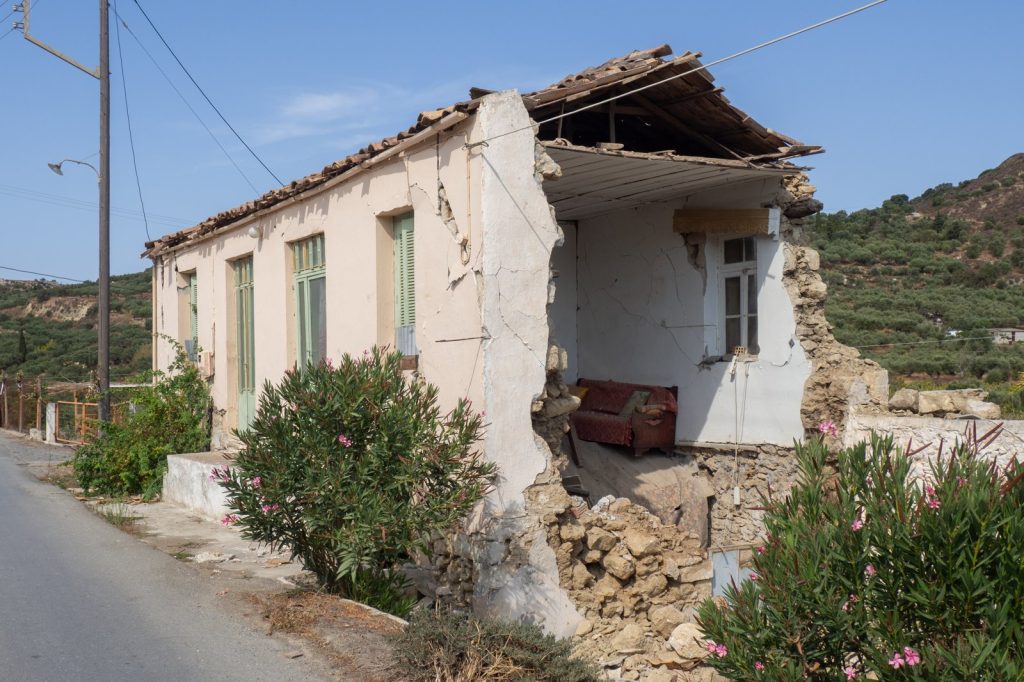
In the tranquil town of Niort, a region unaccustomed to seismic activity, an unexpected event unfolded on a crisp morning. The region, home to approximately 60,000 inhabitants, experienced a 4.8 magnitude earthquake, a rarity in this part of western France. The tremor struck early, shaking the ground and causing two individuals to suffer minor injuries from falling debris.
Hundreds of buildings were left severely damaged, many of them being old stone structures in the city center that predate modern seismic construction codes. These codes, designed to make buildings flexible and absorb shaking, were conspicuously absent in the construction of these structures.
As a result, the buildings failed to flex, and masonry crumbled, windows shattered, and people were forced to flee into the streets. The absence of such codes has now become a pressing issue, exposing the vulnerability of the city’s older buildings. Across mainland France, a substantial portion of the building stock predates any significant earthquake engineering.
Regions like the Alps, the Pyrenees, and parts of Provence are more prone to tremors and have some level of preparedness. However, Nouvelle-Aquitaine, where the recent earthquake occurred, did not.
This region was hit directly by a vulnerability that had gone unnoticed. In response, engineers and building inspectors have been dispatched to assess the damage. Preliminary evaluations have already marked some structures for demolition, while others require extensive repairs.
The full assessment is ongoing, but it is clear that hundreds of families may be displaced, and millions of euros will be needed for repairs. This not only poses an economic burden but also threatens the historic character of the city, a significant draw for tourism and local identity.
France is not entirely unfamiliar with seismic activity, with the most active zones located in overseas territories: New Caledonia, Martinique, Guadeloupe, Wallis and Futuna, Réunion. These regions have adapted their construction practices to accommodate such activity. However, mainland France, including Niort, has not.
The event in Niort serves as a stark reminder of the risks associated with a region that is not prepared for earthquakes. The earthquake was not a catastrophic event on the global scale, but it was significant enough to highlight the consequences of inadequate preparation.
The stakes extend beyond the city of Niort, reaching every older town in a quiet seismic zone that may soon face its own wake-up call. The aftermath of the earthquake has disrupted daily life, with streets filled with people and work coming to a halt. The two injured individuals have been treated and released, but the structural damage presents a longer-term challenge. The buildings that failed were the vulnerable ones, those that will require years to fix or replace.
This event serves as a gap in planning that must be addressed to ensure the safety of the city’s residents and the preservation of its historic center. The earthquake was a jarring event for the residents of Niort, an understatement given the rarity of such occurrences in this region.
The rarity itself makes it dangerous because when a place does not expect earthquakes, it does not build for them, it does not retrofit, it does not plan. The damage in Niort is a local event, but the risk it reveals is not. It is a risk that lies in every town with old buildings and no recent earthquake preparedness.




