
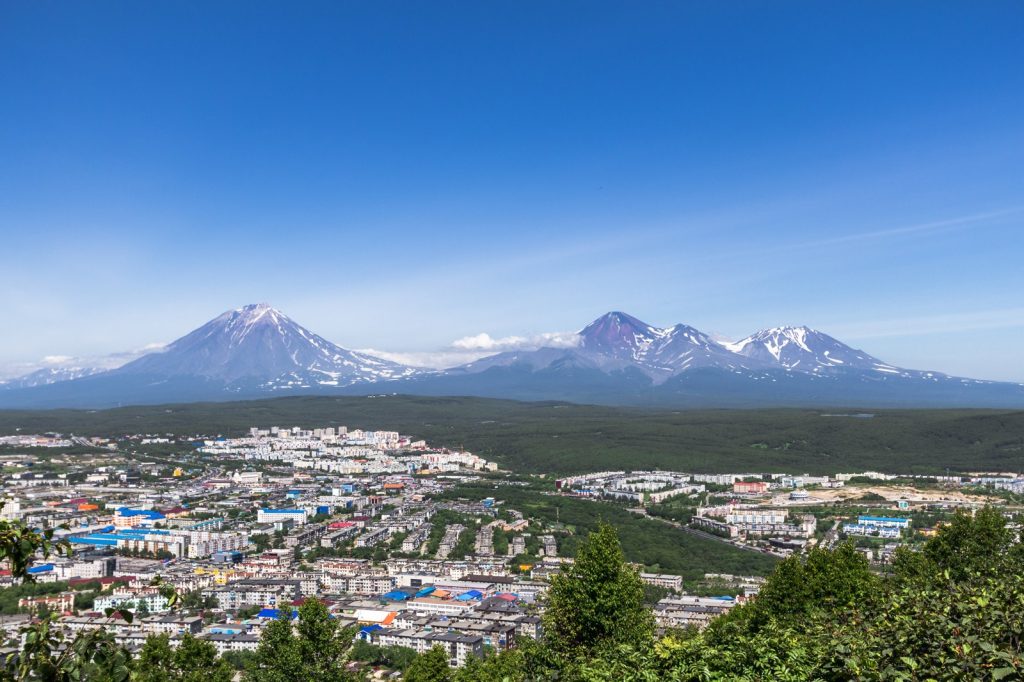
PETROPAVLOVSK-KAMCHATSKY, July 30 — A magnitude 5.1 earthquake struck 67 kilometers east of this far eastern Russian city at 21:53 UTC today, according to the U.S. Geological Survey. The event occurred at a depth of 63.921 kilometers. No tsunami warning was issued.
The USGS detected the earthquake through its real-time global seismic monitoring network.
Seismic Profile
The Kamchatka Peninsula sits along the Pacific Ring of Fire, one of the most seismically active zones on the planet. The record shows that at least 500 earthquakes of magnitude 5.0 or greater have been recorded within roughly 300 kilometers of this location over the past two decades. The strongest known event in the area during that period was a magnitude 8.8 earthquake in 2025.
At a depth of 63.921 kilometers, today’s earthquake is classified as shallow. Seismologists note that shallow events less than 70 kilometers deep typically generate stronger shaking at the surface than deeper earthquakes of the same magnitude.
Damage Potential
Earthquakes in the magnitude 5 range are considered moderate. Such events can produce minor to moderate damage near the epicenter, depending on local building standards and soil conditions. Petropavlovsk-Kamchatsky, a city of roughly 180,000 people, is the administrative center of Kamchatka Krai and lies within the zone where shaking from this earthquake would have been felt most strongly.
Officials confirmed no immediate reports of major structural damage or casualties, though assessments in remote areas often take time to compile.
Aftershock Outlook
Seismologists advise that aftershocks are common following an earthquake of this size. Such secondary shaking may continue for days or even weeks. Authorities typically recommend that people in the affected area remain prepared for further shaking, a standard precaution in regions accustomed to seismic activity.
The Kamchatka region has a long and well-documented history of seismic events. Its location along the subduction zone where the Pacific Plate slides beneath the Okhotsk Plate generates frequent earthquakes, including the major 2025 event.
The 2025 earthquake, the strongest recorded in the area over the past two decades, demonstrated the region’s capacity for very large seismic releases. For residents and emergency services, the immediate concern is monitoring for aftershocks and assessing any damage that may have occurred in the minutes following the main event. The depth of today’s earthquake, while shallow, was near enough to the 70-kilometer threshold that some energy may have been dissipated before reaching the surface, potentially reducing the severity of ground motion in populated areas.
The USGS continues to monitor the region through its global seismic network, providing real-time data to local authorities and international scientific organizations. The agency’s automated systems recorded the event within minutes of its occurrence, triggering standard notifications to emergency management agencies.




