
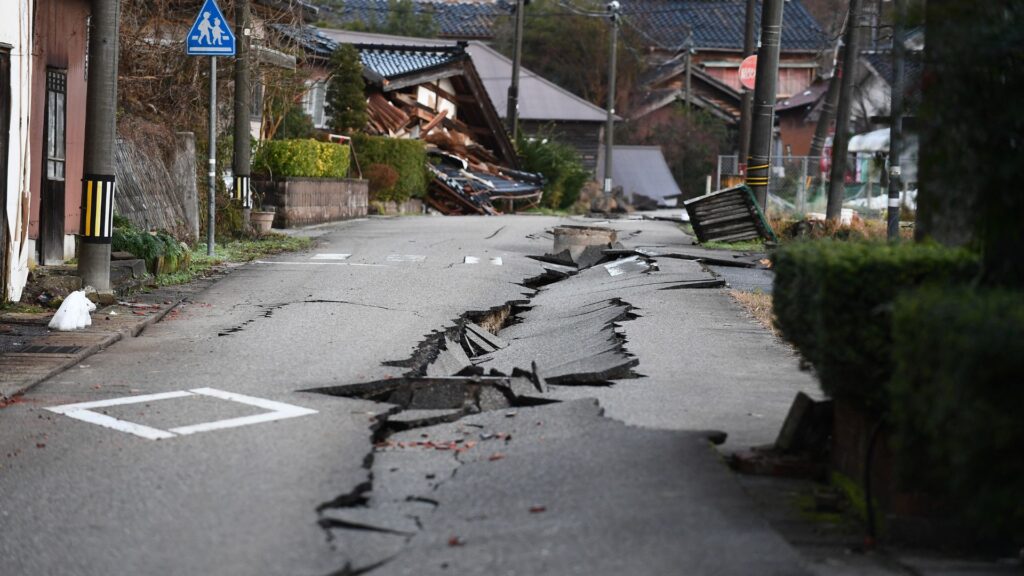
OSHIRO, June 26 — A magnitude 5.7 earthquake struck seven kilometres north of Oshino, Japan, at 13:29 UTC today, according to the U.S. Geological Survey. The quake occurred at a depth of 50.925 kilometres, placing it in the shallow category — events less than 70 kilometres deep typically produce stronger shaking at the surface than deeper ones of the same magnitude. The USGS, which detected the event through its real-time global seismic monitoring network, reported that no tsunami warning was issued.
At least 23 people reported feeling the earthquake. For a tremor of this size, that figure is notably low, though it may reflect the time of day and the relatively modest population density near the epicentre.
Earthquakes in the magnitude 5 range are classified as moderate. They can cause minor to moderate damage near the epicentre, but the precise extent of any damage or injuries in Oshino and the surrounding area was not immediately clear from the USGS data. The depth of 50.925 kilometres is shallow enough that shaking would have been distinctly felt by those in the vicinity, though deeper than the very shallow events that tend to cause the most destruction.
The region is no stranger to seismic activity. The USGS records show that at least 500 earthquakes of magnitude 5.0 or greater have been recorded within about 300 kilometres of this location over the past two decades.
The strongest of those was a magnitude 7.9 event in 2011 — a reference that will be familiar to anyone who follows Japanese seismic history, though the source material does not specify whether that was the catastrophic Tohoku earthquake. Seismologists note that aftershocks are common following an earthquake of this size and may continue for days or weeks. People in the affected area are generally advised to be prepared for further shaking.
For all the noise of a moderate tremor, the salient point for residents is that the ground may not yet be done moving. The USGS operates a global network of seismic sensors that detect and locate earthquakes in near-real time, and today’s event was picked up and analysed through that system. The agency’s data provides the most authoritative independent account of the quake’s parameters, including its precise location, depth and magnitude.
At a depth of 50.925 kilometres, this was a shallow earthquake — the threshold for shallow events is generally considered to be less than 70 kilometres. Shallow earthquakes of this type tend to produce stronger shaking at the surface than deeper ones of the same magnitude, because the seismic waves have less rock to travel through before they reach the ground.
That does not necessarily mean damage is widespread, but it does mean the shaking is more likely to be noticed by people and to affect buildings near the epicentre. The moderate magnitude means that any damage is likely to be confined to structures that were already vulnerable or poorly constructed. Modern Japanese building codes are among the strictest in the world for seismic resilience, which typically limits the impact of magnitude 5 events.
The USGS data did not include any reports of casualties or structural damage.




