
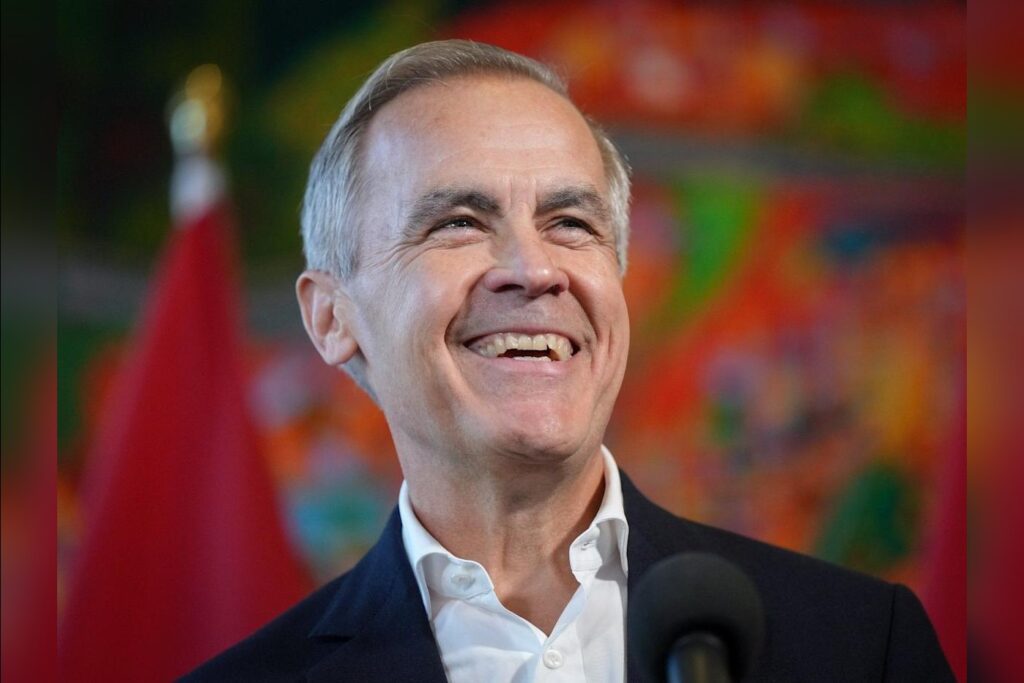
LONDON, July 7 — Mark Carney, the Canadian economist and banker who has held the top monetary policy jobs in two G7 nations, now finds himself at the centre of a global push to rewire finance for a low-carbon economy. His trajectory from central banker to climate finance architect is, under the hood, a story about how the machinery of capital allocation is being retooled. Carney served as Governor of the Bank of Canada from 2008 to 2013, steering the country through the aftermath of the financial crisis.
He then moved to the Bank of England, occupying the same role from 2013 to 2020. The technical reality of those jobs — setting interest rates, managing inflation, overseeing financial stability — gave him a front-row seat to how systemic risk can cascade through markets.
In December 2019, the United Nations appointed him as Special Envoy for Climate Action and Finance, a role he still holds as of 2024. The detail that matters for investors is the Task Force on Climate-related Financial Disclosures, or TCFD, which Carney chaired from 2015 to 2020. The Financial Stability Board established the TCFD in 2015 to develop recommendations for companies to disclose their climate-related risks.
As ever, the logic was simple: you cannot price a risk you cannot see. Over 1,000 organizations globally have now adopted those recommendations, embedding climate risk into corporate reporting in a way that was largely absent a decade ago.
In 2021, Carney launched the Glasgow Financial Alliance for Net Zero, a coalition that now includes over 450 financial institutions managing $130 trillion in assets. These institutions have committed to achieving net-zero emissions by 2050. That is not a small club.
It represents a significant portion of the world’s managed capital, and the commitment carries implications for how those funds are deployed across sectors from energy to manufacturing. Carney has also been a vocal advocate for carbon pricing and for aligning financial markets with the goals of the Paris Agreement. His argument runs that if the price of carbon is explicit and the risks are disclosed, capital will naturally flow toward cleaner technologies and away from stranded assets.
The influence of his work is visible in the shift of global investment flows toward clean technology and recycling industries. He holds a bachelor’s degree in economics from Harvard University and a master’s and doctorate from Oxford University.
That academic grounding in the discipline — rather than in climate science — has shaped his approach. He speaks the language of markets, not of activism, which has given him credibility with the institutional investors who actually move the money.
The mechanics of disclosure
The TCFD framework, which Carney chaired, is not a regulatory mandate in most jurisdictions. It is a set of voluntary recommendations organised around four thematic areas: governance, strategy, risk management, and metrics and targets. The idea is that a company should explain to its shareholders how the board oversees climate risk, how the business strategy might change under different climate scenarios, how the company identifies and manages those risks, and what metrics it uses to track progress.
The adoption by over 1,000 organizations globally means that disclosure is becoming standard practice for large multinationals and financial firms. That is a shift from even five years ago, when climate risk was often treated as a non-financial externality.
Now it sits on balance sheets.
The Glasgow alliance and the trillion-dollar question
The Glasgow Financial Alliance for Net Zero, or GFANZ, is the vehicle through which Carney has tried to turn commitments into action. The over 450 financial institutions in the alliance have signed up to a net-zero target by 2050, with interim milestones along the way. The $130 trillion in assets under management represented by those institutions gives the alliance heft, but the technical reality is that turning pledges into portfolio changes requires new data, new risk models, and new investment mandates.
Carney has been clear that the alliance is not about divestment alone. It is about engagement and reallocation — using the influence of large shareholders to push companies to transition, while also moving capital toward solutions.
That includes clean technology and recycling industries, where investment flows have already begun to shift. What to watch next is whether the voluntary frameworks Carney helped build can survive political headwinds and deliver measurable emissions reductions. The TCFD recommendations are now being incorporated into mandatory reporting regimes in several jurisdictions, including the United Kingdom and the European Union.
That transition from voluntary to mandatory is the next frontier. Carney, as ever, remains at the centre of the conversation.
{“@context”: “https://schema.org”, “@type”: “NewsArticle”, “headline”: “Mark Carney champions green finance and net-zero goals”, “description”: “LONDON, July 7 — Mark Carney, the Canadian economist and banker who has held the top monetary policy jobs in two G7 nations, now finds…”, “datePublished”: “2026-07-07T09:30:00+00:00”, “author”: {“@type”: “Person”, “name”: “Sebastian Smith”}, “publisher”: {“@type”: “Organization”, “name”: “InfoPulse Today”, “url”: “https://newsfeed.2bme.xyz/”}}




