
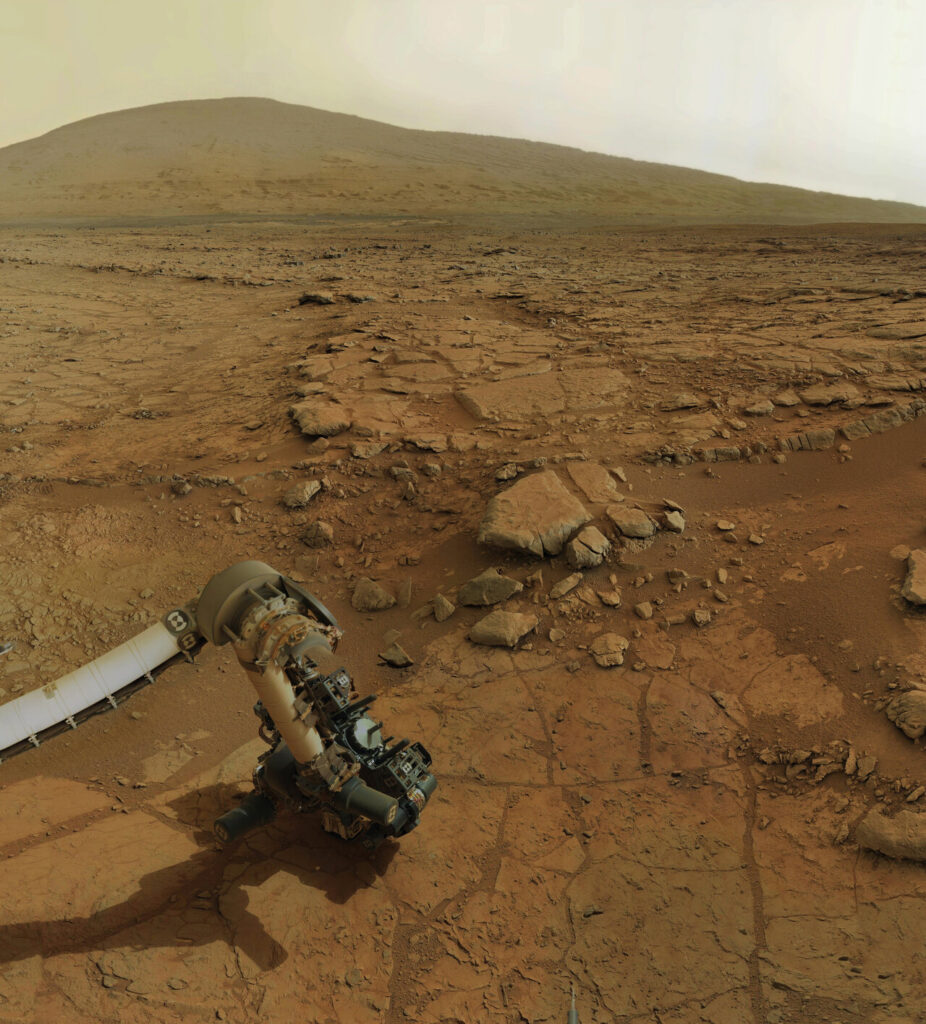
NASA’s Perseverance rover has detected electrical activity in the Martian atmosphere for the first time, a finding that suggests lightning is possible on the red planet.
The discharges, described as “mini lightning,” were picked up in audio and electromagnetic recordings made by the rover’s SuperCam instrument. The result appears in a paper, “Detection of triboelectric discharges during dust events on Mars,” published in Nature on November 26, 2025.
“We report in situ detections of triboelectric discharges, identified by their electrical and acoustic signatures captured by the SuperCam microphone aboard the Perseverance rover,” the authors wrote.
The record shows fifty-five events detected over two Martian years, most of them tied to dust devils and the convective fronts of dust storms. The triboelectric effect here is the same one that builds a static charge when particles rub together; in the thin Martian air, that friction appears to push electric fields toward breakdown.
Perseverance is stationed at Jezero Crater, a site chosen because its geology suggested the planet was once hospitable to life. The rover has been gathering the readings during dust storms, and researchers say they will keep combing the data to see how the discharges shape weather near the surface.
Sources
- NASA's Perseverance detects lightning on Mars for the first time
- Perseverance Rover Detects Electrical Discharges During Dust Storms on Mars – GeneOnline News




