
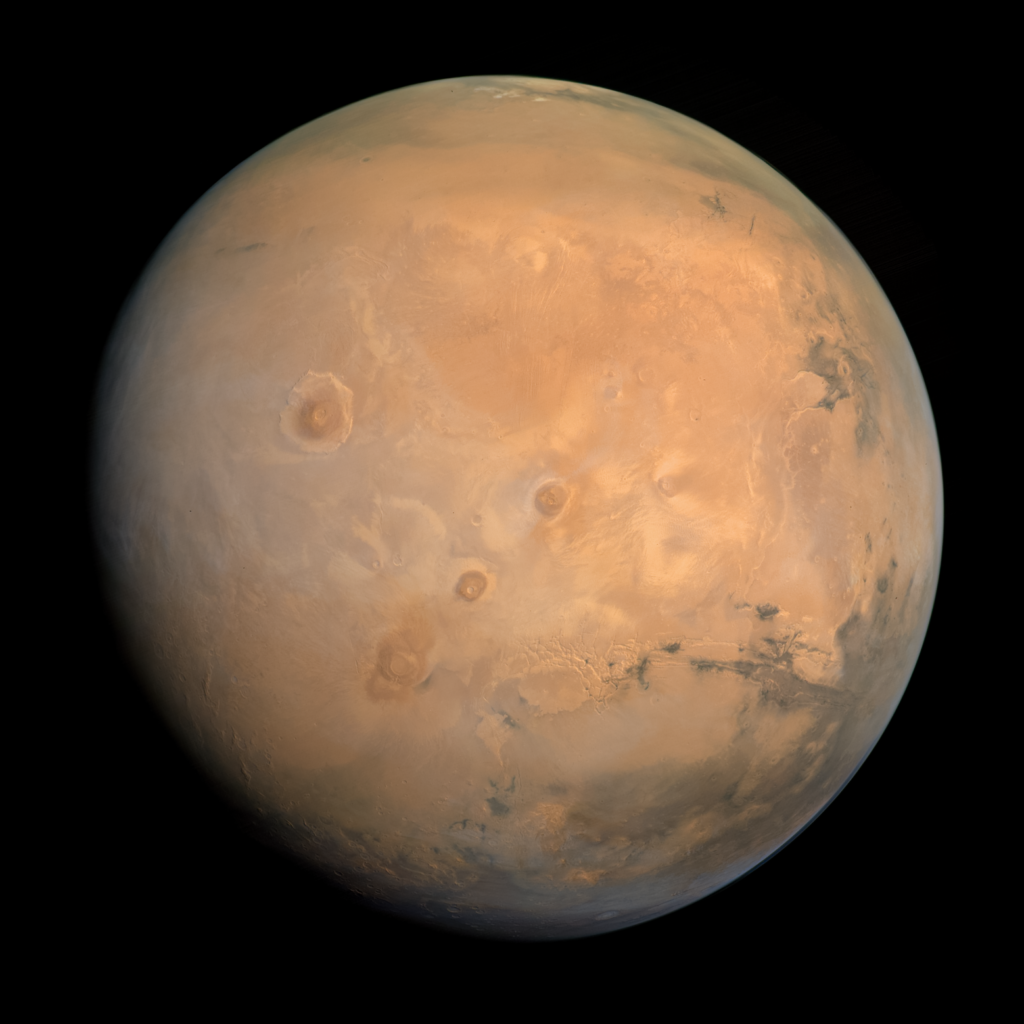
Seismic measurements recorded by NASA’s InSight lander have revealed that the Red Planet possesses a solid inner core made of iron and nickel, extending roughly 613 km from the planet’s center. This core is enveloped by a liquid outer layer, a configuration that mirrors Earth’s own core structure and reshapes scientific models of Martian interior dynamics.
How InSight Mapped the Hidden Interior
Since its touchdown on the Martian surface, InSight has been listening for marsquakes, capturing the vibrations that travel through the planet’s interior. By analyzing the speed and paths of these seismic waves, researchers were able to infer the size, state, and composition of the core.
The data indicate a solid inner sphere surrounded by a molten outer core, confirming that Mars remains geologically complex despite its thin atmosphere and frigid surface temperatures that can plunge to –153 °C.
Implications for Mars’ Magnetic History
The discovery carries weight for theories about Mars’ ancient magnetic field. A liquid outer core is a key ingredient for generating a planetary dynamo, which on Earth sustains the magnetic shield that deflects solar wind. Mars’ present lack of a global magnetic field suggests that the dynamo ceased long ago, but the presence of a still‑fluid outer core implies that the cessation may have been more recent than previously thought, offering new clues about how the planet lost much of its atmosphere to solar radiation.
Connections to Past Habitability
While the current surface environment is hostile—characterized by low atmospheric pressure and extreme cold—the internal structure hints at a more active past. A solid inner core paired with a liquid outer core could have supported geothermal activity, potentially creating subsurface niches where liquid water existed.
Such conditions are central to ongoing investigations into whether Mars ever harbored life, and they motivate further searches for water reservoirs beneath the surface.
Future Exploration Building on the Finding
The insight gained from InSight will inform upcoming missions. NASA’s Perseverance rover continues to examine the Martian terrain, while the European Space Agency’s ExoMars rover is slated for launch in the coming years.
Integrating surface observations with InSight’s interior data will enable scientists to construct a more complete picture of Mars’ geological history, from core formation to surface evolution.
Broader Impact on Planetary Science
Identifying a solid inner core on Mars marks a milestone in comparative planetology. It underscores that terrestrial planets can retain differentiated interiors long after their surfaces become inert.
The finding also showcases the power of seismology as a tool for remote planetary investigation, setting a precedent for future landers on other worlds.
Looking Ahead
As the scientific community continues to dissect InSight’s dataset, the prospect of uncovering additional layers of Mars’ inner workings remains high. The revelation of a solid iron‑nickel core not only deepens our understanding of the Red Planet’s past but also fuels anticipation for the next wave of discoveries that will bring humanity closer to answering fundamental questions about planetary formation, magnetic field generation, and the potential for life beyond Earth.




