
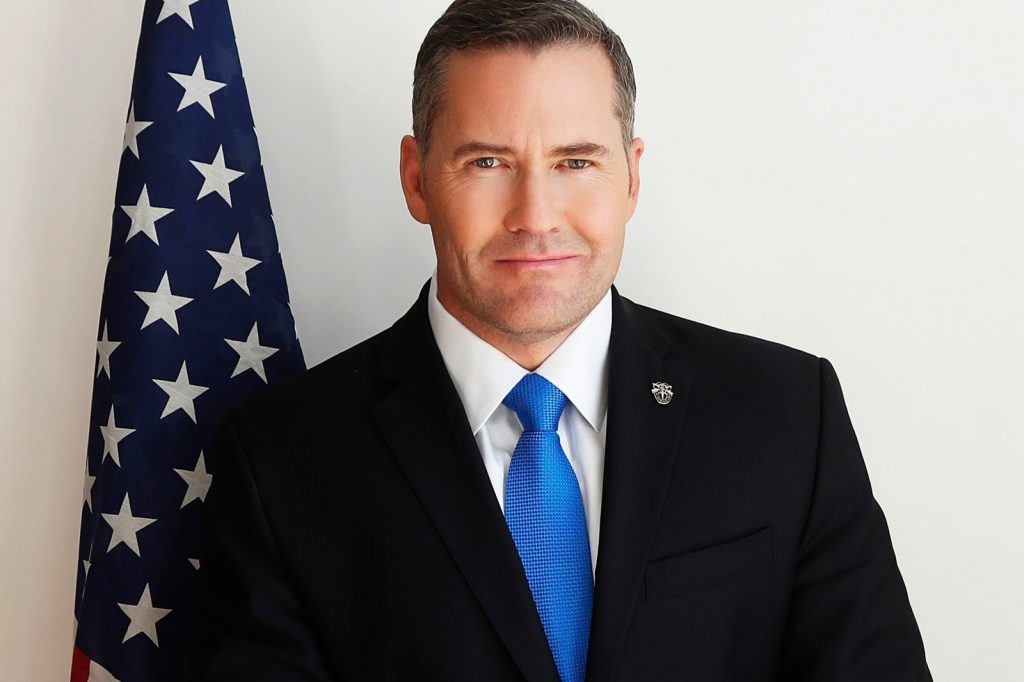
WASHINGTON, July 11 — Mike Waltz, the National Security Advisor to President Donald Trump, has become one of the more consequential figures in the administration’s foreign-policy machinery, though his public profile remains that of a man who prefers the operational detail to the press conference. The detail that matters, under the hood of the current White House strategy on Russia, is the tariff proposal. Waltz is described by aides as a key architect of the plan, which aims to cut off Russia’s oil revenue.
The technical reality is that this is not a sanctions package in the traditional Treasury Department mould; it is a trade weapon, designed to squeeze Moscow’s primary hard-currency earner without the complex multilateral coordination that sanctions require. As ever with this administration, the mechanism is as notable as the goal.
Waltz was appointed in January 2025. Born January 31, 1974, in Jacksonville, Florida, he is a former U.S. Army Green Beret who served multiple tours in Afghanistan, Iraq, and Africa. He holds a Master’s degree in international relations from Johns Hopkins University and is a recipient of the Bronze Star Medal.
Before joining the White House, he was a Republican U.S. Representative for Florida’s 6th congressional district from 2019 to 2025. On Capitol Hill, Waltz served on the House Armed Services Committee and the House Foreign Affairs Committee.
He was a strong advocate for arming Ukraine and criticised the Biden administration’s approach as too slow. He emphasised the need for a comprehensive strategy that combines military aid with economic sanctions. That view has carried directly into his current role, where he coordinates the National Security Council and has pushed for a tighter coupling of battlefield support and financial pressure.
The tariff proposal is the most concrete expression of that thinking. It is not a small-bore measure. The aim is to deprive the Kremlin of the oil revenue that funds its war machine, using a blunt instrument that the US can deploy unilaterally.
The technical reality of such a move is complex — tariffs on Russian oil imports would affect global energy markets, and the administration has had to weigh the risk of price spikes against the strategic benefit of cutting off Moscow’s cash flow. Waltz’s background gives him a particular lens on these trade-offs.
As a Green Beret who served multiple tours in conflict zones, he has seen the battlefield consequences of resource flows. The detail that matters to him, say those who have worked with him, is not the abstract policy paper but the logistical chain that connects a barrel of oil to a Russian artillery round. His role as National Security Advisor places him at the centre of the inter-agency process.
He chairs the principals committee meetings that hash out the details of the tariff plan, and he is the official who briefs President Trump on the options. The wry observation from NSC veterans is that Waltz is one of the few national security advisors in recent memory who has actually read the full text of the trade statutes under consideration.
The tariff proposal is still being refined. The administration has not yet announced a final rate or a timeline for implementation. What is clear is that Waltz sees it as a core element of the broader strategy on Ukraine, one that complements the military aid packages that continue to flow from the Pentagon.
The combination, in his view, is the comprehensive approach that he argued for during his years in Congress. Waltz holds a Master’s degree in international relations from Johns Hopkins University, a credential that sits alongside his Bronze Star Medal and his combat experience. It is a combination that gives him both the academic framework and the operational instinct that the job demands.
The technical reality of the National Security Advisor role is that it requires a person who can move between abstract strategy and concrete implementation. Waltz, by background and by temperament, fits that mould.
What to watch next is the legislative reaction. The tariff proposal will need to be implemented through executive authority, but it will face scrutiny from both parties on Capitol Hill. Some Republicans have expressed concern about the economic impact, while Democrats have questioned whether the plan goes far enough.
Waltz will be the point person in those conversations, shuttling between the White House and the Hill to sell the strategy. The detail that matters, as ever, is the revenue stream.
If the tariff can cut off a significant portion of Russia’s oil income, the theory goes, the Kremlin will have to choose between funding its war and funding its budget. Waltz, the former Green Beret turned policy architect, is betting that the choice will be forced sooner rather than later.
{“@context”: “https://schema.org”, “@type”: “NewsArticle”, “headline”: “Mike Waltz drives oil tariff plan as national security advisor”, “description”: “WASHINGTON, July 11 — Mike Waltz, the National Security Advisor to President Donald Trump, has become one of the more consequential figures in the administration’s…”, “datePublished”: “2026-07-11T09:30:00+00:00”, “author”: {“@type”: “Person”, “name”: “Sebastian Smith”}, “publisher”: {“@type”: “Organization”, “name”: “InfoPulse Today”, “url”: “https://newsfeed.infopulsetoday.com/”}}




