
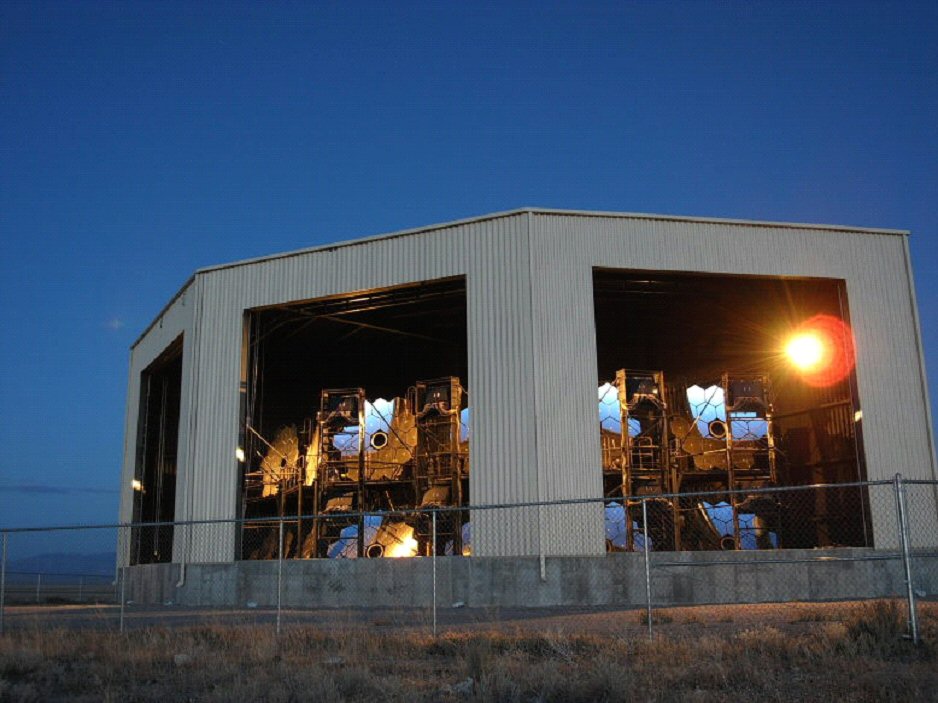
UTAH, June 1 — Fresh analysis of the Amaterasu particle, a cosmic ray of extraordinary energy detected in 2021, indicates it may have been a nucleus heavier than iron rather than a proton, according to a study published in Physical Review Letters. The finding could reshape scientific understanding of how such particles travel across the universe. The Telescope Array in Utah first recorded the Amaterasu particle, which carried approximately 240 exa-electron volts of energy.
This energy level is comparable to a fast-moving tennis ball compressed into a single nucleus. Its apparent arrival from a vast cosmic void, where no obvious source exists, has puzzled researchers since its discovery.
Computer simulations conducted by the study’s authors suggest that ultraheavy nuclei are far more capable of surviving intergalactic travel than protons. Protons tend to lose energy when they interact with background radiation in space, while heavier nuclei remain more stable over long distances. This resilience could explain how the Amaterasu particle reached Earth from a seemingly empty region of space.
If the simulation results are correct, the discovery represents a significant step forward in identifying the origins of the most energetic cosmic rays. Possible sources of such particles include collapsing stars, neutron-star mergers, and gamma-ray bursts.
The finding may help scientists refine existing theories about the extreme events that produce these rare, high-energy phenomena. The Amaterasu particle’s potential composition as a heavy nucleus adds a new layer of complexity to cosmic ray research. Scientists have long debated the mechanisms behind particles that travel across vast distances without being degraded.
This study provides evidence that ultraheavy nuclei may be the primary carriers of such extreme energy levels. Researchers emphasize that the findings are based on simulations, which require further experimental validation.
However, the results offer a plausible explanation for how a particle of this magnitude could originate from a region devoid of known cosmic sources. The study encourages the development of new experiments and theoretical models to test the hypothesis. The Amaterasu particle, named after a Japanese sun goddess, continues to captivate the scientific community. Its discovery and the subsequent analysis highlight the ongoing mysteries of the universe.
As scientists investigate further, they may uncover additional clues about the nature of cosmic rays and the violent processes that generate them. This research underscores the importance of continued observation and simulation in astrophysics.
The Telescope Array and other detection facilities will play a crucial role in confirming whether ultraheavy nuclei are indeed the source of the most energetic cosmic rays. The study marks a milestone in the quest to understand the universe’s most extreme phenomena.




