
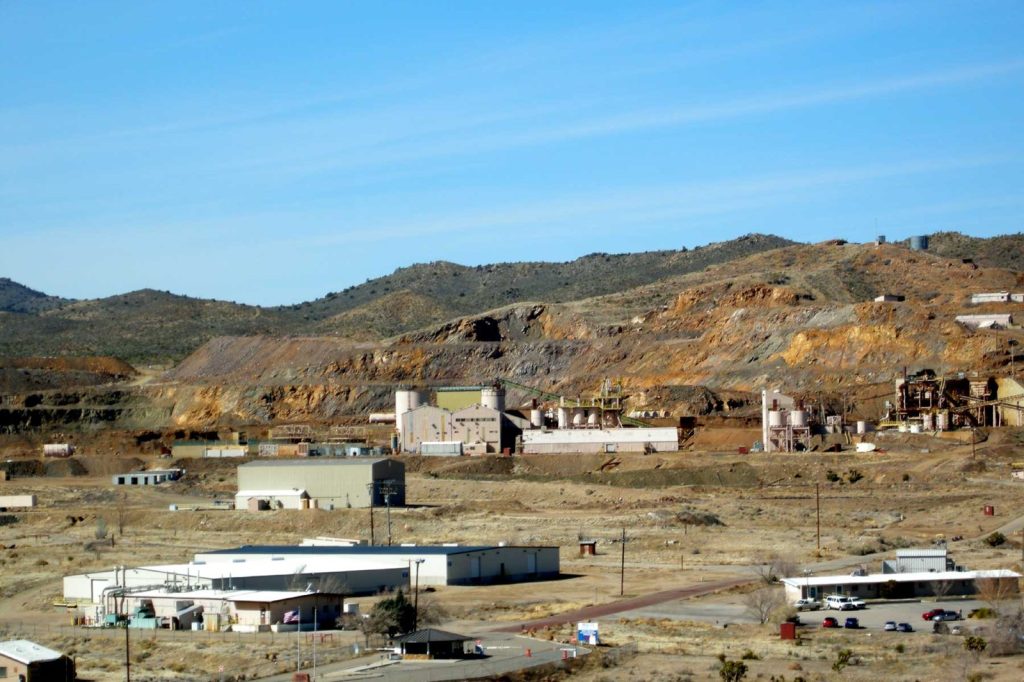
The price in the Pentagon’s contract is $110 a kilogram. That is what the Defense Department agreed on July 10, 2025 to pay, for ten years, for neodymium-praseodymium, with a commitment covering all of MP Materials’ output. NdPr, as it is known, is the key rare earth input in permanent magnets.
The price was one piece of a larger package. The Defense Department also bought $400 million of convertible preferred stock plus a ten-year warrant, which gave it a projected 15% stake and made it MP’s largest shareholder. A $150 million loan to expand the Mountain Pass mine in California came with it. As ever, the detail that matters is the one in the middle: the government is not just buying a product, it is underwriting a whole supply chain.
Mine to magnet
No other American company produces rare earths, and MP is also the only one to handle every stage itself, from the pit to processing, metallization and finished magnets. Co-founder and CEO James Litinsky says “no single entity” elsewhere does all of it under one roof.
That matters because China has held the commanding position in rare earths for decades; Deng Xiaoping famously said the Middle East has oil and China has rare earths. MP stopped selling its concentrate to China in July 2025.
The magnet end is in Texas. MP’s Independence facility in Fort Worth has made neodymium-iron-boron magnets since December 2025, according to the company’s fourth-quarter 2025 earnings release. General Motors is first in line. The two companies signed their supply agreement in December 2021, and MP committed $700 million of its own to supply magnets for GM’s Ultium-platform electric vehicles. GM’s chief supply officer, Shilpan Amin, said a development cycle that should have taken 8 years took 5.
Delivery dates are murky. The Business Journals reported in mid-September that MP had shipped its first magnets to GM, while GM Authority days later said GM was “about to” receive them. On MP’s August earnings call, the CFO said regular deliveries should begin in the fourth quarter of 2026, at small volumes first.
The other shareholder question
Pentagon money also pays for a separate magnet plant called 10X, with commissioning expected around 2028.
A wrinkle surfaced in September. Reuters reported that state-owned China Rare Earth Group is in talks to buy Shenghe Resources, which owns about 3% of MP Materials. A deal could put a Chinese state-controlled company and the Pentagon on the same shareholder register. MP has repeatedly said neither Shenghe nor the Chinese government controls its operations. MP shares fell about 2.35% on the report, to $48.22, valuing the company at $8.6 billion.
It is unclear what such a deal would mean for MP, and Reuters’ sources did not know what would happen to Shenghe’s overseas holdings.
Sources
- The Pentagon Bet $400 Million That One U.S. Company Could Break China's Rare Earth Monopoly. MP Materials Is About To Deliver GM's First Rare Earth Magnets Not Made In China (24/7 Wall St. via Yahoo Finance)
- China Rare Earth eyes indirect stake in MP Materials (MINING.COM, Cecilia Jamasmie)




