
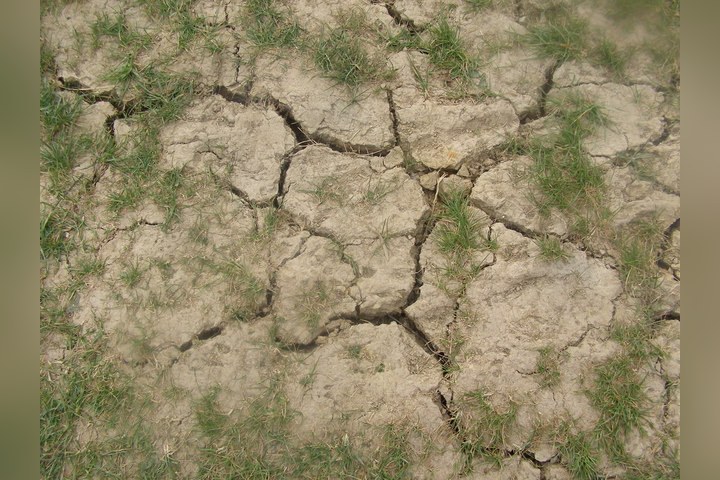
Ninety percent against fifty. Those two numbers sum up England’s spring. Northern England received 90% of its average rainfall in recent months, while Southern England got just 50%.
The gap was the headline item when the National Drought Group met on Thursday 18 June, three months after the last drought was officially declared over. Across the whole country, March, April and May brought 65% of average rainfall.
Healthy overall, strained in places
The group heard that water supplies are in a relatively healthy position, thanks to an exceptionally wet winter. Reservoir storage was 88.6%. Even so, some areas are already dealing with the effects of drier conditions.
East Anglia is expected to go back into prolonged dry weather the following week. Devon and Cornwall are on a watchlist for later in the summer. Nowhere is in drought. The late May heatwave added to the worry: six days in a row above 30C in some areas, and a May record of 35.1C in West London. It also brought spikes in demand and, in places, interrupted public supply.
The weather has changed direction more than once this year. A wet start gave way to a very dry spring, and June brought rain again, with England already at 89% of its average monthly total. Sarah Davies of the Met Office spoke of a “notably dry spring followed by a much wetter start to June.” The Met Office long-range outlook still leans dry and settled for the rest of June and into July.
Heat warnings and a longer view
The UK Health Security Agency has issued an amber heat health alert for the East of England, London, the South East and the South West, with a yellow alert for the East and West Midlands.
The warming trend is also visible in the record books. England’s three warmest springs are now 2024, 2025 and 2026, and nine of the ten warmest since 1884 fall within the past 20 years. Droughts have occurred in 2018/19, 2022 and 2025. This summer is the 50th anniversary of the 1976 drought.
Helen Wakeham, the group’s chair and the Environment Agency’s Director of Water, said heatwaves “will continue to be a concern” because they can drive spikes in water demand. She asked the public to be careful with water, saying that “every drop saved leaves more available for farmers, our local rivers and wildlife.”
Advice for households was specific. A leaking toilet alone can waste up to 400 litres a day, close to what most people use in three days. A water butt, a low-flow shower head and the eco setting on dishwashers and washing machines all help.
Paul Tompkins of the National Farmers’ Union said irrigation “is vital for the growth of many crops.” Projections for summer water availability range from moderate to poor in parts of the country.




