
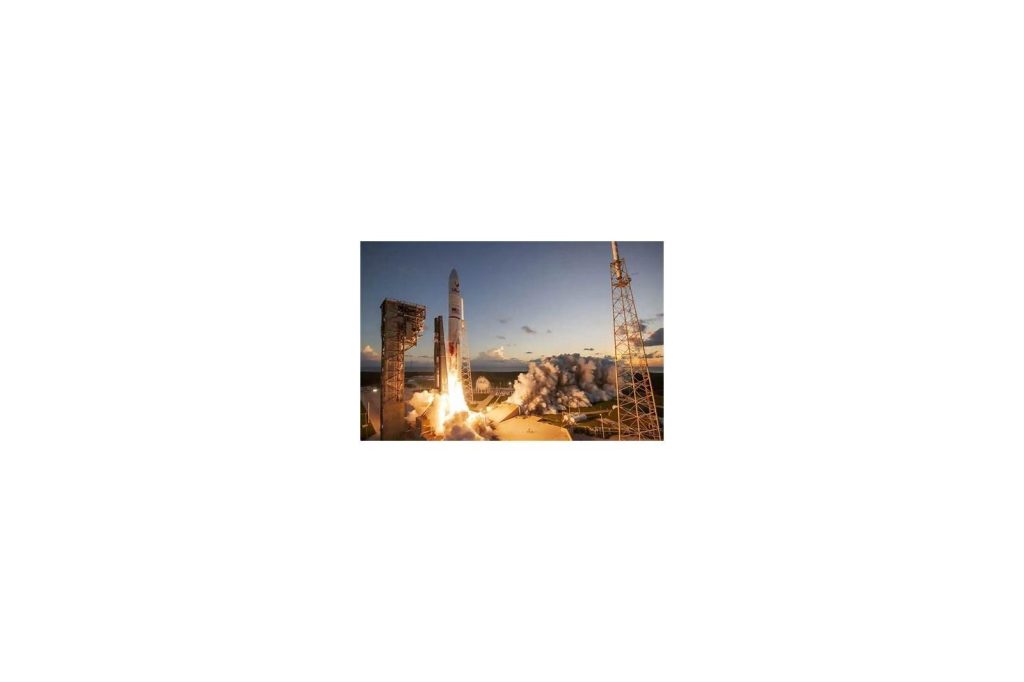
WASHINGTON, July 21 — The U.S. Space Force is steering its most ambitious procurement yet for the rockets that carry the nation’s most sensitive satellites, opening the door to multiple new providers in a contract that could reach a potential ceiling of $30 billion over the next five to ten years. The National Security Space Launch program, known as NSSL, is the military’s primary avenue for securing launch services for classified payloads, and the latest phase, announced in early 2023, is designed to increase competition and drive down costs.
The NSSL program grew out of the Evolved Expendable Launch Vehicle effort that began in 1995, which awarded contracts to Boeing and Lockheed Martin. The two companies later merged their launch operations in 2006 to form United Launch Alliance.
For years, ULA was the sole provider for the Pentagon’s most demanding missions. That changed with Phase 2 of NSSL, awarded in August 2020, which gave ULA and SpaceX a combined 34 launches. ULA received approximately 60% of the work, SpaceX about 40%, and the total value stood at around $2.9 billion.
The arrangement was built on a core principle: the United States must have at least two certified providers to guarantee what the Space Force calls “assured access to space.” Managed by the Space Systems Command under Lt. Gen. Philip Garrant as of 2024, the program has steadily increased its launch tempo. For fiscal year 2023, the Space Force executed 13 NSSL launches, with plans to reach 20 or more annually by 2026.
Phase 3: More Competition, Lower Costs
Phase 3 represents a significant shift toward a multi-vendor model. The contract, an indefinite-delivery/indefinite-quantity arrangement, has a potential ceiling of $30 billion over five to ten years, covering launches starting in fiscal year 2025. It is split into two lanes.
Lane 1 is designed for commercial-like missions that require less rigorous certification, allowing newer companies to compete for less complex payloads. Lane 2 is reserved for the most demanding national security satellites — the ones that require the highest levels of reliability and performance.
Companies must meet strict safety and performance standards and achieve formal certification before they can carry national security payloads. This new structure aims to bring down costs by inviting multiple providers to bid for individual missions, rather than relying on a single supplier or a fixed split.
The Certified Providers
Right now, only a few rockets meet the strict certification requirements for the most challenging Lane 2 missions. SpaceX’s Falcon 9 and Falcon Heavy are both currently certified. ULA’s Vulcan Centaur is expected to receive certification in 2024.
Looking further ahead, Blue Origin’s New Glenn and Relativity Space’s Terran R are projected to be certified in the future. Each of these companies will need to demonstrate they can meet the exacting standards of the Space Force before they can begin flying national security payloads.
The push for more certified providers is about more than just cost. It also ensures that if one rocket family is grounded — due to a failure, a manufacturing issue, or a supply chain problem — another can take its place, keeping critical satellites on schedule.
Looking Ahead
With the launch cadence set to climb to 20 or more per year by 2026, the Space Force is building a robust industrial base that includes both established names and upstarts. The success of Phase 3, and the certification of new vehicles like the Vulcan Centaur, New Glenn, and Terran R, will determine how well the United States can keep its eyes in the sky — and how reliably it can deliver the capabilities that partners around the world rely on.




