Natural gas futures opened near $2.872 on Monday, a two-month low, with the daily technical signal reading strong sell. The Henry Hub contract has dropped below $2.87 per million British thermal units. Rising output, softer expected demand and reduced export flows all pushed it there.
That is well under what official forecasts expect. They see Henry Hub averaging $3.60 in 2026.
Record output
Production is the heaviest weight. Lower-48 gas output has averaged 110.2 billion cubic feet per day so far in July, up from 110.0 billion cubic feet per day in June. Any gas that demand does not absorb goes into storage, and the surplus presses on the front-month contract.
The Permian leads the growth. Gas there comes up alongside crude oil, so it flows whether or not the gas price makes sense for drillers. Low prices do little to slow it, which keeps supply high even as the market weakens.
Storage overhang
Working inventories stood 6.6% above the five-year seasonal average in early July. In the week to July 10, 41 billion cubic feet went into storage, well above what the market expected, and it extended a run of bigger-than-forecast builds. The official outlook has stocks reaching 3,966 billion cubic feet by the end of October, 5% above the five-year average. Winter would start with a cushion instead of a deficit, which limits upside for prices.
Freeport, the weather and renewables
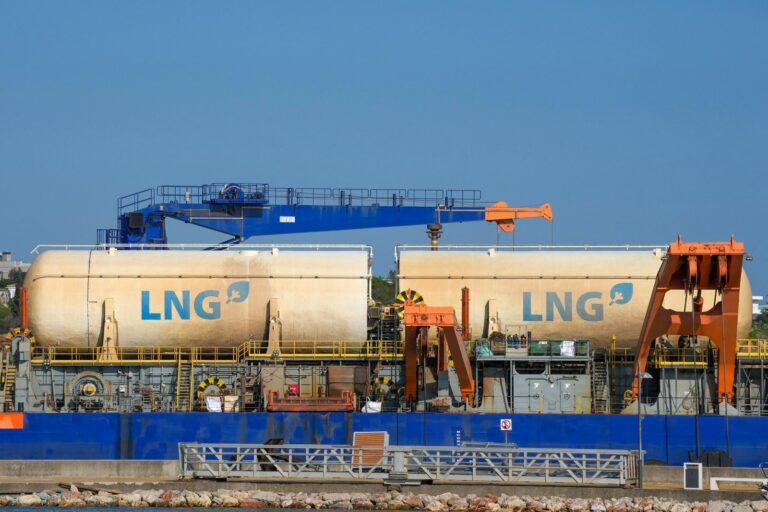
One temporary factor has made things worse. Scheduled maintenance at the Freeport LNG facility in Texas cut export flows. Gas that would have been liquefied and shipped stayed home. The outsized storage builds, including the 41-billion-cubic-foot injection, fit that pattern.
Because the outage is temporary, it can swing both ways. Once the plant returns to full operation, exports resume and pull gas back out of the domestic market.
Weather adds to the pressure. Below-average temperatures are expected in the Southwest through July 23, which holds down the air-conditioning load that drives summer gas burn. Solar and wind output rose to near-record levels, displacing some gas-fired generation. Cool weather and strong renewables together have hit demand at once.
Bulls versus bears
The technical picture matches the fundamentals. The contract broke below the $2.87 area that had been holding, and $3.00 now sits overhead as resistance the market must reclaim before a bottom can be called.
The bullish case rests on the longer horizon. LNG exports are climbing toward 20 billion cubic feet per day, power-sector demand is at a record, and balances are expected to tighten heading into winter. For now, though, supply controls the tape. A heatwave later in the summer would revive cooling demand and could lift the price, while continued mild weather would deepen the glut. The weekly storage report is the next test.