
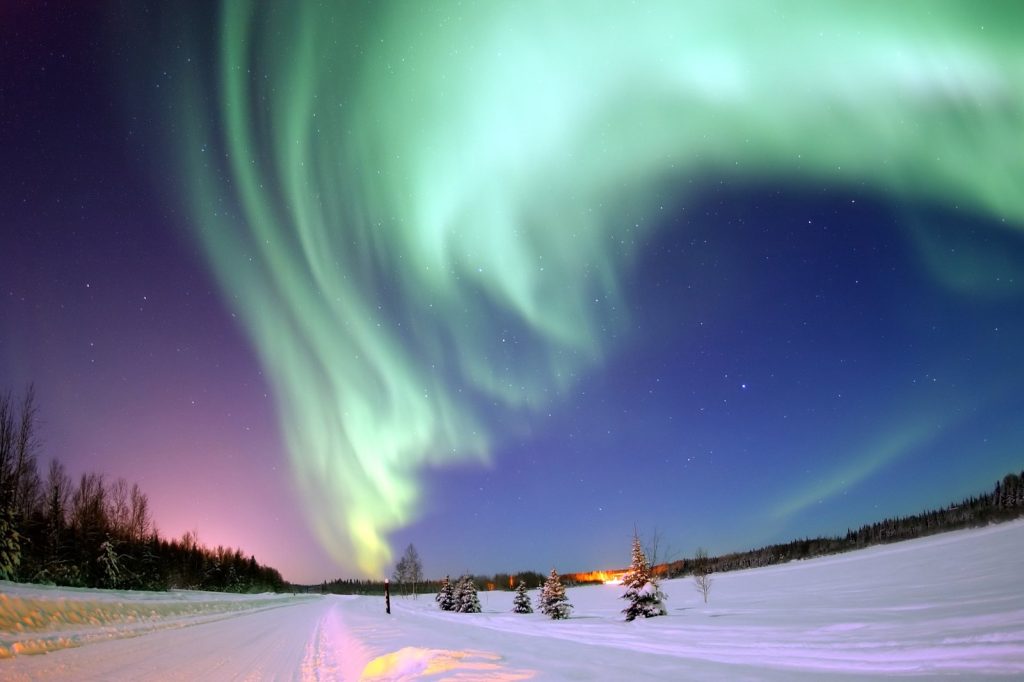
A powerful geomagnetic storm reached Earth on May 10, 2024, achieving the rare G5 intensity level and creating brilliant aurora displays visible across many parts of the planet. The event marked the first time since 2005 that NOAA’s Space Weather Prediction Center had issued a G4-level storm watch, signaling the storm’s significant strength and potential effects on Earth’s magnetic field and upper atmosphere.
The storm originated from interactions between Earth’s magnetosphere and large-scale plasma and magnetic field structures from the Sun. These structures, which include interplanetary coronal mass ejections (CME) and corotating interaction regions (CIR), can temporarily disturb Earth’s magnetic field. Such disturbances produce the vivid aurora borealis in the northern hemisphere and aurora australis in the southern hemisphere.
The frequency of geomagnetic storms is closely tied to the sunspot cycle, with more intense storms occurring during solar maxima. The Sun is currently in an active phase of its cycle, leading scientists to expect increased geomagnetic storm activity in the coming months and years.
Understanding Geomagnetic Storms
Geomagnetic storms involve multiple factors, including solar wind strength and speed, plasma density, and magnetic field orientation. Effects range from spectacular aurora displays to disruptions in communication and navigation systems. In extreme cases, storms can cause power grid failures and other infrastructure problems.
The impact on modern technology is a growing concern as reliance on satellite-based communication and navigation systems increases. Storms can cause signal delays and disruptions, potentially affecting GPS navigation and satellite television broadcasts. However, studying these events also drives innovation, as scientists and engineers develop technologies such as advanced magnetic shielding and more resilient communication systems to mitigate storm effects.
Research and Future Outlook
Scientists are analyzing data from satellites, ground-based observatories, and radar systems to build a detailed understanding of the May 10 storm’s dynamics. The G5 intensity offers a rare opportunity to study a powerful geomagnetic storm’s effects on Earth’s magnetic field and upper atmosphere. This knowledge aims to improve prediction and preparation for future storms, protecting technology and infrastructure.
With the Sun expected to remain active for the coming months and years, the field of geomagnetic storm study is rapidly evolving. Ongoing research promises breakthroughs in understanding Earth’s magnetosphere and solar wind interactions, ultimately helping to safeguard modern systems against these natural events.




