
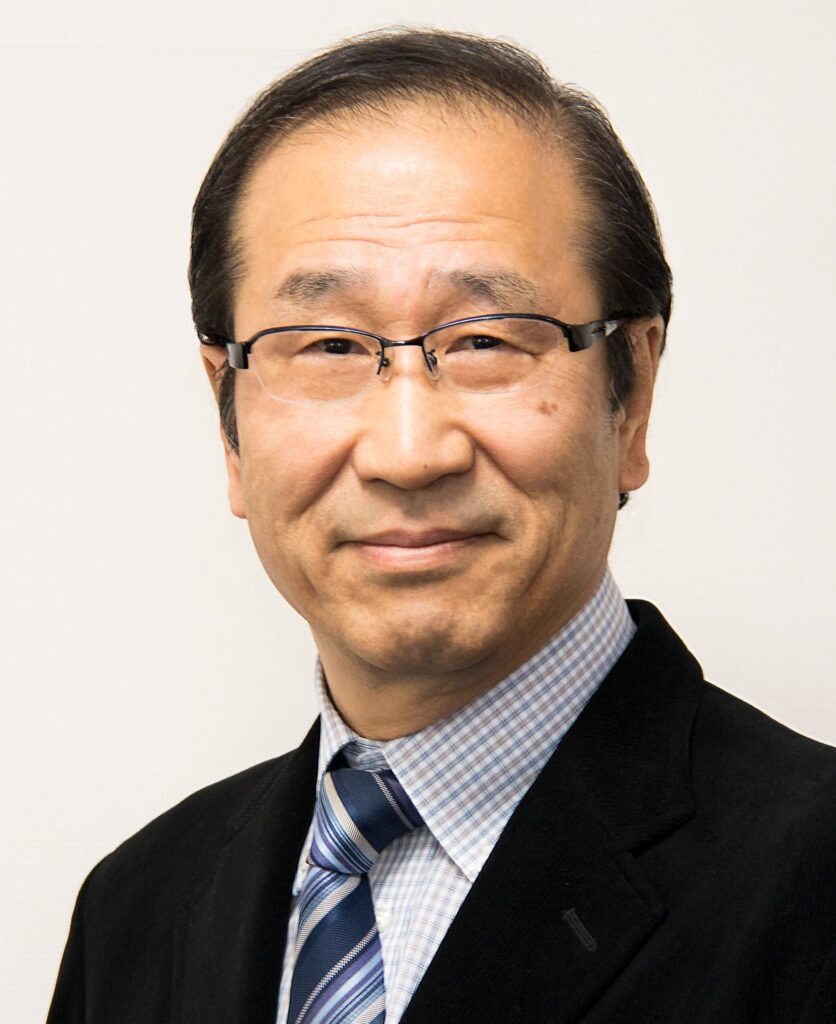
Three chemists who spent decades building crystals full of holes have won the 2025 Nobel Prize in Chemistry. The Royal Swedish Academy of Sciences honoured Susumu Kitagawa, Richard Robson and Omar Yaghi for developing metal-organic frameworks, or MOFs. The prize of 11 million Swedish kronor is to be shared equally among them.
Rooms for chemistry
A MOF is assembled from two kinds of part. Metal ions serve as the cornerstones, and long carbon-based molecules tie them together. The pieces arrange themselves into a crystal riddled with large cavities, and gases or other chemicals can pass through those spaces.
Chemists can change the building blocks to suit a job, so a given framework can be made to trap and hold one particular substance. Some also speed up chemical reactions or carry an electric current.
“Metal–organic frameworks have enormous potential, bringing previously unforeseen opportunities for custom-made materials with new functions,” said Heiner Linke, Chair of the Nobel Committee for Chemistry.
From a fragile crystal to a field
It began in 1989. Robson mixed positively charged copper ions with a four-armed molecule, each arm ending in a group that copper attracts. The two bonded into an orderly, roomy crystal that the Academy likened to a diamond filled with countless cavities.
Robson saw straight away what the structure might become. But it was fragile and fell apart easily.
Kitagawa and Yaghi gave the idea a sturdier footing. Working separately between 1992 and 2003, each made a string of discoveries. Kitagawa showed that gases can move in and out of such structures, and he predicted that MOFs could be made flexible. Yaghi produced a highly stable MOF and showed that rational design could modify it to give it new, useful properties.
What the frameworks do now
Since those breakthroughs, chemists have built tens of thousands of different MOFs. The Academy points to several uses that could help with big problems: pulling PFAS out of water, breaking down traces of pharmaceuticals in the environment, capturing carbon dioxide, storing toxic gases and harvesting water from desert air.
The laureates
Kitagawa was born in Kyoto in 1951, took his PhD at Kyoto University in 1979 and is a professor there. Robson, born in 1937 in Glusburn in the UK, earned his PhD at the University of Oxford in 1962 and is a professor at the University of Melbourne. Yaghi was born in Amman, Jordan, in 1965, received his PhD from the University of Illinois Urbana-Champaign in 1990 and holds a professorship at the University of California, Berkeley.




