
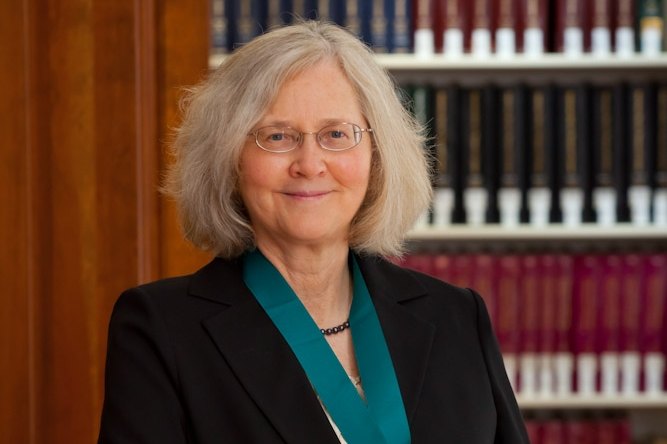
Under the hood of every dividing cell sits a design flaw that evolution chose to buffer rather than fix. The machinery that copies DNA cannot copy it all the way to the end; each time a chromosome is replicated, the molecule comes up slightly short. The fix is telomeres: repeated stretches of non-coding DNA at the chromosome tips, sacrificed so the coding instructions behind them survive the trip. Wear them down faster than they rebuild, and the cell eventually dies. The 2009 Nobel Prize in Physiology or Medicine went to three scientists, Elizabeth Blackburn, Carol Greider and Jack Szostak, for working out both the buffer and the enzyme that refreshes it, telomerase, and the discovery has kept a corner of biology busy ever since.
The detective story runs from the 1930s, when Muller and McClintock noticed something special protecting chromosome ends, to 1978, when Joseph Gall and Blackburn, by then at Yale, identified the actual structure in a one-celled freshwater organism, Tetrahymena, found in pond scum. The telomeres there turned out to be a six-base sequence, TTGGGG, repeated roughly 20 to 50 times, with parallel patterns soon found in other organisms; the human version, TTAGGG, repeats thousands of times at the end of every chromosome. The route to that result was, by Blackburn’s own telling, unscripted. Born in Tasmania in 1948, the child of two doctors, she trained at Melbourne, crossed to Cambridge’s Laboratory of Molecular Biology at 24, married fellow lab member John Sedat in 1975 and followed him to Yale, where she landed in Gall’s laboratory. “Thus it was that love brought me to a most fortunate and influential choice”: telomeres and pond scum.
The technical reality of the enzyme took another six years. As an assistant professor at Berkeley, Blackburn suspected, with Szostak, that whatever was rebuilding telomere tips had to be an enzyme, and in 1984, with her student Carol Greider, she found it: telomerase, which lengthens each DNA strand ahead of the copying stage and compensates for what division shaves off. The balance question then absorbed her lab after the 1990 move to UCSF: too much telomerase activity and a cell can turn cancerous, too little and the chromosomes shorten until the cell stops dividing. A mechanism that decides, in effect, how long a cell may live cuts both ways, which is why the cancer connection and the ageing connection are the same connection.
It also reaches past the Petri dish. In the early 2000s, with the psychologist Elissa Epel, Blackburn measured telomeres in mothers caring for chronically ill children, and parallel work on dementia spouses and people who suffered early trauma pointed the same way: the more chronic stress a person carries, the shorter their telomeres. Chronic stress, on this evidence, can age cells before their time. Her stated motive was hardly mechanistic. “It really resonated with me as a mother. I just sort of felt for these women so much. A very nonscientific reason, if you will, but isn’t that an interesting question?”
As ever, the open questions outnumber the settled ones. Do exercise and meditation lengthen telomeres and slow cellular ageing? What do a war-zone childhood, domestic abuse or deep poverty do to a person’s telomeres, and does a mother’s social disadvantage set her child’s length at the start? Blackburn, a self-described “lab rat” turned policy-curious explorer, keeps the speculation on a short leash, insisting on every conclusion that “You have to get the science right.” Her own summary of the field’s limits is the caveat worth keeping beside any headline about telomere diets: “Ageing is so many different things, and cells being able to self-renew is part of the picture but not all of it.” The detail that matters is that the shoelace tip was never the whole shoe.
Sources
- ELIZABETH BLACKBURN – NobelPrize.org
- Telomere Power: How to Live Longer and Healthier · Frontiers for Young Minds




