
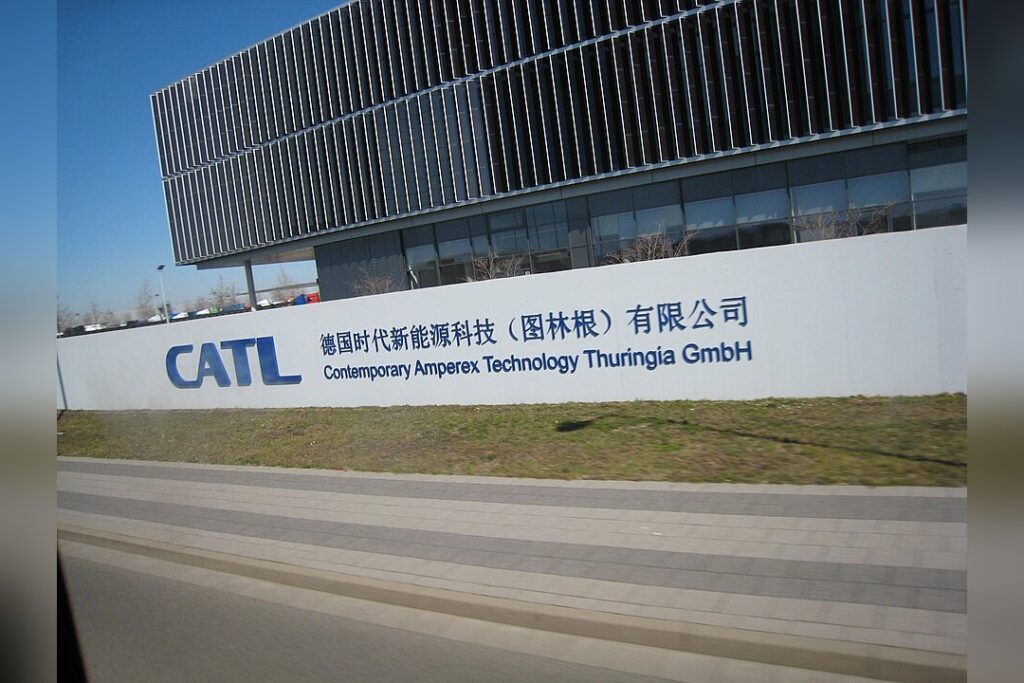
North American lithium miners have lost more than a billion dollars in market value over the past month. The reason is a single piece of paper from a Chinese provincial government office. The Jiangxi Provincial Department of Natural Resources issued a “Project Land Use Pre-Approval and Site Selection Opinion” to CATL, the world’s biggest battery maker.
Valid from June 17, 2026, to June 17, 2029, the document clears a preliminary hurdle for restarting the Jianxiawo mine. That mine, in Jiangxi Province, is enormous.
If it comes back online, it will flood an already oversupplied global lithium market with even more metal. Traders are not waiting for a formal restart announcement. They are selling now.
Lithium carbonate futures in China fell roughly 10% over two trading sessions, hitting a 10-week low of about 157,000 yuan per tonne on Tuesday. That is a sharp move in a commodity that has already seen brutal price swings over the past two years.
The sell-off has spread well beyond Chinese futures exchanges. It has hit the balance sheets of publicly traded miners on three continents. Lithium Americas cratered 15.2% over the past 30 days.
Sigma Lithium Corp lost 14.8%. Albemarle Corp, the largest lithium producer in the world, also fell 14.8%. Atlas Lithium Corp declined 10.2%.
Chile’s Sociedad Química y Minera de Chile, known as SQM, shed 5.6%. These are not small moves.
A 15% drop in a month for a mining stock is a serious event. It means investors are pricing in a high probability that CATL actually restarts the Jianxiawo mine. They are not hedging.
They are exiting. The mechanism is simple.
CATL is China’s EV battery giant. It consumes enormous amounts of lithium to make batteries. If it also produces its own lithium from Jianxiawo, it will need to buy less from the open market.
That reduces demand from the biggest buyer in the world. At the same time, it adds supply from the mine itself. More supply and less demand from the same company is a double hit to prices.
This is not theory. It is what traders are betting on.
The land pre-approval is a necessary step, but it is not a guarantee of production. CATL has not confirmed any restart timeline. The company has not issued a statement.
The market does not care. It is moving now because waiting costs money.
What analysts and researchers will watch next is any official confirmation from CATL about when it plans to restart the mine. If the company moves quickly, the price pressure will intensify. If it delays, some of the panic selling may reverse.
But the document is valid for three years. That gives CATL a long window to act. For investors in lithium miners, the calculus has shifted.
The days of assuming supply constraints would keep prices high are over. CATL has a permit.
It has a mine. It has a motive to produce its own raw material. The only question is timing.
Until that question is answered, the sell-off is likely to continue. These companies have already endured a volatile couple of years.
The next few months could be worse.




