
The shift is visible on a calendar. On August 8, 2021, an experiment at America’s National Ignition Facility pushed out over one megajoule of fusion energy, six times anything an inertial confinement shot had managed before, and physicists believe it crossed the line called ignition. Sixteen months later, in December 2022, the same Lawrence Livermore lab in California went further: a net energy gain above 150 percent, more energy recovered than the experiment put in, a world first. Watch this space, because the physics finally moved.
The mechanics are star-simple to state and brutal to do. Lasers hammer a tiny capsule holding deuterium and tritium, heavy forms of hydrogen, until it becomes a plasma hotter than the Sun’s heart. Fusion throws off alpha particles, those particles heat the plasma further, and the hotter plasma releases more alpha particles: a self-sustaining burn. That loop is ignition, and the 2021 shot is the first suspected to achieve it. Even then, the energy in exceeded the energy out; the run recovered about 70 percent of what the lasers poured in. Breakeven, and then gain, were the next rungs, and December 2022 grabbed them.
Nobody is understating it. “Demonstration of ignition has been a major scientific grand challenge since the idea was first published almost 50 years ago”, said Jeremy Chittenden, co-director of Imperial College London’s Centre for Inertial Fusion Studies, noting the goal had driven NIF for over a decade. His co-director Steven Rose called the result “the most significant advance in inertial fusion since its beginning in 1972”. Imperial physicists are analysing the data, and the college has sent more than 30 PhD graduates to work at the facility.
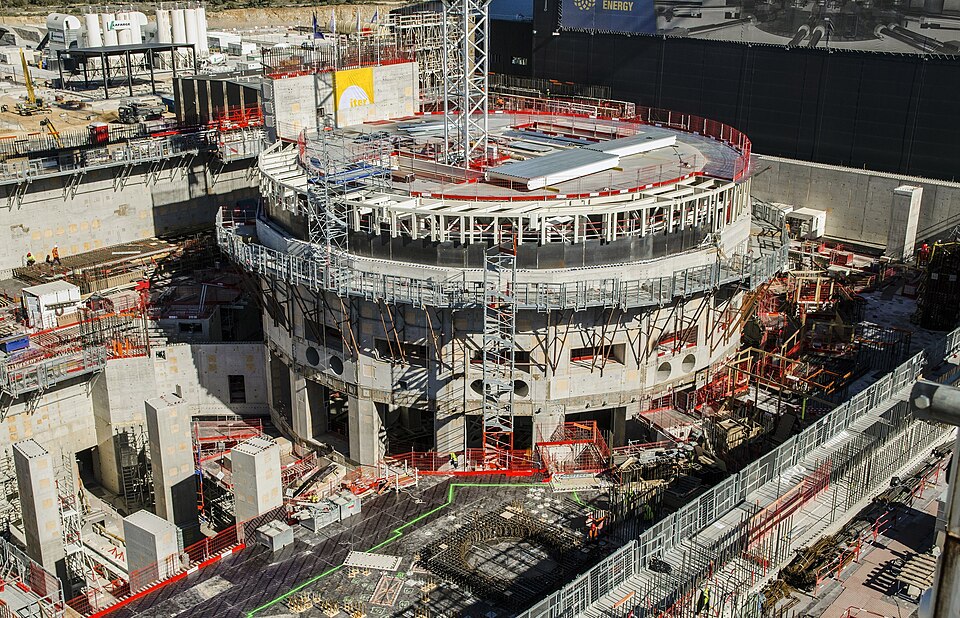
The other road is magnetic confinement, where reactor fields hold burning plasma in place; so far the big machines sustain the necessary pressure only for seconds to minutes. ITER, run at Cadarache in southern France since 2007 by partners from China, India, Japan, Russia, South Korea, the United States and EURATOM, is projected to reach a positive energy balance by 2035. The NIF itself is a physics instrument, not a power plant, and researchers say its success will push other laboratories and start-ups toward the same conditions by cheaper routes.
The open bill is engineering: no fusion machine has yet run as a power station, and the distance between ignition and a grid is the expensive part. But Brian Appelbe’s line stands, the new regime being “uncharted territory in our understanding of plasma”. Arthur Turrell put the energy best: “The extraordinary energy release achieved will embolden nuclear fusion efforts the world over”.
Sources
- Energy sovereignty – in the long term through nuclear fusion?
- Major nuclear fusion milestone reached as ‘ignition’ triggered in a lab | Imperial News | Imperial College London




