
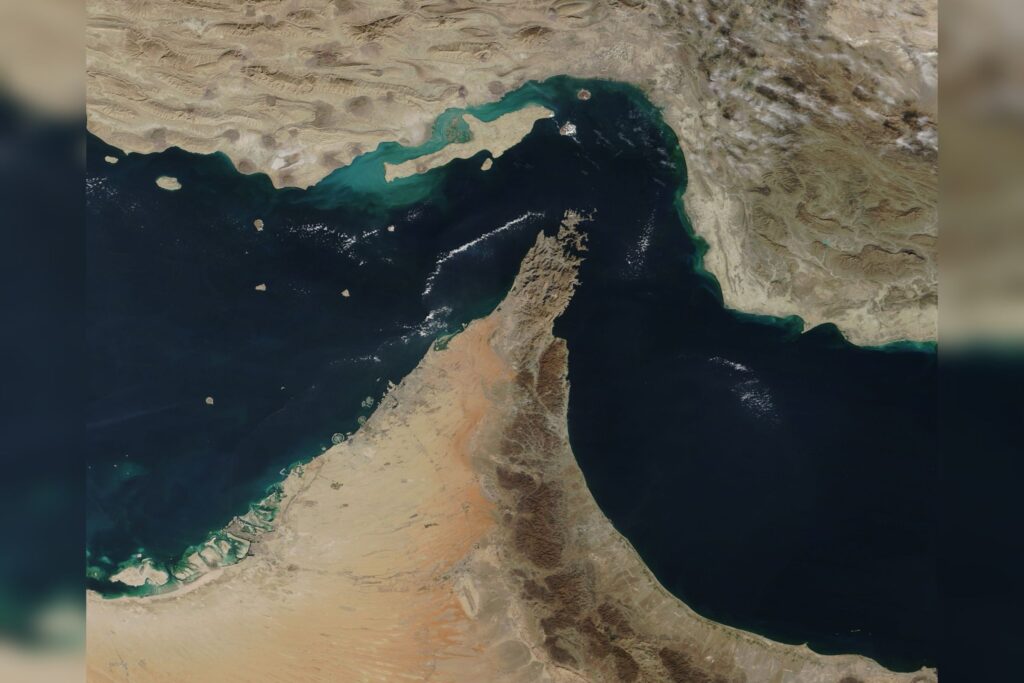
A narrow sliver of water between Iran and Oman has once again seized global attention as the most strategic chokepoint for oil shipments, with fresh signs of market jitters underscoring its fragile role in energy security. The Strait of Hormuz, just 33 kilometers wide at its most constricted point, carried roughly 21 million barrels of oil per day in 2023 — an amount equivalent to about 21 percent of total worldwide petroleum consumption.
For the nations that depend on this single maritime corridor for their energy exports and imports, any disruption reverberates far beyond the Gulf region.
A Vital Conduit Under Strain
The strait serves as the sole sea passage connecting the Persian Gulf to the open ocean, bordered by Iran to the north and Oman’s Musandam Peninsula to the south. It has long been the primary route for seaborne oil and liquefied natural gas flowing to markets in Europe and Asia. Several Gulf states — including the United Arab Emirates, Qatar, Bahrain, Kuwait, and Iraq — possess no alternative maritime outlet for their exports, making the waterway indispensable to their economies and to global supply chains.
The Gulf region holds some of the world’s largest proven oil and gas reserves, and the strait is the only gateway through which those resources can travel by sea. Iran has periodically threatened to block or mine the waterway during periods of heightened tension, although no prolonged closure has occurred in recent history.
The risk, however, has not diminished. In early January 2025, crude oil prices surged 3.2 percent to $78.50 per barrel, up from $76.10 just three days earlier on January 3. That spike reflected growing supply concerns tied directly to the strait, according to market observers.
It served as a preview of what might unfold if tensions escalate further, rather than a full-scale crisis.
History of Threats and Disruptions
Iran has made similar threats before — notably in 2012 and 2018 — but the last major disruption to Gulf energy infrastructure came in 2019, when attacks on Saudi Aramco facilities temporarily removed about 5 percent of global oil supply from the market. That incident demonstrated how a single strike could rattle production and shipping, even without a full closure of the waterway. The U.S. Fifth Fleet, based in Bahrain, patrols the area to help maintain freedom of navigation, and for now oil tankers continue to transit the strait.
But the history of Iranian threats, combined with the market’s jittery reaction in early 2025, keeps this passage at the center of global energy security discussions. The International Energy Agency, or IEA, has warned that a prolonged closure of the Strait of Hormuz could push oil prices above $100 per barrel.
Analysts note that such a projection would become the floor, not the ceiling, if the strait were actually closed for an extended period. The 2019 Saudi Aramco attacks underscored how fragile the supply chain can be — a single incident caused a 5 percent global supply cut. A sustained closure would force lengthy detours for tankers or halt shipments entirely for countries that have no other outlet, triggering cascading effects on markets and economies worldwide.
What a Disruption Would Mean
For ordinary consumers and businesses, the January 2025 price spike was a brief reminder of the strait’s importance, not the main event. If a real closure occurred, oil prices would likely climb far above the $100 threshold, potentially straining economies that are already sensitive to energy costs.
The strategic significance of the Strait of Hormuz stems from its geographic monopoly: it is the only maritime route for oil and gas leaving the Persian Gulf. Disruptions here have historically triggered sharp energy price swings and supply concerns, as seen in past incidents affecting regional infrastructure. The U.S. Fifth Fleet continues its patrols, and commercial shipping moves through the strait daily.
Yet the combination of past threats, recent market reactions, and the inherent vulnerability of a narrow passage means this waterway will remain a critical point of focus for policymakers and the energy industry alike. A prolonged disruption would not only affect oil prices but also reverberate through global supply chains, reinforcing the strait’s role as the world’s most vital oil chokepoint.
{“@context”: “https://schema.org”, “@type”: “NewsArticle”, “headline”: “Strait of Hormuz vital conduit under strain as global oil shipments hinge on fragile chokepoint”, “description”: “MANAMA, July 8 — A narrow sliver of water between Iran and Oman has once again seized global attention as the most strategic chokepoint for…”, “datePublished”: “2026-07-08T09:30:00+00:00”, “author”: {“@type”: “Person”, “name”: “Sebastian Smith”}, “publisher”: {“@type”: “Organization”, “name”: “InfoPulse Today”, “url”: “https://newsfeed.infopulsetoday.com/”}}




