
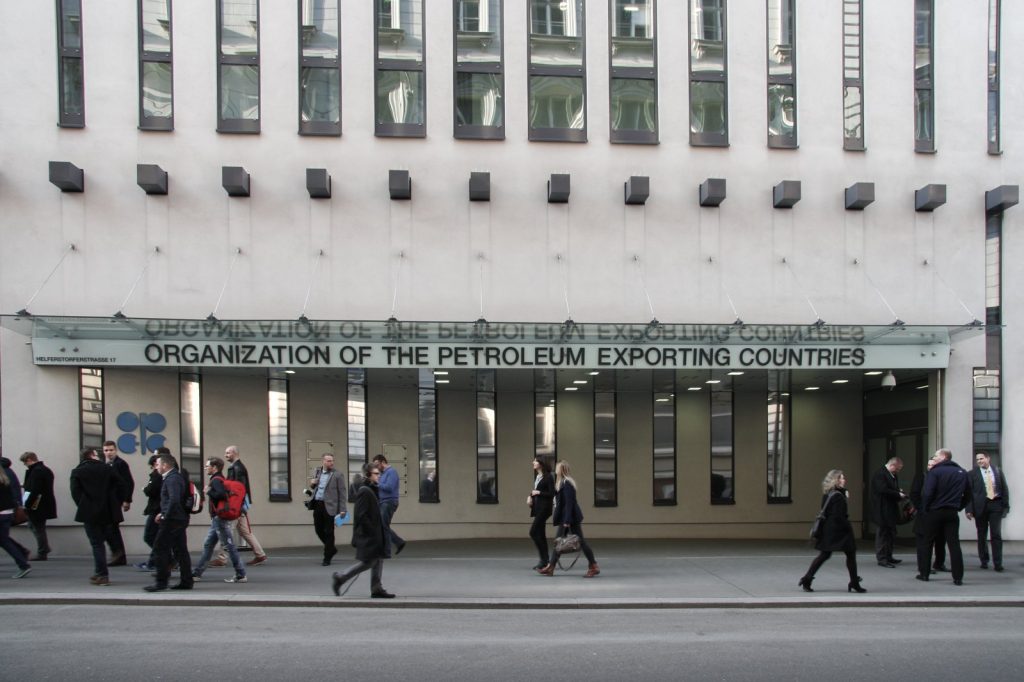
Against this backdrop of a six-decade arc, the newest line in the cartel’s story is a departure: in 2026, according to a geopolitical analysis published in May, the United Arab Emirates announced it would quit the group and its OPEC+ extension, giving strategic national interests and frustration with output caps as its reasons. For an organization born when Kuwait, Iraq and Iran joined Saudi Arabia and Venezuela in Baghdad in September 1960, five producer states pushing back against the Western majors known as the “Seven Sisters” the exit of one of its most influential members lands as both a symbolic and an economic blow. The group’s stated founding logic, the analysis notes, was to “coordinate petroleum policies among member states in order to stabilize prices and strengthen producer sovereignty over natural resources” and its headquarters, Geneva then Vienna since 1965, has “stood at the center of global energy politics” for more than six decades.
The golden age came fast and violently. After the Yom Kippur War in 1973, Arab producers embargoed countries seen as backing Israel, principally the United States and parts of Western Europe, and “Oil prices quadrupled in a matter of months, triggering inflation, recession, and panic throughout industrialized economies.” The decade’s power was real enough that the organization was “capable of shaking the foundations of Western economies” and a second shock followed the 1979 Iranian Revolution. What is at stake was made plain to Washington and the European capitals: energy security became strategy, strategic petroleum reserves were invented, nuclear programs accelerated, and import dependence became a policy obsession that has never quite left.
The wider picture, though, was always a cartel arguing with itself. Members cheated on quotas; some wanted high prices and low output, others needed revenue now. The 1980s brought the reckoning: high prices had financed non-OPEC supply in the North Sea, Alaska and Mexico, the West had learned efficiency, and in 1986 prices collapsed. Politics compounded economics, with Iran and Saudi Arabia on opposite sides of regional disputes, Iraq invading Kuwait in 1990, Libya under sanctions, Venezuela in long decline. The membership ledger tells the same story: Ecuador’s exits in 1992 and again in 2020, Indonesia’s suspension as a net importer, Qatar’s 2019 departure for natural gas, Angola’s 2024 walkout over quota fights, and now the UAE, with Abu Dhabi heavily invested in capacity and, in analysts’ reading, unwilling to cap output for cartel discipline; the same analysis sees a deepening UAE-Saudi rivalry underneath. Its summary of the pattern is the line that stings in Vienna: “ambitious producers increasingly seek flexibility rather than collective restraint.”
In the corridors of the modern market, the machinery is quotas and meetings, and since 2016 the wider OPEC+ format pulling in outsiders led by Russia and Kazakhstan, a structure built after the price collapse that American shale helped cause. The pandemic proved it still moves markets: as demand evaporated in 2020, the alliance made historic cuts to hold prices up. But a primer published the same month is careful about the limits: OPEC “does not simply “set” the world price of oil” because prices answer to demand, inventories, sanctions, shipping and finance as well, and “it does not control the entire market.” Quotas slip, some members overproduce, others cannot reach target for want of investment or because of conflict, and “This gap between announced policy and actual production is one reason analysts watch both OPEC decisions and real production data.”
The long game looks harder still. The shale revolution turned the United States into a leading producer and clipped the cartel’s pricing power; electric vehicles, renewables, storage and decarbonization policy are eating the demand curve; and even OPEC has revised its own long-term forecasts downward. Oil is not vanishing, the analyses agree, remaining essential for transport, aviation, petrochemicals, agriculture and industry, with Asian and African consumption likely rising for decades, and Gulf states are hedging through diversification, Riyadh’s Vision 2030 the most ambitious case. But declaring the “death” of OPEC would be premature, as the May analysis puts it: the group still holds a large share of proven reserves, a Middle East crisis can restore its centrality overnight, and markets “remain psychologically sensitive to OPEC announcements.” Oil, as the primer has it, “is not just another commodity.”
That is the honest close on the cartel at sixty-six: “a declining but still influential power” no longer dominant in the 1970s style, yet “too important to ignore” its future riding on the pace of the energy transition, the cohesion of what remains, and Saudi discipline. Whatever comes, the organization that five frustrated states founded in Baghdad in 1960 has already shaped the modern world’s inflation, wars and diplomacy more than almost any institution of its kind, and the wider picture it framed, that cheap energy was never politically free, is now everyone’s doctrine.
Sources
- OPEC’s Rise and Decline: How the Oil Cartel Shaped the Modern World – Geopolitical Brief
- OPEC: Meaning, History, Members, and Its Role in Global Oil Markets




