
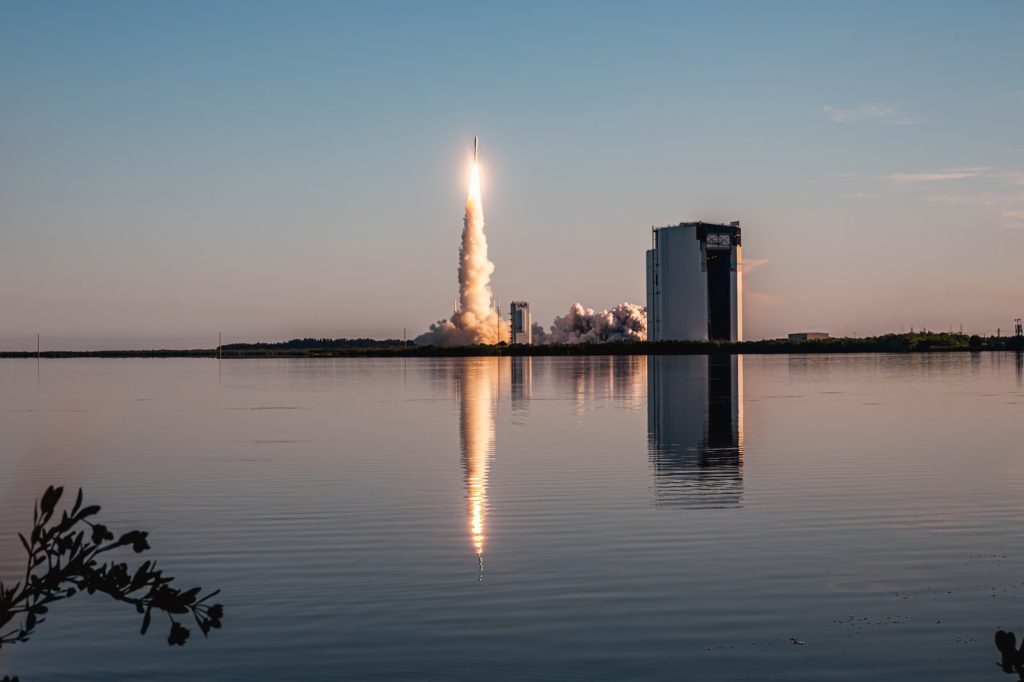
WASHINGTON, July 15 — The Federal Communications Commission’s 2022 approval of Amazon’s Kuiper satellite system set a regulatory framework that is now approaching its first major deadline, with the company required to deploy half its constellation by 2026. The FCC’s order, issued under the Communications Act of 1934, granted Amazon authority to launch and operate its broadband satellite network. The agency stipulated that Kuiper must place half of its planned satellites in orbit by 2026, with the full constellation required by 2029.
These milestones are designed to ensure that companies holding spectrum and orbital slot licenses move forward with deployment rather than warehousing valuable rights. SpaceX, operator of the Starlink system, filed comments with the FCC in 2021 and 2022 arguing that Amazon’s plans risked causing radio frequency interference and contributing to orbital congestion.
The record shows that the FCC’s final order included a requirement for Amazon to coordinate with existing operators, including Starlink, to mitigate those concerns. The timeline of those filings and the agency’s response reflects a pattern of competitive tension between the two companies as they race to build large low-Earth orbit constellations. ## Orbital congestion and the regulatory landscape The broader context for the Kuiper approval involves the rapidly growing population of satellites in low-Earth orbit.
As of 2024, there were over 8,000 active satellites in orbit, according to publicly available data. Starlink alone accounts for more than half of that total.
The U.S. Space Force tracks space debris and orbital objects, and the International Telecommunication Union coordinates global spectrum use, adding layers of international oversight to domestic FCC decisions. SpaceX has faced its own regulatory hurdles. In 2022, the FCC denied the company’s request for $885.5 million in subsidies from the Rural Digital Opportunity Fund, a program designed to expand broadband access to underserved areas.
The denial marked a significant setback for Starlink’s rural deployment plans. Sources familiar with the regulatory process note that the FCC’s dual role — promoting competition while managing orbital resources — creates inherent tensions. The agency must weigh the benefits of new entrants like Amazon against the risks of interference and debris that come with more satellites. ## What to watch next The 2026 deployment deadline for Kuiper’s half-constellation milestone will test Amazon’s manufacturing and launch capacity.
The company has not publicly disclosed the exact number of satellites it needs to have in orbit by that date. SpaceX, meanwhile, continues to expand Starlink and has its own pending regulatory matters before the FCC.
The record shows that the FCC’s actions on satellite licensing will continue to shape the competitive dynamics of the space-based broadband market. With the ITU also involved in global spectrum coordination, the interplay between domestic regulation and international agreements will remain a factor for both Amazon and SpaceX as they navigate the orbital landscape.
Sources
{“@context”: “https://schema.org”, “@type”: “NewsArticle”, “headline”: “Orbital Congestion and Spectrum Rights: The Regulatory Battle”, “description”: “WASHINGTON, July 15 — The Federal Communications Commission’s 2022 approval of Amazon’s Kuiper satellite system set a regulatory framework that is now approaching its first…”, “datePublished”: “2026-07-15T09:30:00+00:00”, “author”: {“@type”: “Person”, “name”: “Ariel Antonio”}, “publisher”: {“@type”: “Organization”, “name”: “InfoPulse Today”, “url”: “https://newsfeed.infopulsetoday.com/”}, “citation”: [{“@type”: “CreativeWork”, “url”: “https://en.wikipedia.org/wiki/Federal_Communications_Commission”}]}




