
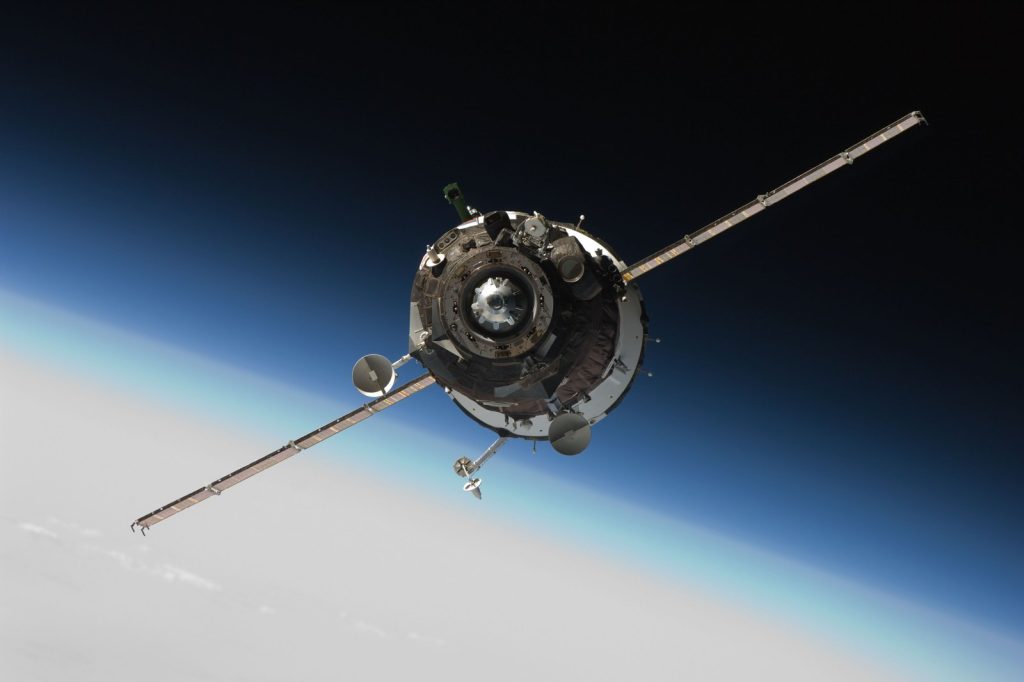
ISLAMABAD, July 7 — Scientists and space agencies are increasingly asking a question that would have seemed far-fetched just a few years ago: is cleaning up space debris by burning it in the atmosphere creating a pollution problem for Earth? The short answer, according to new discussions within the global space community, is that we do not yet know for certain — but the early findings suggest we need to take a closer look.
Space debris, or orbital debris, is the term for the growing cloud of human-made objects circling our planet. It includes defunct satellites, spent rocket stages, and fragments from collisions and explosions.
As of 2025, the US Space Surveillance Network was tracking more than 40,000 objects larger than 10 centimeters in Earth orbit. Below that size, millions of smaller pieces are too small to track but still dangerous to active spacecraft.
An old problem, a newer concern
The risk of a runaway cascade of collisions in orbit has been understood for decades. In 1978, NASA scientist Donald J. Kessler proposed what is now known as the Kessler Syndrome — a scenario in which the density of debris becomes so high that collisions cascade, eventually rendering low Earth orbit unusable.
To prevent that nightmare, space agencies and private companies have adopted guidelines for removing satellites from orbit at the end of their operational lives. SpaceX, for example, has built its Starlink constellation with a five-year lifespan, and the company practices controlled deorbiting to ensure satellites are removed from orbit promptly.
The Inter-Agency Space Debris Coordination Committee (IADC) recommends that satellites be deorbited within 25 years of mission end. SpaceX’s approach exceeds that guideline. But here is where the story takes a turn.
The very act of deorbiting — burning up a satellite in the atmosphere — is now being questioned for its environmental cost.
What goes up must come down — but where does it go?
When a satellite reenters the atmosphere, it does not simply vanish. It burns up at extremely high temperatures, breaking into tiny particles. Those particles include metals and other compounds that may linger in the upper atmosphere.
The European Space Agency (ESA) has called for a global framework to address both orbital debris and atmospheric pollution from reentries. The encouraging part is that this is a problem we can study and, potentially, manage.
Unlike some environmental challenges where the damage is already done, the question of atmospheric pollution from satellite reentries is still in its early stages. Scientists are now working to understand what happens to those particles — how long they stay aloft, whether they affect the chemistry of the upper atmosphere, and what the cumulative effect might be as the number of satellites in orbit continues to grow. Patients facing a diagnosis often ask their doctor about the balance of risks and benefits.
The same kind of careful, evidence-based thinking is now being applied to space debris. On one hand, leaving defunct satellites in orbit risks the Kessler Syndrome — a catastrophic cascade that could end our ability to use space for communications, navigation, weather forecasting, and science.
On the other hand, regularly burning hundreds or thousands of satellites in the atmosphere may have consequences we have not fully measured.
No easy answers, but a clear path forward
The IADC guidelines were developed at a time when the number of satellites was much smaller. The current approach — deorbit within 25 years — was designed to keep orbit clear for future generations. But the sheer scale of modern satellite constellations, with thousands of spacecraft being launched and deorbited on regular cycles, changes the equation.
SpaceX’s Starlink constellation is the most prominent example, but other companies and nations are also planning large constellations. Each satellite, at the end of its life, will reenter and burn up.
The cumulative effect of thousands of such reentries per year is what now concerns researchers. The ESA has been particularly vocal about the need for a coordinated international response. A global framework, the agency argues, would ensure that no single country or company creates a problem that affects everyone.
The conversation is moving from “how do we keep orbit clean” to “how do we keep orbit clean without making a mess in the atmosphere.” This is not a reason to stop deorbiting satellites. The risk of the Kessler Syndrome remains real, and the consequences of inaction in orbit would be severe.
But it is a reason to study the problem carefully, to measure what is happening in the upper atmosphere, and to develop deorbiting methods that minimize pollution. The encouraging part is that the space community is having this conversation now, before the problem becomes acute. Researchers are calling for more data, more monitoring, and more international cooperation.
The answer, as with so many complex problems, will likely involve a combination of better engineering, smarter regulation, and continued vigilance. For now, the message from scientists is clear: we need to keep studying this. And for anyone concerned about the health of our planet and our access to space, the best advice is the same one doctors give their patients — stay informed, ask questions, and talk to your doctor.
Or, in this case, talk to your space agency.




