
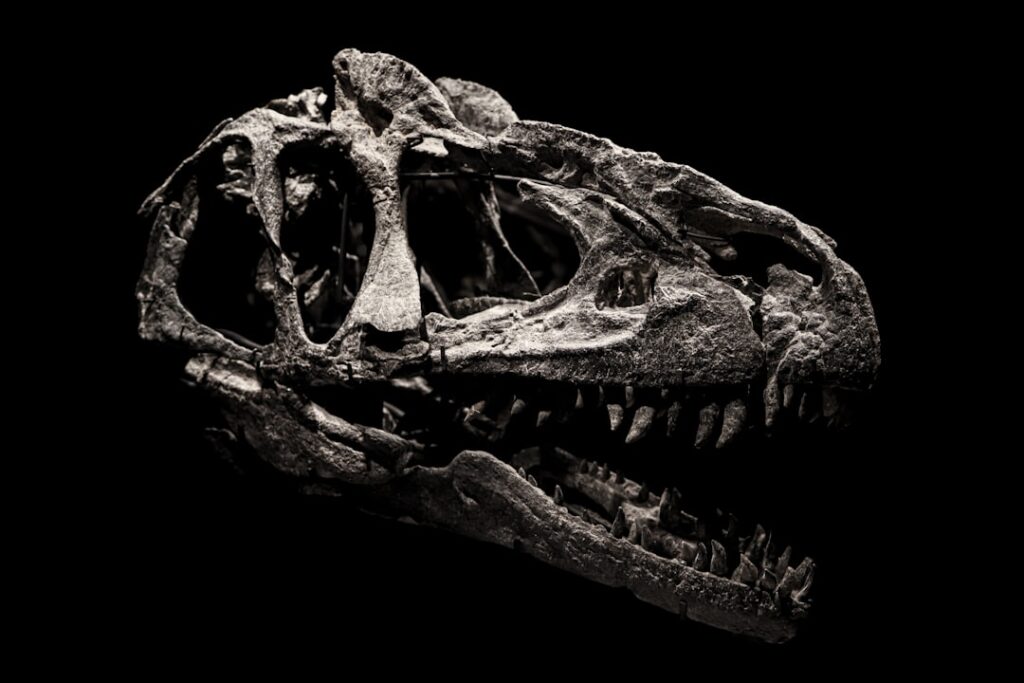
The quiet Balabansai Formation of Kyrgyzstan, long known to contain Jurassic‑age sedimentary rocks, has yielded its first evidence of a meat‑eating dinosaur. On 25 December 2024, researchers announced the discovery of a partial skeleton that they have named Alpkarakush kyrgyzicus. The find provides the first concrete proof that theropods inhabited Central Asia during the Jurassic period, closing a long‑standing gap in the continent’s fossil record.
Prior to this discovery, the region’s Jurassic strata had produced only plant fossils and a few non‑theropod vertebrates. While scientists suspected that predatory dinosaurs might once have roamed the area, no definitive remains had been recovered. The newly described specimen, recovered from the same formation, offers a tangible set of bones that can be examined for clues about the animal’s anatomy, diet, and ecological role.
Morphological analysis places Alpkarakush kyrgyzicus within the metriacanthosaurid family, a group of large, agile carnivores characterized by elongated skulls, powerful hind limbs, and sharp claws. These features suggest a predator adapted for speed and active hunting. The addition of this species expands the metriacanthosaurid lineage, introducing a branch that evolved in a region previously under‑explored for Jurassic theropods.
The significance of the find extends beyond taxonomy. Jurassic theropod fossils are abundant in North America, Europe and China, but Central Asia has remained a “blank spot” on the global map of dinosaur distribution. With a confirmed specimen now anchored in Kyrgyzstan, paleontologists can investigate biogeographic questions such as whether this species was isolated, whether it migrated across ancient land bridges, and how it relates to contemporaneous predators elsewhere.
Extraction of the bones was a meticulous process. Field teams removed the fragments from surrounding matrix, cleaned them, and conducted comparative studies with known theropods. The resulting assessment confirmed that the material does not belong to any previously described genus, warranting the establishment of a new taxon.
The genus name Alpkarakush draws from Kyrgyz mythology, honoring local cultural heritage, while the species epithet kyrgyzicus denotes the country of origin.
Future work will involve detailed description of the specimen in peer‑reviewed journals. Researchers plan to measure each bone, reconstruct locomotor capabilities, estimate overall size, and perform phylogenetic analyses to clarify the dinosaur’s evolutionary relationships within Metriacanthosauridae. The find also promises to revitalize interest in the Balabansai Formation, prompting additional field campaigns aimed at uncovering more of the Jurassic ecosystem that once thrived there.
In the broader context of paleontology, the discovery of Alpkarakush kyrgyzicus stands out as a landmark event. It not only fills a geographic and temporal void in the theropod record but also provides a new data point for reconstructing the dynamics of Jurassic predator communities across Eurasia. The scientific community has welcomed the announcement, recognizing that each new species adds a vital piece to the puzzle of Earth’s deep past.




