
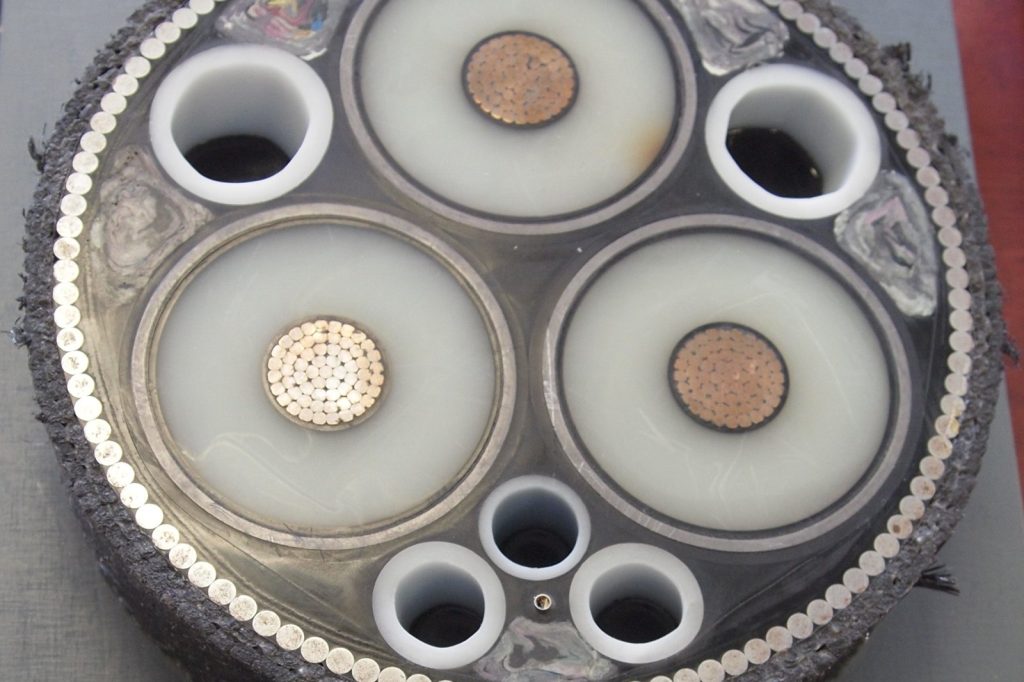
On December 25, 2024, the Estlink 2 high-voltage direct current (HVDC) submarine cable, which connects Finland and Estonia, ceased operations. The exact moment of the failure and its cause remain unknown. Finnish Prime Minister Petteri Orpo has confirmed that an investigation is now underway, but no further details have been released to the public.
Estlink 2 is a 170-kilometer underwater HVDC link designed to transmit electricity across the seabed. It operates at voltages ranging from 100 kV to 800 kV.
HVDC technology is particularly effective for long-distance transmission because it experiences significantly lower energy loss compared to traditional alternating current (AC) lines. It also enables the connection of power grids operating on different frequencies, allowing countries to trade electricity without requiring their systems to be synchronized. This is crucial for Estonia and Finland, which do not share identical grid configurations.
When functioning, the cable allows bidirectional power flow. Its failure leaves each nation to independently manage its own electricity supply.
This presents an immediate risk, especially on a cold winter day when demand is high. Estlink 2 is the larger of two interconnections; Estlink 1 is an older, smaller cable. The outage removes a substantial portion of cross-border transfer capacity, leaving Finland, with its nuclear and hydro resources, and Estonia, reliant on oil shale and wind, without the ability to balance each other’s loads. This reduces grid flexibility, increases the likelihood of price spikes, and forces a greater reliance on backup generation, which is often both more expensive and more polluting.
HVDC technology has become a cornerstone of modern long-distance power transmission, ideal for both underwater cables and land-based links across continents. Its primary advantage is reduced energy loss as heat.
Estlink 2 is a standard piece of infrastructure, not an experimental project. Like all infrastructure, it is subject to failure. The investigation will seek to determine the cause.
While sabotage remains a possibility, particularly given recent suspicious activity around Baltic Sea energy and data cables, no evidence has been presented. Other potential causes include equipment failure, a manufacturing defect, a ship anchor strike, or a seismic event.
None have been confirmed. The broader significance of this outage extends beyond the immediate power loss. It challenges the principle of interconnection that underpins European energy policy, which promotes cross-border links to enhance resilience.
Shared grids allow one country’s surplus to cover another’s shortfall, which is particularly beneficial for variable renewable energy sources. The wind might be calm in Finland but strong in Estonia, and the cable enables that exchange.
Without it, each country becomes more isolated, reducing the margin of safety and increasing the strain on their respective grids. The investigation continues, and both nations await answers as the cable remains inactive on the seabed.
Sources
- Undersea power cable linking Finland and Estonia hit by outage…
- Undersea power cable linking Finland and Estonia hit by outage…




