
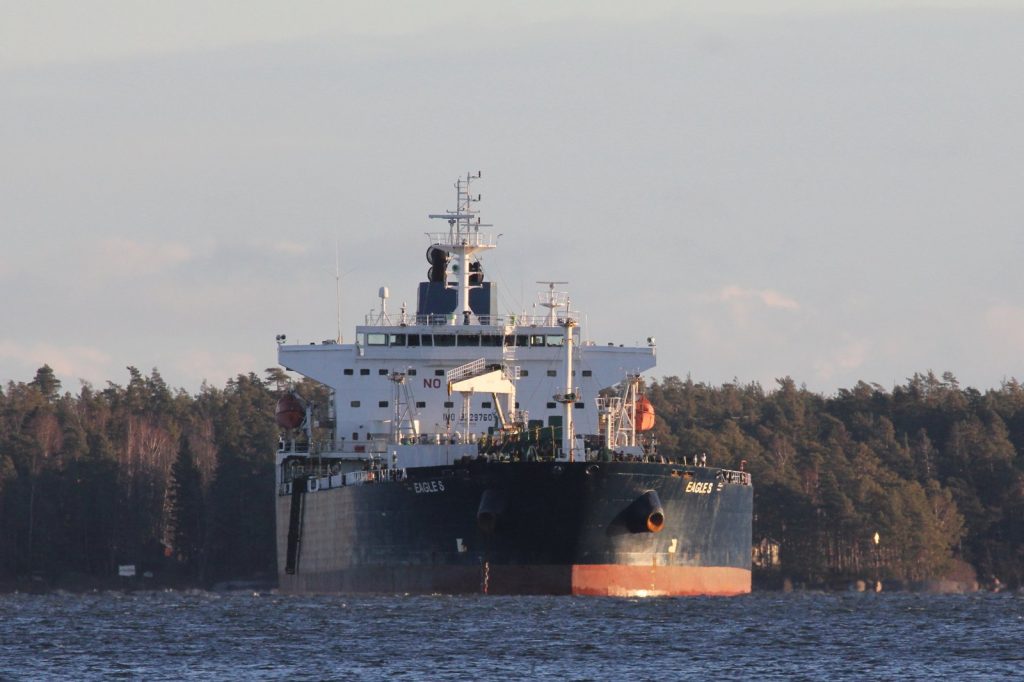
Estlink 2 HVDC Cable Stops Power Flow Between Estonia and Finland on Christmas Day
On the morning of December 25, 2024, the Gulf of Finland fell silent—not because of the water, but because electricity ceased to move across the sea floor. The Estlink 2 high‑voltage direct current link, which normally carries power between Estonia and Finland, stopped transmitting at some point during the day. No official explanation has been given for the interruption, and the duration of the outage remains unknown.
Finnish Prime Minister Petteri Orpo announced that an investigation is underway to determine why the cable failed. That is the only statement released by authorities so far.
The submarine cable stretches 170 kilometres beneath the Gulf of Finland and operates as an HVDC system, transmitting direct current at voltages ranging from 100 kV to 800 kV. HVDC technology is favoured for long‑distance underwater connections because it loses less energy as heat than conventional alternating current lines. It also enables the interconnection of power grids that run at different frequencies, allowing electricity to be exchanged without the need for synchronous operation. Estonia and Finland do not share identical grid characteristics, so the cable provides the essential bridge that lets power flow in either direction when it is functioning.
When the link is operational, each country can draw on the other’s generation to smooth fluctuations in supply and demand. When it fails, as it did on Christmas Day, the two systems must rely solely on their own resources.
This creates an immediate concrete risk: a Baltic nation and a Nordic nation, each with its own mix of generation, are suddenly disconnected during a winter period when demand is high and every megawatt matters. Estlink 2 is not the only connection between the states; an older, smaller counterpart called Estlink 1 remains in service. However, Estlink 2 carries the larger share of cross‑border capacity and is described as the workhorse of the link.
Its loss removes a significant chunk of the ability to move electricity between the two countries. Under normal circumstances, Finland’s nuclear and hydroelectric plants complement Estonia’s oil‑shale and wind‑based generation.
The cable allows surplus power from one side to offset a shortfall on the other, improving overall flexibility. Without that exchange, each grid must absorb its own variations, which reduces flexibility, raises the chance of price spikes, and may force greater reliance on backup generation that tends to be dirtier and more costly. The broader significance of HVDC lies in its role as the backbone of modern long‑distance power transmission.
It is particularly suited for underwater cables, but it is also used for land‑based links that span continents. The advantage is simple: less energy is wasted as heat compared with AC lines, so power companies have increasingly turned to HVDC for new projects.
Estlink 2 is one such piece of infrastructure; it is not an experimental device but a permanent part of the regional grid, and like all infrastructure it can fail. The investigation will consider various possibilities. Sabotage is always a concern with undersea cables, and the Baltic Sea has seen suspicious activity around energy and data communications lines in recent years.
No evidence of intentional interference has been released in this case. Other potential causes include equipment failure, a manufacturing defect, damage from a ship’s anchor, or a seismic event; none of these have been confirmed at this stage.
Prime Minister Orpo said only that the inquiry is ongoing. What is truly at stake goes beyond the immediate loss of electricity. It touches the principle of interconnection that underpins European energy policy: more cross‑border ties are meant to make the whole system more resilient, allowing one country’s surplus to cover another’s deficit.
Renewable output, which is inherently variable, benefits from being shared over a wider area—when the wind is calm in Finland it may be strong in Estonia, and the cable makes that exchange feasible. Without the link, each nation becomes more isolated, reducing the margin of safety and leaving the grids with less room for error.
They must work harder to maintain stability.




