
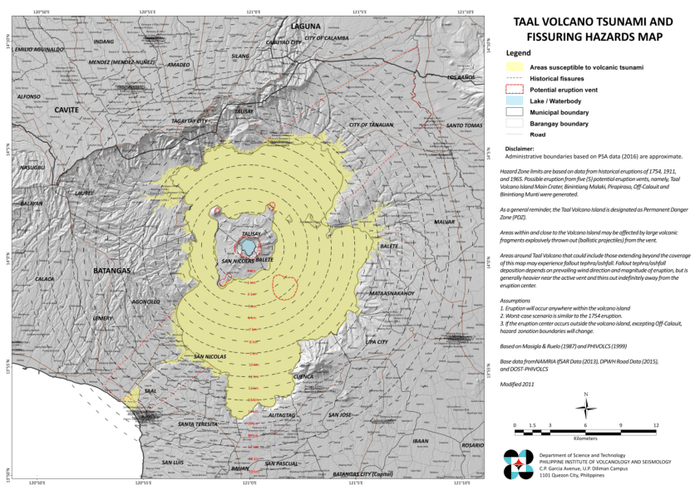
The Philippine Institute of Volcanology and Seismology (Phivolcs) announced on 13 January 2020 that a volcanic tsunami could develop if Taal Volcano’s activity escalates to Alert Level 5. The volcano, situated roughly 60 km south of Manila, began emitting steam on the afternoon of 12 January, prompting the agency to raise its alert status.
According to Phivolcs, a tsunami in a caldera lake can be triggered when rising magma deforms the lake floor, displacing water. The institute warned that such a wave could accompany an eruption column soaring up to 15 km, potentially causing flooding in the surrounding communities. At the time of the statement, Taal Volcano was placed under Alert Level 4 following a magmatic eruption and lava fountaining.
Phivolcs cautioned that, should the unrest persist, the alert could be upgraded to Level 5 within days, a stage that would bring “extreme hazards.” Director Renato Solidum emphasized that the agency was monitoring the situation closely and stood ready to adjust the alert level as needed. In response to the heightened threat, the Philippine Army’s 2nd Infantry Division began evacuating residents of Batangas province.
By 5:00 a.m. on 13 January, more than 23 000 people had been moved from high‑risk zones around Taal Lake, including the towns of Balete, Laurel, San Nicolas, Talisay, and portions of Lipa and Tanauan City. Lieutenant General Gilbert Gapay described the operation as a precautionary measure to safeguard civilians. Phivolcs also urged locals to stay clear of the volcano and obey evacuation orders.
The agency highlighted collaboration with local governments and other agencies to implement necessary safety measures. Humanitarian assistance was mobilised swiftly.
The Department of Social Welfare and Development supplied food and temporary shelters to evacuees, while the Department of Agriculture announced support for farmers whose lands were affected by ashfall. Agriculture Secretary William Dar pledged ongoing help to aid recovery. No casualties had been reported as of the latest update, though the volcano continued to emit ash and steam, keeping conditions volatile.
International bodies took note of the crisis. The United Nations Office for the Coordination of Humanitarian Affairs expressed readiness to assist, and Japan’s embassy in Manila confirmed that it was monitoring the event and prepared to provide aid if requested.
The potential for a volcanic tsunami heightened concerns about long‑term impacts on the region. While the full extent of damage remains uncertain, authorities anticipate a protracted recovery period for communities around Taal Lake. Overall, the coordinated effort between Philippine agencies, the military, and international partners aims to mitigate the immediate dangers and lay the groundwork for rebuilding. Continuous monitoring by Phivolcs will determine whether the alert escalates to Level 5, at which point the threat of a tsunami and associated flooding would become a critical priority for emergency responders.




