
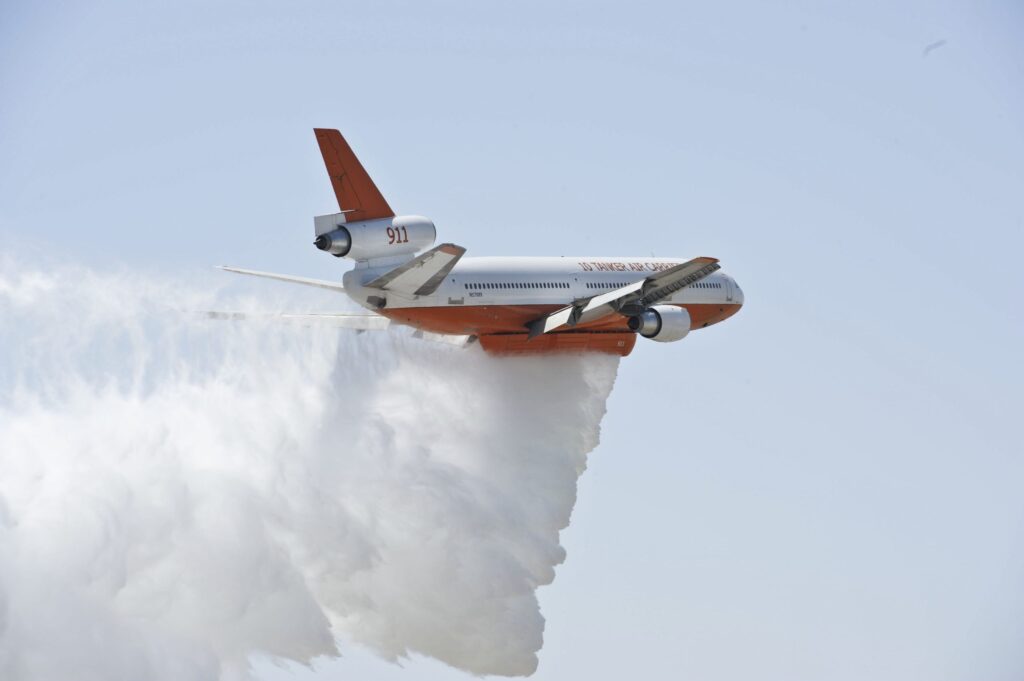
An aerial firefighter died on July 10, 2024, when his single-engine air tanker crashed into Hauser Lake in Montana. The pilot was engaged in waterbombing operations against the Horse Gulch fire at the time of the accident. He did not survive.
The incident occurred during a routine shift in the middle of the day. The pilot was one of the men and women who operate aircraft low and slow over rugged terrain, carrying heavy loads of water or fire retardant. These missions involve repeated drops in conditions that would be hazardous even for hikers on clear ground. The Horse Gulch fire, like all wildfires, continued to burn without regard for the loss.
Aerial firefighting is a demanding profession where errors are not tolerated, and even flawless execution can result in fatal outcomes. The crash adds to a troubling pattern: wildfire seasons are lengthening, fires are intensifying, and the need for aerial resources has risen steadily over the past decade. The fleet responding to these demands is aging and costly to maintain, staffed by individuals who understand the risks and choose to fly regardless.
Fixed-wing tankers and helicopters serve distinct roles in firefighting operations. Helicopters can hover, dip buckets into water sources, and make precise drops. Fixed-wing aircraft fly faster and carry larger payloads but require runways and commit to their flight paths without the ability to loiter. The pilot who died on Hauser Lake was flying a fixed-wing plane, fully committed to his mission.
Firefighting chemicals such as Phos-Chek retardant and water enhancers—foams and gels—are dropped by the ton to slow fires and give ground crews time to work. These substances are designed to be effective, but they do not pilot the aircraft. The pilot must navigate through smoke, rotor wash, and downdrafts that can force a plane into a lake in an instant.
Other aerial firefighters include smokejumpers and rappellers, who parachute or descend from helicopters into remote areas. They carry chainsaws, pulaskis, and roughly forty pounds of gear, staying on the ground after the aircraft depart. The ground crew battling the Horse Gulch fire lost their air support when the plane crashed, along with aerial surveillance and water drops. They continued fighting without it.
Investigators will examine the aircraft, the pilot’s record, weather conditions, load factors, and the seconds leading up to impact. They are unlikely to find a single explanation that makes sense of a man dying in a Montana lake while a fire burned uphill. No such sense exists.
Aerial firefighting is described clinically as a critical component of wildfire management. The reality is a pilot in a cockpit, a fire on the ground, and a lake that became the final sight. The Horse Gulch fire will be fought by other pilots tomorrow. They will fly the same routes, drop the same retardant, and bank over the same lake. The risks are not abstract or calculable; they are accepted. Every pilot who straps into a firefighting aircraft knows this could be the outcome. The crash on Hauser Lake is a reminder of that acceptance, not a warning. The pilots already understand.




