
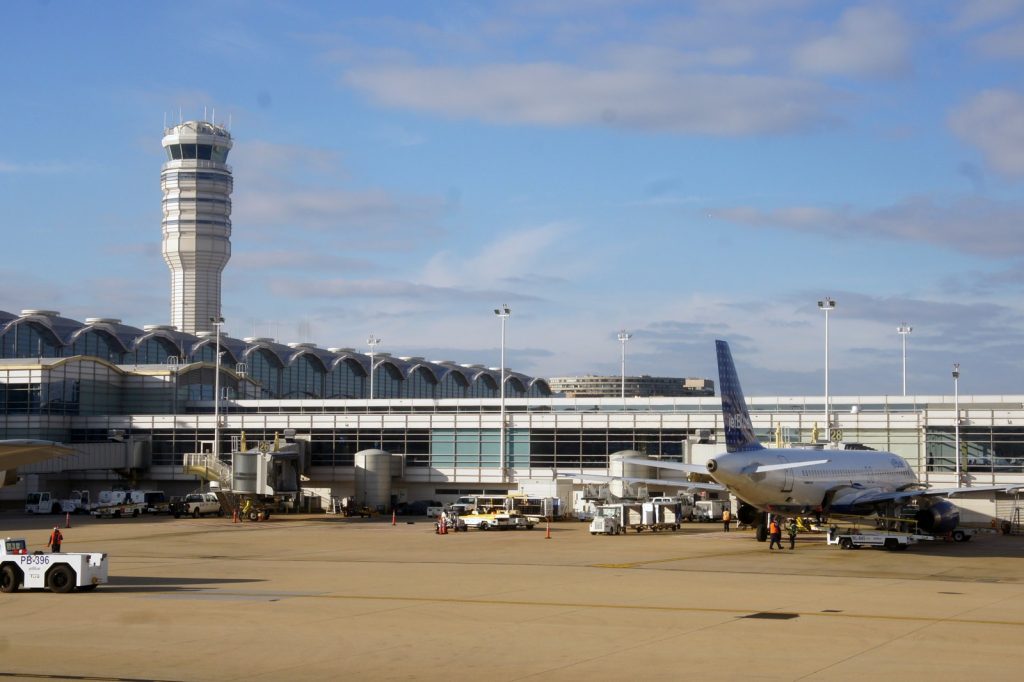
On the night of January 29, a PSA Airlines Bombardier CRJ‑700 operating under the American Eagle brand collided with a U.S. Army Sikorsky UH‑60 Black Hawk helicopter above the Potomac River near Ronald Reagan Washington National Airport. All 67 people aboard the two aircraft perished, and no bodies have yet been identified in official records.
The crash forced an immediate shutdown of Reagan National, halting all arrivals and departures. The airport, a critical hub for the Washington region, saw its air‑travel network grind to a halt, stranding thousands of passengers nationwide and creating a chaotic scene of grief and disruption on the ground.
Both aircraft were under the direction of air‑traffic control when they entered the same segment of airspace. The Black Hawk was conducting a routine military training flight, while the CRJ‑700 was on a scheduled passenger service. Details of the helicopter’s flight plan, altitude and communications have not been released, but the presence of military helicopters in the approach corridors of Reagan National has long been recognized as a point of operational tension.
Reagan National’s location – directly across the Potomac from downtown Washington – places it within one of the world’s most congested and restricted airspaces. Approaches to its runways require low‑altitude maneuvers amid no‑fly zones, military training routes and frequent helicopter traffic from nearby bases. The collision, described only as “severe,” left wreckage in the river and will require a months‑long investigation to determine the exact dynamics of the impact.
The National Transportation Safety Board (NTSB) will lead the investigation, while the Federal Aviation Administration (FAA) and the U.S. Army have pledged separate reviews of their respective procedures. Investigators will examine radio frequencies, transponder data, altitude readings and human decision‑making to understand how two aircraft, each in contact with controllers, came to occupy the same point in space.
PSA Airlines, a wholly owned subsidiary of the American Airlines Group, operates more than 800 daily flights to nearly 100 destinations and employs over 5,000 staff. The carrier’s fleet consists exclusively of the Bombardier CRJ‑700 for its regional routes. At the time of the crash, PSA had just announced a headquarters move from Dayton, Ohio, to Charlotte, North Carolina, a transition intended to mark a new chapter for the airline. The tragedy now adds a focus on whether the airline’s scheduling and training practices may have contributed to the accident.
The U.S. Army owns the Black Hawk involved in the crash. Although the helicopter was part of a routine operation, the exact nature of its mission, its flight path and its coordination with air‑traffic control remain undisclosed pending the ongoing investigations.
Authorities note that the air‑traffic system over Washington was originally designed for a lower volume of mixed commercial and military traffic. Over time, the increase in flight numbers, aircraft speeds and the blend of civilian and military operations have narrowed safety margins. The January 29 collision underscores concerns that the existing infrastructure may be strained beyond its original capacity.
For the families of the 67 victims, the search for answers has only begun. The forthcoming findings from the NTSB, FAA and Army reviews will determine whether procedural changes are needed to prevent a repeat of this tragedy and to restore confidence in the nation’s capital airspace.




