
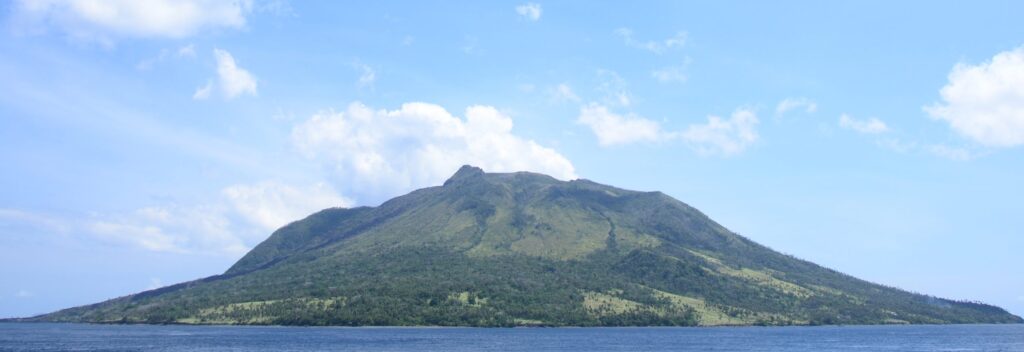
On 17 April 2024, the stratovolcano Ruang, situated on a small island in Indonesia’s Sangihe Islands arc, erupted with enough force to trigger a large‑scale evacuation. Local officials moved hundreds of residents from the vicinity of the volcano as ash and volcanic gases began to drift over the surrounding area, posing immediate health risks such as respiratory irritation. Ruang rises to 725 metres above sea level on an island roughly 4 by 5 kilometres in size.
Its summit, crowned by a partial lava dome, offers clear‑day views of neighboring peaks—Klabat to the south, Siau to the north and Ternate to the east—yet the same geological setting also makes the volcano prone to sudden, violent activity. The latest eruption underscores the need for continuous monitoring of this historically volatile mountain.
Emergency response teams dispatched by the Indonesian government have been on the ground assessing damage and providing assistance. Their priorities include safeguarding the health of displaced residents, distributing protective equipment, and coordinating shelter arrangements. The rapid evacuation reflects the authorities’ assessment that ash fall and gas emissions could compromise air quality and water sources, as well as damage crops and local wildlife habitats.
Beyond the immediate human impact, the eruption raises concerns for the island’s ecosystem. Fine ash can settle on agricultural fields, reducing yields, while volcanic gases may alter the chemistry of nearby water bodies.
The government has signaled its intent to support affected farmers and to implement measures aimed at limiting long‑term environmental degradation. Scientists continue to monitor Ruang’s activity, tracking ash plumes and gas output to forecast any further developments. Their observations will inform both ongoing evacuation decisions and future preparedness plans for communities living in the shadow of the volcano.
The incident arrives at a time when Indonesia, like many nations, is confronting broader environmental challenges. While the eruption itself is a natural event, officials have reiterated the importance of sustainable practices and renewable energy investments to mitigate human‑driven climate pressures that can exacerbate disaster impacts.
International aid organisations have been alerted to the situation, and coordination with local authorities is expected to ensure that relief reaches those displaced while environmental safeguards are put in place. The combined effort of government agencies, emergency responders, and scientific teams aims to minimise both the immediate health hazards and the longer‑term ecological consequences of the eruption. As the ash settles and evacuation shelters operate, the focus remains on protecting the well‑being of the island’s residents and restoring normalcy.
Ongoing assessments will determine when it is safe for displaced families to return and for agricultural activities to resume, while continuous observation of Ruang will guide future hazard mitigation strategies.




