
Russia took in EUR 733 mn per day from fossil fuel exports in April 2026, according to the Centre for Research on Energy and Clean Air (CREA). That was 4% more than in March and the best figure in two and a half years. Shipped volumes fell 7% over the same period, so higher prices did the work.
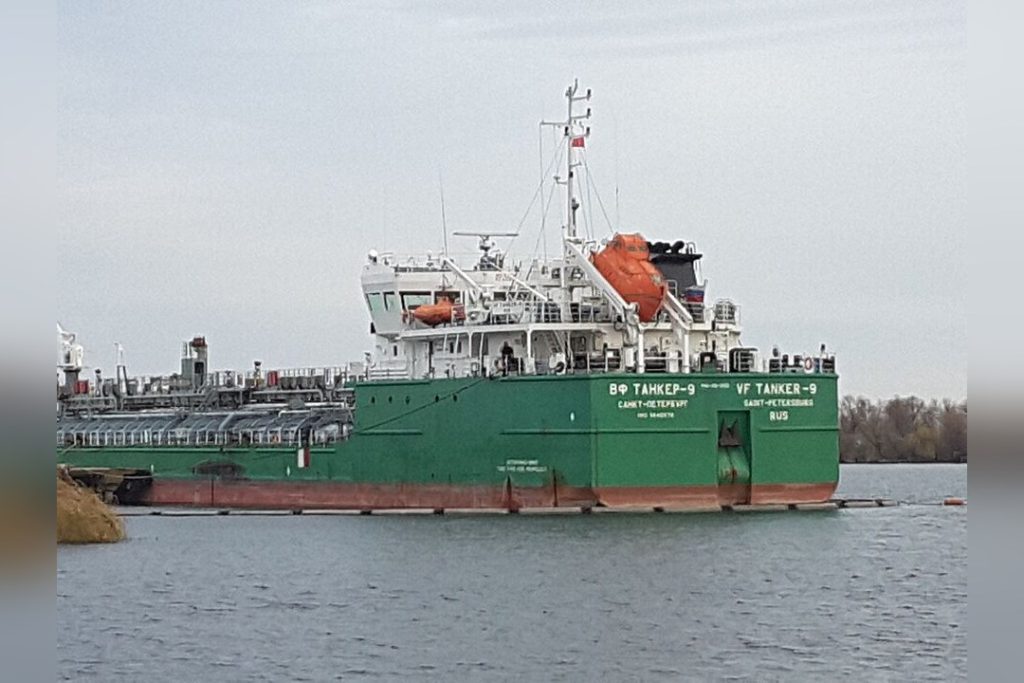
The CREA analysis, written by Luke Wickenden and Isaac Levi, ties the result partly to the way Moscow now moves its oil. Sanctioned “shadow” tankers carried 54% of Russia’s fossil fuel exports in April, the largest share the group has recorded. Tankers from G7+ countries handled another 44%. Non-sanctioned shadow vessels took the rest.
Crude dips, gas and products climb
Crude oil revenue slid 9% to EUR 374 mn per day. Even so, it stood 68% above February 2026 and 44% above April of last year. Ukrainian drone strikes on Russian export infrastructure cut seaborne crude volumes by 24% from March, and CREA says that outweighed a sharp rise in the Russian crude price. The group’s early estimate, built on a price of USD 93 per barrel, puts April Mineral Extraction Tax revenue at EUR 7.8 bn.
Drone attacks on the Rosneft-owned Tuapse refinery, Russia’s fifth-largest oil product export installation, also weigh on the figures. Oil product export volumes between January and April were down 65% on the year earlier.
Other lines moved the other way. Seaborne oil product revenue rose 32% to EUR 173 mn per day on a 9% rise in volume. Pipeline gas brought in EUR 82 mn per day, up 15%, even though volumes slipped 7%. LNG earned EUR 58 mn per day, up 25%. CREA notes that only two LNG carriers crossed the Strait of Hormuz in April, which kept global gas supply tight and pushed European prices up 24% on the year. Coal revenue reached EUR 45 mn per day, a 5% gain.
The Druzhba pipeline, which feeds Hungary and Slovakia, resumed flows on 23 April after almost three months idle. It added EUR 27 mn per day.
Who is buying
China was the largest buyer in April. It accounted for 41% (EUR 7.3 bn) of Russia’s export revenue from the top five importers, and crude made up 75% of that, or EUR 5.5 bn. Its imports of Russian Sokol grade crude rose 36% on the month, the highest volume in over two years. The Dalian refinery, once the biggest processor of Russian crude, took a cargo for the first time since September 2025.
India ranked second at EUR 5 bn, of which crude was EUR 4.5 bn. Its Russian crude imports fell 19.4% month-on-month, in part because the Vadinar refinery, which runs only on Russian feedstock, shut for maintenance on 9 April. Visakhapatnam’s Russian purchases, meanwhile, jumped 149%.
Turkiye bought EUR 3 bn of Russian hydrocarbons, led by pipeline gas at EUR 1.2 bn. Saudi Arabia was fifth at EUR 683 mn, all of it oil products unloaded at western ports. None of those cargoes passed through Hormuz.
Over the whole period since 5 December 2022, China has taken 49% of Russia’s crude exports and India 37%. Turkiye has taken 26% of oil products, the most of any buyer.
The EU’s share
The EU was the fourth-largest buyer, with EUR 1.7 bn, almost 10% of top-five revenue. LNG made up 59% of that. Spot-market purchases have been banned since 25 April under Regulation (EU) 2026/261, yet monthly LNG buying stayed high. The bloc’s share of Russian LNG fell 8%, mostly because Spain halved its imports.
France was the biggest EU importer at EUR 413 mn of LNG. Hungary followed with EUR 380 mn, then Belgium with EUR 363 mn, Slovakia with EUR 228 mn and Spain with EUR 181 mn.
The EU barred oil products made from Russian crude on 21 January 2026. CREA still counted eight high-risk shipments from refineries using Russian crude that unloaded at EU ports in April. Seven left Turkish refineries and one left Georgia. Cyprus received four. The analysts say national enforcement agencies must investigate such cargoes to keep Russian oil out of the bloc.
Refineries in India, Turkiye, Brunei and Georgia sent EUR 760 mn of oil products to sanctioning countries in April. Australia took EUR 399 mn and the US EUR 216 mn. CREA estimates EUR 232 mn of the total was refined from Russian crude.




