The latest ledger is from June 2026, and it reads two ways at once. Russia’s earnings from fossil fuel exports slipped 1% that month to EUR 734 million a day, even as the barrels shipped actually grew by 7%, according to CREA, the research group that compiles the monthly export analysis. Sanctions squeeze the price; the volumes keep moving. The money still lands in Moscow’s treasury, and the war still draws on it.
Drilling into the month: crude revenue fell 8% to EUR 348 million daily while loadings jumped 14%, concentrated at the Black Sea port of Novorossiysk, up 68%, while the Baltic ports Ust-Luga and Primorsk shed 10% and 9% respectively. Ukraine’s drones did the sharpest damage. Refinery strikes pushed seaborne oil product loadings down 21% to their lowest level on record, the Tuapse terminal loaded nothing at all, and fuel shortages at home forced a temporary jet fuel export ban in early June.
Who Keeps Paying
The customer list is short and telling. China alone took 41% of revenue from the top five buyers in June, EUR 7.3 billion, with crude making up EUR 4.9 billion of it. India followed at EUR 5.5 billion, its Russian crude purchases hitting a record EUR 4.5 billion, up 34% in a single month. Turkiye bought EUR 2.3 billion, Saudi Arabia EUR 799 million, and the European Union itself EUR 1.9 billion, almost 11% of the top five’s payments.
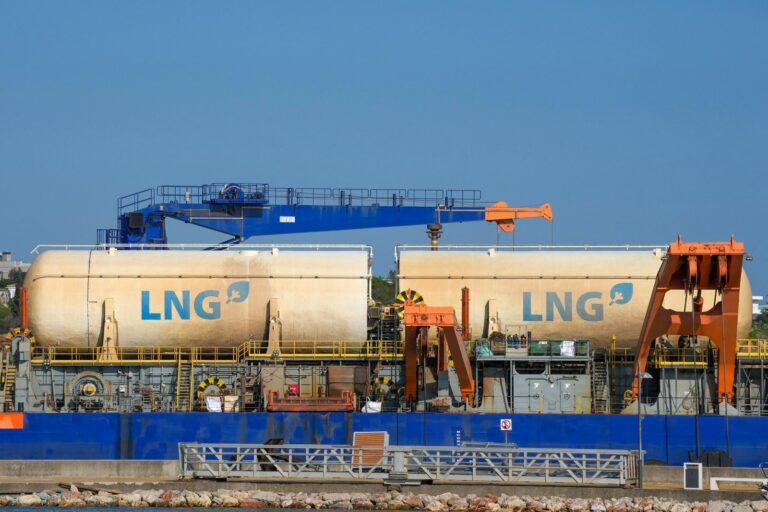
Europe’s slice is gas-heavy: LNG worth EUR 993 million made up just over half of its June imports, and the EU remains the single largest buyer of Russian LNG at 49% of exports, ahead of China at 23% and Japan at 18%. Hungary was the bloc’s biggest customer at EUR 591 million, while France, second at EUR 349 million, actually increased Russian LNG deliveries by 34% month-on-month. A short-term LNG contract ban took effect on 25 April 2026, yet legacy deals signed before 17 June 2025 remain permissible.
The Laundering Loop
Oil finds a side door. An EU ban on fuel made from Russian crude has applied since 21 January 2026, but Novaya Gazeta Europe, working from CREA figures, counted nearly €1 billion worth of such products entering the bloc through third-country refineries between January and May: €929 million processed in Turkiye, India and Georgia, down 45% from the final quarter of 2025, moving in 49 tanker cargoes that CREA says “fall into the high-risk category under EU guidelines,”. Cyprus unloaded 16 of them, Spain and France seven each.
The economics, not the paperwork, keep it alive. Tatiana Mitrova of Columbia University’s Centre on Global Energy Policy put it bluntly: “The margins are simply too tempting. Sanctions have clearly narrowed these flows, but they have not cut them off completely.” Refiners can claim Russian crude feeds only one line, a story Carnegie’s Sergey Vakulenko calls convenient. “This is probably untrue, but it grants them plausible deniability.” One detail stings most: “It’s significant that petroleum products imported in this way were not recorded in official EU trade statistics as imports from Russia,” the Cedar think-tank report noted.
What the Trend Shows
The trend underneath is stubbornness. Cedar finds Russia’s average oil and gas revenue in 2023 and 2024 ran just 3.3% below its 2018-2019 average, and 2025’s 24% fall owed more to cheaper oil and a stronger ruble than to sanctions, which Washington’s listings of Gazprom Neft, Surgutneftegas, Lukoil and Rosneft only briefly disrupted. Even so, January to May 2026 brought the Kremlin 2.9 trillion rubles, about €34.6 billion, nearly a third less than a year earlier. As long as the discount exists, Mitrova warned, buyers will keep finding ways “by any means: through changing export routes, reallocating cargo batches, blending, or more creative documentation of the fuel’s origin”. Cut deeper, and the money for the war follows.
Sources
- June 2026 — Monthly analysis of Russian fossil fuel exports and sanctions – Centre for Research on Energy and Clean Air
- The billion-euro loophole. How is Russia still earning revenue from oil exports to Europe in spite of sanctions? — Novaya Gazeta Europe