
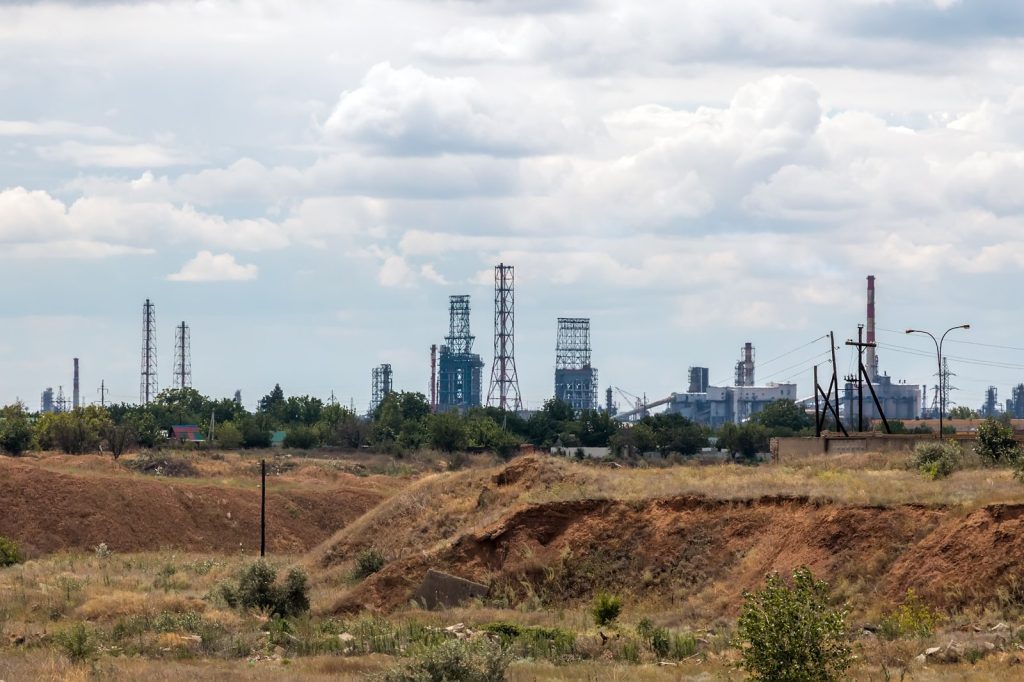
Over 51% of Russia’s oil refining capacity has been disabled by Ukrainian attacks, the Ukrainian Defense Ministry reported on Oct. 4.
Defense Minister Yevhen Khmara gave the figure in an update, citing analysts from Ukraine’s intelligence services, the Defense Ministry and the General Staff. “This is the result of carefully planned, systematic, and comprehensive actions aimed at crippling the Russian war machine and destroying its military-economic potential,” he said. He called the damage “a significant blow to the enemy’s economy, to its ability to wage aggression, and to supply its military formations.”
The new number is higher than the 45% drop in refining capacity that the General Staff reported on Sept. 21. The ministry’s report listed recent attacks on the Moscow, Yaroslavl, Kirishi, Perm, Ilsky, Saratov and Syzran refineries.
Why Kyiv targets refineries
Ukraine has gone after Russian oil and gas infrastructure with long-range strikes, and its campaign against refineries has grown sharply over the past two years. Kyiv treats the plants as valid military targets because they supply both fuel and money to Russia’s armed forces.
Its long-range drones and missiles regularly reach targets more than 1,500 kilometers (930 miles) from Ukrainian-controlled territory. On Sept. 9 the military reported a record, saying a Fire Point FP-1 drone hit a Russian gas facility 3,200 kilometers (1,988 miles) from the border. The Defense Ministry said Ukraine tripled its production and procurement of long-range strike drones in 2026. “This is not the limit,” it said. “We will continue to scale up our long-range strike capabilities.”
Moscow has responded with secrecy. President Vladimir Putin signed a decree on Sept. 28 restricting access to data on the country’s oil refineries and energy exports.
The International Energy Agency’s view
The International Energy Agency lowered its forecast for Russian refining over the next 18 months to 4 million barrels per day, Bloomberg reported. That is 30% below the level before the full-scale invasion. The agency pointed to repeated attacks combined with the “patchwork nature of repairs.”
August brought at least 22 strikes on Russian refineries, the highest monthly figure since the full-scale war began. “Ukrainian forces are using multiple drone waves against single sites, overwhelming protective netting and air defences,” the agency’s report said. “The targeting also appears more precise.”
Drones are increasingly hitting secondary processing units, which can take around 6-8 months to replace or restart. International sanctions on Russia’s energy sector limit access to replacement equipment. The agency also warned that “longer lead times to source replacement parts and the approach of colder weather could compound the stress placed on the Russian system.”
Ukrainian drones hit the Ryazan refinery on Sept. 7 and the Saratov refinery overnight on Sept. 8. Residents near Saratov reported explosions and a fire.
Sources
- Ukraine's deep strikes have wrecked over half of Russia's oil refining capacity, Defense Ministry says
- Russia's oil refining could fall 30% below pre-war levels for 18 months




