
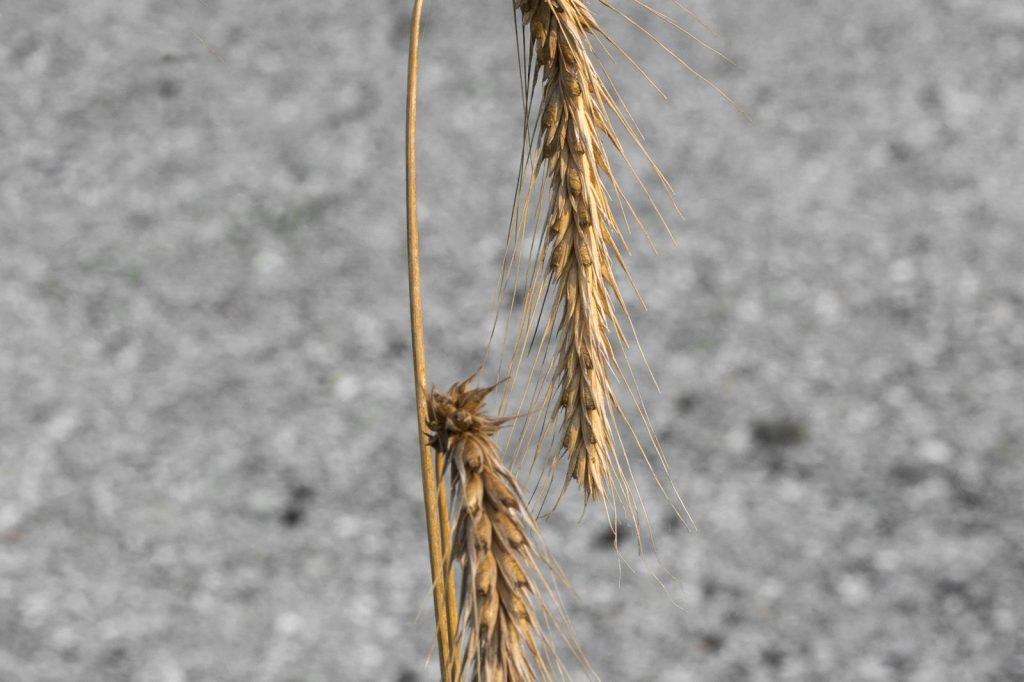
Two molecules from rye pollen have kept chemists guessing for almost 30 years. Researchers at Northwestern University have now pinned down their exact three-dimensional structures, and the answer came from building them by hand.
The molecules, called secalosides A and B, were found nearly three decades ago. In animal studies they seemed to slow tumor growth. Then the work stalled, because nobody could say what the molecules actually looked like in three dimensions. The findings appeared in the Journal of the American Chemical Society.
Two models, one mirror image
Advanced nuclear magnetic resonance spectroscopy could not settle how key parts of the molecules were arranged. For decades scientists argued over two candidate structures. Both had the same atoms joined in the same way and the same overall shape. In each, one critical region was the mirror image of the other.
That small difference can decide whether a molecule affects a biological target at all. Karl A. Scheidt, who led the study, used a plain comparison. “It’s like your hands,” he said. “They are mirror images of each other, but you need a different glove for each. If you had two left-handed gloves, it wouldn’t work because your hands can’t be superimposed on top of one another.”
Building the molecules from scratch
The Northwestern team used total synthesis, which means assembling a natural molecule step by step in the laboratory. It was hard going. At the core of secalosides A and B sits an extremely rare, highly strained 10 membered ring, a tightly compressed structure that is notoriously difficult to make.
The chemists got around the problem by first making a larger, more flexible ring. A chemical reaction then turned it into the smaller strained ring in a single step.
They produced both proposed versions and compared each with samples taken from rye pollen. Only one matched perfectly. That settled which structure is real.
What it opens up
“In preliminary studies, other researchers found that rye pollen could help different animal models clear tumors through some unknown, non-toxic mechanism,” said Scheidt, a professor of chemistry at Northwestern’s Weinberg College of Arts and Sciences. “Now that we confirmed the structure of these molecules, we can find the active ingredient — or what part of the molecule is doing the work. This is an exciting starting point to make better versions of these molecules that could possibly inform approaches to cancer therapy.”
Plant compounds have a long record as starting points for drugs. Morphine comes from the opium poppy, Taxol was first isolated from the Pacific yew tree, and statins originated from fungi. Scheidt said natural products “aren’t necessarily effective drugs on their own, but they are great leads.”
Rye pollen extract is already sold as a dietary supplement that many people use to support prostate health. It has not been developed into a pharmaceutical treatment.
The result is basic chemistry, not a therapy. No clinical trials have been conducted or announced, and the evidence for tumor effects so far comes from early animal models. These findings do not show that the molecules are safe or effective in people. Eating rye bread or other rye foods does not deliver this effect, since the molecules were isolated from rye pollen in the laboratory.
Scheidt said his group is now looking for immunology collaborators. “We’ve demonstrated we can make the core of this natural product,” he said. “Now, we’re trying to find potential collaborators in immunology who could help us translate this to a possible clinical endpoint.”
The study, “Synthesis and structural confirmation of secalosides A and B,” was supported by the National Institute of General Medical Science, the Chemistry of Life Processes Institute Lambert Fellowship and the National Science Foundation. Consult your doctor for medical advice.
Sources
- Scientists solve a 30-year rye pollen mystery that could transform cancer research
- Scientists Solved a 30-Year-Old Mystery About Rye Pollen's Anti-Tumor Properties




