
Early Life and Rise
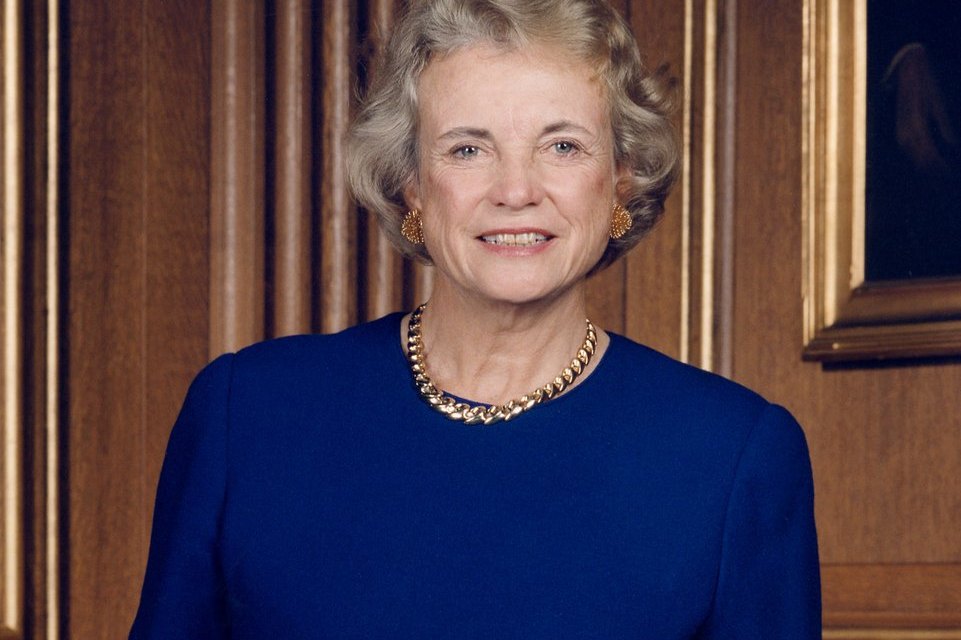
Sandra Day O’Connor was 93 when she passed away on December 1, 2023. Her death marks the end of a chapter in American legal history that began with a single nomination and culminated in a reshaped Supreme Court. Although she was not the first woman ever considered for the nation’s highest bench, she was the first to win confirmation. President Ronald Reagan put her name forward in 1981, and the Senate approved her without dissent.
Before her arrival in Washington, O’Connor built a career in Arizona. She served as a Republican leader in the Arizona Senate, becoming the first woman to hold that position in any state. Prior to that she had been an elected legislator, giving her a direct view of how laws are crafted rather than merely interpreted. Her later service on the Arizona state bench prepared her for the rigors of the Supreme Court, but it was her time in the political arena that gave her a pragmatic sense of power and its limits.
Supreme Court Tenure
On the Court O’Connor identified as a moderate conservative and quickly became the swing vote. Her vote was not a neutral marker; it represented real institutional power. In case after case, the outcome turned on her decision. She authored the majority opinion in Grutter v. Bollinger, which upheld the use of affirmative action in college admissions. She also wrote the majority opinion in Hamdi v. Bush, placing limits on the government’s authority to detain enemy combatants. In 1992 she co‑authored the lead opinion in Planned Parenthood v. Casey, a decision that preserved legal access to abortion. She joined the per curiam majority in Bush v. Gore, the ruling that settled the 2000 presidential election dispute.
These rulings were far from abstract; they shaped everyday life. The concrete stakes included affirmative action, abortion rights, presidential elections, and the balance between national security and individual liberty. O’Connor did not consistently align with either the left or the right. Instead, she often wrote narrow concurrences that sought to curb the reach of the majority’s holding, building the law incrementally, case by case, rather than through sweeping pronouncements.
Legacy and Current Challenges
What is now at stake is the pragmatic center she helped sustain. Since her retirement in 2006 the Court has shifted noticeably to the right. Her successor, Justice Samuel Alito, has voted to overturn Casey and to restrict affirmative action, unraveling the legal framework she helped construct. The decisions she influenced are being dismantled piece by piece, a process that represents more than the loss of a jurist—it signals the erosion of a judicial philosophy.
O’Connor believed in incremental change, argued that the Court should not outpace the country, and valued outcomes that worked in practice over those that sounded good in theory. Those convictions are no longer fashionable; the current bench favors broad, sweeping rulings. The swing vote she once provided is gone, and the center has collapsed. Her legacy is therefore not merely that she was the first woman on the Supreme Court, but that she was effective. She served twenty‑five years, authored opinions that endured for decades, worked alongside colleagues whose names have become historical footnotes, rose from a state that was not then a national power center, and navigated a system that was not designed for her. In doing so she changed the institution, a change that is now being undone.
The nation has lost a jurist who understood that the law is not a weapon but a framework. She used that framework to resolve hard questions, did not always




