
A 72-second radio burst detected in 1977, long considered the most promising candidate for extraterrestrial contact, now has a natural explanation. Scientists announced on August 16, 2024, that the Wow! signal likely originated from a cold molecular cloud that underwent a sudden brightening after being struck by a stellar emission.
The event was described as a rare astrophysical occurrence, not evidence of intelligent life. The signal, captured by Ohio State University’s Big Ear telescope on August 15, 1977, had captivated researchers and the public for decades. It was strong and narrowband, matching the characteristics astronomers predicted for an intentional transmission from an advanced civilization.
The signal originated from the direction of Sagittarius and lasted the full 72 seconds the telescope could observe before disappearing permanently. Despite extensive searches, it was never detected again.
Jerry R. Ehman, the Ohio State University astronomer who first spotted the unusual reading, circled the alphanumeric code “6EQUJ5” on the printout and wrote “Wow!” in red ink. That moment became a cultural touchstone for the search for extraterrestrial intelligence, or SETI. The new explanation removes what many considered the strongest piece of evidence supporting the possibility of alien contact.
The cold molecular cloud produced a narrowband radio blast that mimicked a transmission, but it was a one-time cosmic coincidence rather than a deliberate message. The signal pointed toward Sagittarius, but not toward any civilization.
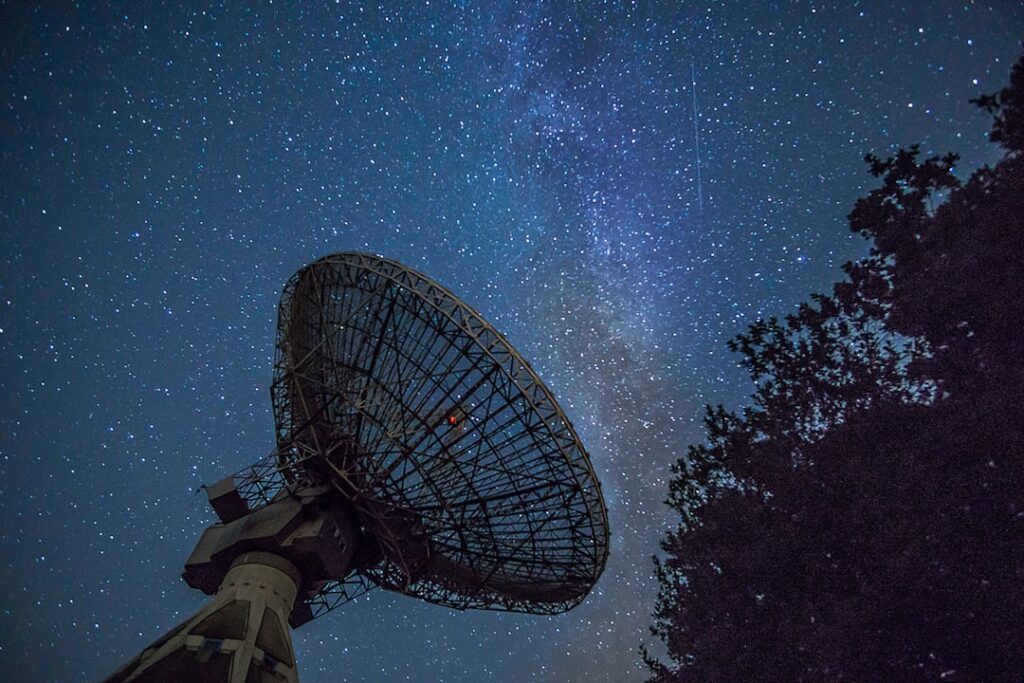
For the Big Ear telescope, which was dismantled years ago, the finding changes nothing. The observatory no longer exists, and the original data tapes remain archived. However, for ongoing SETI projects such as the Allen Telescope Array, the Breakthrough Listen initiative, and successor facilities to Arecibo, the announcement serves as a reminder of the challenges involved in the search.
The Wow! signal had all the hallmarks of a deliberate transmission: it was strong, narrowband, and lasted exactly as long as the telescope could monitor. It appeared intentional but was not.
In forty-seven years of searching, only one signal generated such excitement, and it turned out to be a natural event. Researchers will continue listening and scanning the skies, but the discovery changes how they evaluate data. The standard of proof has shifted.
Every future candidate signal will require ruling out the possibility of a similar natural phenomenon before generating excitement. A rare astrophysical event can mimic a transmission, and that fact will now be part of every SETI team’s analysis process.
The August 16 announcement did not end the search for extraterrestrial intelligence. It closed one chapter and raised the burden of proof for any future detection. The Wow! signal was a story that captured public imagination and provided a concrete example of something unexplained.
That hook is now gone. The silence of the universe has a new explanation: even when something looks like a message, it might be a cloud.




