
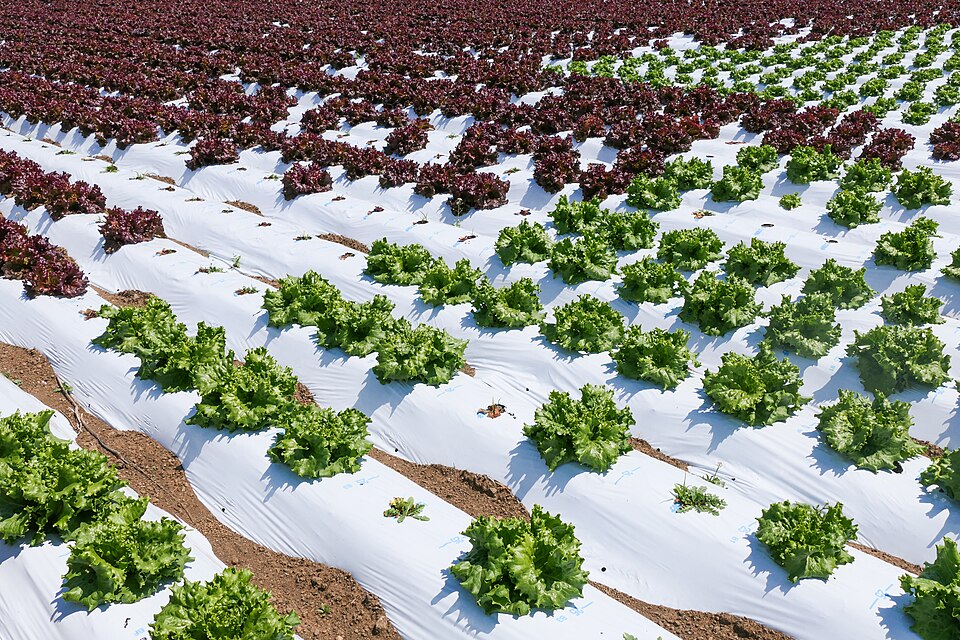
A research team led by Imperial College London has coaxed tobacco and lettuce into making myoglobin, the iron-rich protein that gives beef and pork their colour and savoury flavour. The aim is a better ingredient for plant-based meat.
The team put the gene for myoglobin directly into the plants’ chloroplasts, the parts of the cell that carry out photosynthesis. “We show plants can be engineered to produce the animal protein myoglobin in their chloroplasts, the energy factories for photosynthesis,” said Alexia Groff, first author of the study. “This could provide a more sustainable way to produce an important ingredient for plant-based meat products.”
How they did it
The researchers cloned pig and cattle myoglobin genes, then used a “gene gun” to shoot copies into tobacco and lettuce seedlings. Some seedlings took up the gene in their chloroplast genome. Those plants grew to adulthood, flowered and passed the gene to the next generation. The study appears in Frontiers in Plant Science.
The team also put the gene into the nuclear genome of both species, and into a single-celled alga, Chlamydomonas reinhardtii.
Groff said chloroplasts generally make much more protein than the cell nucleus does. Tobacco was chosen as the best model plant for the technology. Lettuce is an edible crop that could one day supply food ingredients.
The yield, and its limits
Tobacco gave 800mg of myoglobin per kilogram of dry weight, and lettuce 810mg. That is at least three times what tobacco produced when the gene went into the nuclear genome. It is still at least 10 times lower than the myoglobin in animal muscle.
The authors argue plants make up for it. “Plant cultivation is far more resource efficient than livestock production,” the study said, so yields per hectare could rival or even exceed animal farming, with far less water use and fewer greenhouse gas emissions.
Microbes still do better at one key step. Of the protein extracted from them, 80 percent bound heme, which myoglobin needs to work, against 35 percent from tobacco. The team suggests plants may not make enough heme, partly because the same chemical pathway also supplies chlorophyll.
The study does not aim to make finished meat substitutes. Because the extracted protein is identical to the animal version, it could be purified and added to meat alternatives to improve colour, flavour and nutrition. Iron bound in heme is also absorbed better by the body than iron in ordinary plants. Co-author Kyoko Morimoto, chief science officer of the Cambridge plant biotech startup Kyomei, which partly funded the work, said she hoped edible lettuce modified this way could one day serve as a heme-iron-enriched food, “depending on legislative approval.”
Outside views
Derek Stewart of the James Hutton Institute’s National Alternative Protein Innovation Centre said tobacco “does raise concerns in that it innately produces bioactive alkaloids that would undoubtedly prove problematic” for extraction and food safety. The study itself reported little evidence of oxidative damage from myoglobin expression in the tobacco chloroplast.
Rodrigo Ledesma-Amaro, director of Imperial’s Bezos Centre for Sustainable Protein, was not involved in the work. He called it an “important advance.” Its wider potential, he said, depends on improving heme incorporation so the protein can deliver the colour, flavour and cooking properties people expect from meat.




