
Seventy-eight people felt the ground shake early Monday morning. That number comes from the U.S. Geological Survey. It is a self-reported count.
The actual number of people who woke up to a rolling floor or a sudden jolt could be higher. The quake hit at 03:32 UTC.
That is 7:32 p.m. Sunday in Alaska. The epicenter sat 35 kilometers south-southwest of Cordova. The depth was 13.3 kilometers.
That shallow depth matters. Seismologists classify shallow events as those less than 70 kilometers deep.
At 13.3 kilometers, this earthquake was very shallow. Shallow quakes produce stronger shaking at the surface. A deeper magnitude 5.3 might go unnoticed by many.
This one did not. The USGS data shows that the shaking was strongest in communities closest to the epicenter. Cordova is the nearest town of any size.
The magnitude puts this event in the moderate category. A magnitude 5.3 earthquake can cause minor to moderate damage near the epicenter.
No reports of casualties or structural damage have come in yet. The USGS continues to monitor the region. Aftershocks are common after a quake of this size.
They can last for days or weeks. Standard USGS guidance advises people in the affected area to be prepared for further shaking.
Alaska is seismically active. The area south of Cordova sits in a region that produces earthquakes regularly. The record shows at least 22 earthquakes of magnitude 5.0 or greater within roughly 300 kilometers over the past two decades.
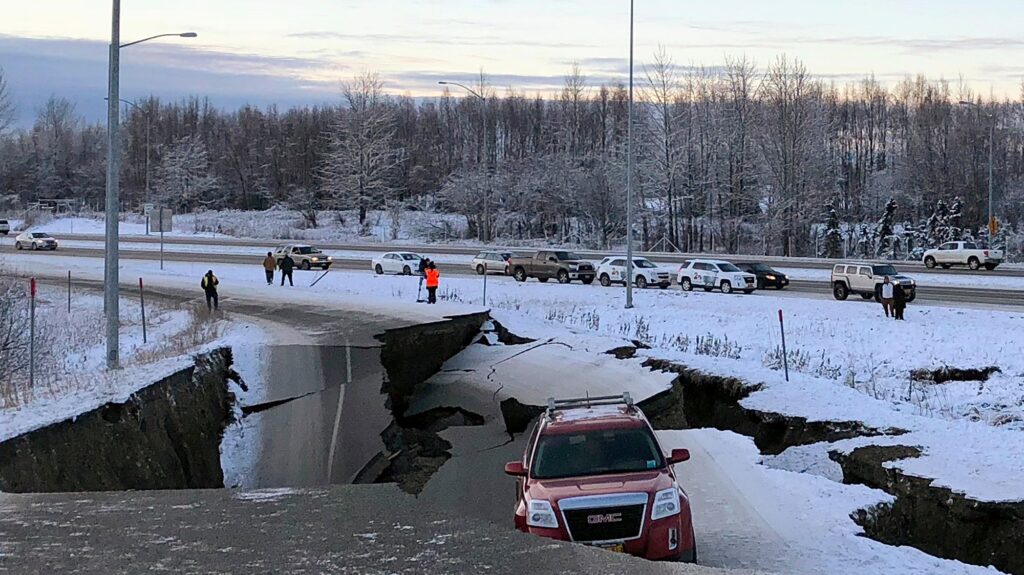
The strongest among them was a magnitude 7.1 earthquake in 2018. That event caused significant damage. Monday’s quake was much smaller.
The USGS detected the event through its real-time global seismic monitoring network. No tsunami warning was issued.
That is standard for a magnitude 5.3 earthquake. Tsunami warnings typically require larger magnitudes and specific fault mechanisms. The shallow depth and moderate magnitude meant the shaking was likely felt most strongly near the epicenter.
People in Cordova, 35 kilometers away, probably felt it. People farther away may have felt nothing.
The timing is notable. The quake struck in the early morning hours local time. That means many people were likely asleep.
A shallow earthquake at night can be disorienting. The shaking might have been brief. Earthquakes of this magnitude typically last only a few seconds.
But the intensity can vary depending on local geology. Soft soil can amplify shaking.
Bedrock dampens it. The USGS data does not specify the soil conditions near Cordova. Seismologists will watch for aftershocks.
The first few hours and days are the most likely time for them to occur. Most aftershocks are smaller than the main shock.
But they can still be felt. They can also cause additional damage to structures already weakened by the main quake. The USGS advises people to check for hazards like gas leaks and broken electrical lines after any earthquake.
No such reports have come in from Cordova. This earthquake is a reminder that Alaska experiences frequent seismic activity. The state sits on the Pacific Ring of Fire.
The Pacific Plate is subducting under the North American Plate. That process generates earthquakes of all sizes.
The 2018 magnitude 7.1 earthquake near Anchorage caused widespread damage. Monday’s quake was far smaller. But it still registered on instruments and in the awareness of 78 people who reported feeling it.
The USGS will continue to monitor the region. Aftershocks may continue for days or weeks.
People in the affected area are generally advised to be prepared for further shaking. That is the standard guidance. The data so far shows no immediate reports of casualties or structural damage.
The event was detected, measured, and recorded. That is the system working as designed.




